
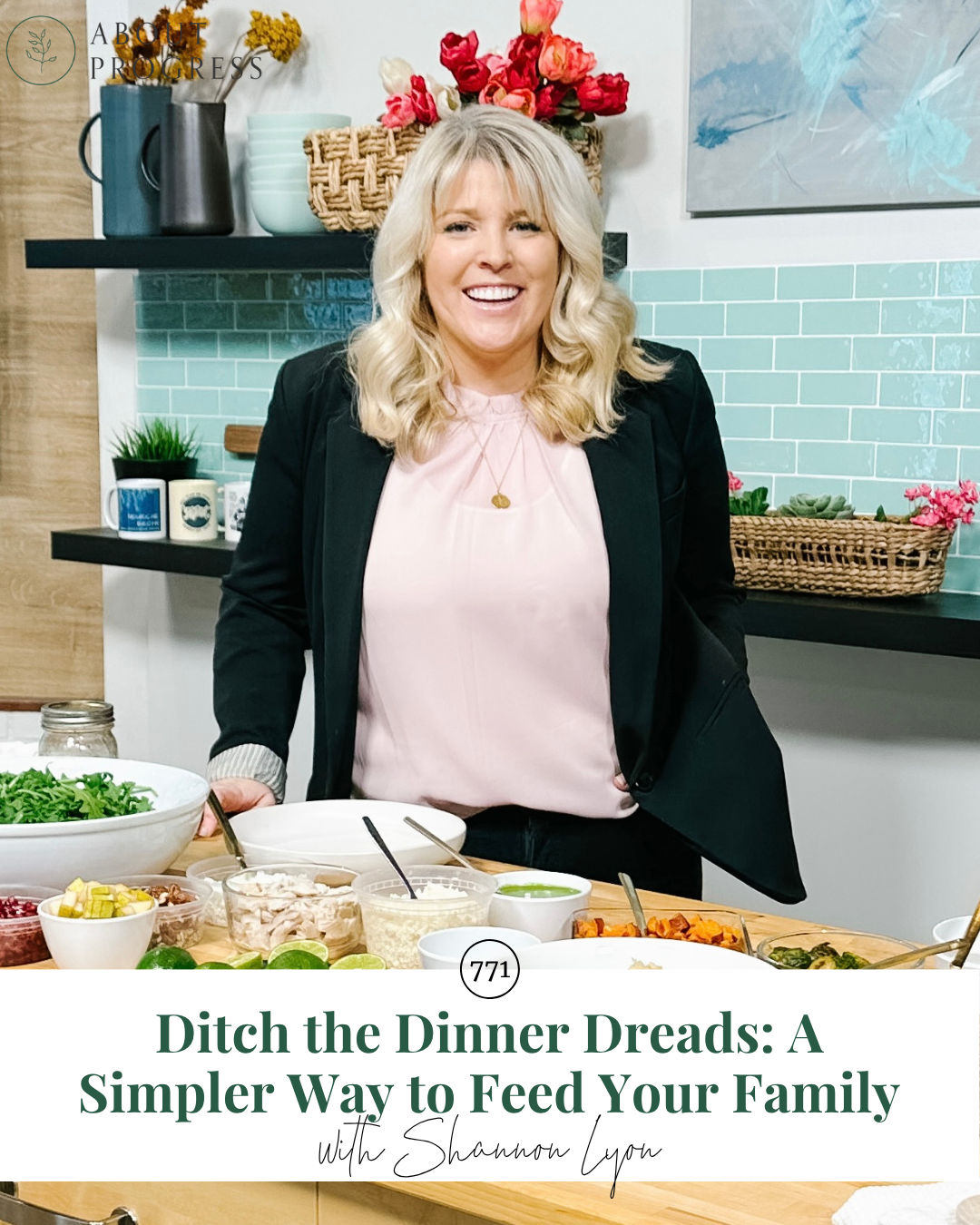
Ditch the Dinner Dreads: A Simpler Way to Feed Your Family || with Shannon Lyon
Mar 30, 2026
If you've ever stood in your kitchen at 5:00 PM wondering if everyone really needs to eat again, you're not alone. The constant planning and responsibility can be overwhelming, but Shannon Lyon offers some great strategies. By planning only two to three real meals a week and always cooking extra protein, you can significantly lighten your load. Matching your meal plan to your actual life, giving yourself permission to make dinners simple, and building in one special meal each week are doable steps towards a more enjoyable family dining experience.
It's all about creating a joyful and sustainable routine that includes meals your family loves and moments you cherish together, even if it’s just over grilled cheeses. Let's embrace these small, consistent efforts to make feeding our family an achievement rather than an obligation.
Preorder Sticky Habits book today!
Get 50% off More for Moms All-Access Pass with code LISTENER at checkout.
Join the Book Launch Committee for behind-the-scenes and first peeks at all things book.
Join the Supporters Club to keep About Progress around for good.
About a few other things...
Sign up for the Go Getter Newsletter to get Progress Pointers in your inbox every Wednesday.
You can listen to the episode below, on Apple Podcasts, or on your favorite podcast app. If you like the show please share it, subscribe, and leave a review!
SHOW NOTES
Shannon's Instagram
Access exclusive supporter benefits
Sign up for the next Sticky Habit Intensive
Book Launch Committee
Leave a rating and review for the podcast!
Lend your voice and experience + be featured on the show HERE
Join Monica on Facebook and Instagram
Songs Credit: Pleasant Pictures Music Club
Get your AirDoctorPro air purifier with the discount code “MONICA.” Transform your space now. Go to https://www.quince.com/monica for free shipping on your order and 365-day returns; Get organized, refreshed, and back on track this new year for WAY less. Head to Wayfair.com right now to shop all things home; Join Masterclass for 15% off at masterclass.com/progress
TRANSCRIPT
Shannon Lyon: So if you even have on your schedule for the week, okay, I know Wednesday night's really busy. We're just having grilled cheeses that week.
Then when Wednesday comes and you make grilled cheeses, you don't feel like a failure. Like, oh, I made this simple dinner. You actually feel accomplished, and you're like, oh, I'm the kind of person that follows a meal plan. Like I'm the kind of person that gets dinner on the table for my family. Like what?
Who have I, you know?
Monica Packer: Hi, this is Monica Packer and you're listening to About progress where we are about progress made practical. If you have ever stood in your kitchen at 5:00 PM thinking, do they all really need to eat? Again, this episode is for you Today, we are talking about something that almost every mom has to do, and yet almost no one talks about how hard it is to feed your family day after day.
And it's not even just the cooking. It's about the constant planning, decision making, and responsibility that never seems to turn off. One of the most underestimated sources of mental load for women is feeding their families. And even if you love to cook, it can still feel exhausting. In this conversation with Shannon Lyon, we are not adding on more pressure or telling you how to make dinner perfectly.
Instead, we're talking about how to feed your family dinner in a way that actually works with your real life. You'll learn how to simplify your weekly meal plan, reduce burnout and still create meaningful moments with your family around food. If the dinner dreads has been feeling extra heavy lately, this conversation will help lighten the load.
Shannon Lyon is a food blogger and recipe developer . In addition to developing her own recipes, she works with food brands to create new recipes, and she also teaches cooking techniques at conferences, on TV programs, and on her Instagram page.
Shannon loves balancing flavor combinations and simple changes to basic recipes that elevate the flavors. She lives in Portland with her husband and four children. This conversation originally aired as part of the More for Moms conference that I hosted in the fall of 2025. If you like this interview, than there are 24 more like it.
I was going to save upping your listener discount for the summer, but I'll share it now. You can go to about progress.com/more for moms. And use the Code Listener to now get 50% off lifetime access to all of the speaker sessions from our first More for Moms conference, and that's without any ads and a private podcast to boot so you can listen on the go.
That pricing breaks it down to just $1 and 34 cents per speaker session. You can use the Code Listener for 50% [email protected] slash more for moms before that code and the content expires this coming August. My interview with Shannon is coming up after a quick break for our sponsors.
Monica Packer: One of the things I did not have on my almost 40 bingo card is more allergies. Since I already have some kids who tend to struggle with allergies in general, I am now joining them in noticing the great difference between having good versus poor air quality.
This is why we love Air Doctor in our home. It's the only air purifier we use , and we are in good company. Air Doctor won Newsweek's Readers Choice Award for best air purifier with Air Doctor, we notice reduced allergy symptoms as an entire family, fewer odors around the home,
the cleaner air for my kids brings me a lot of peace of mind, as does the extra protection during wildfire season, air doctors, powerful three stage filtration captures particles about 100 times smaller than what typical air purifiers can remove.
Air doctor captures airborne contaminants that you do not want to be breathing in. Dust, pollen, mold spores, pet dander, wildfire, smoke, bacteria, viruses, odors and more, it has a whisper, quiet operation.
It's not loud like others on the market. And the auto mode feature is a big favorite of mine because it automatically kicks into different modes as needed, as well as an easy change filter reminder. So I don't have to guess when it's time to change my filter.
We are part of the 98% of Happy Air Doctor customers who say their home's, air feels cleaner, safer, and healthier. Head to air doctor pro.com and use promo code Monica to get up to $300 off today Air Doctor comes with a 30 day money back guarantee.
Plus a three year warranty. An $84 value free get this exclusive podcast only offered [email protected]. A-I-R-D-O-C-T-O-R-P-R o.com using promo code Monica.
Monica Packer: Shannon Lyon, welcome to the More for Moms Conference. It's so great to have you here.
Shannon Lyon: Thank you so much. I am really excited to be here and I love what you're doing with the conference.
Monica Packer: I am such a longstanding fan. I have made so many of your recipes over the years, and it's one of those weird things. I love to cook. I know you love to cook. I know not everybody loves to cook or bake, right? But at the same time, we all have to feed. Our families, and it always surprises me, but then it doesn't because I'm in the middle of it too. Just how stressful it is to do so and how waning it is on this ongoing process. It never ends. So I wanted to begin with what you can see are the obstacles that moms face to feeding their families and how that could often create that kind of like, I'm going nutty feeling.
Shannon Lyon: Yes. Well, when you say what are the obstacles, immediately what comes to mind is only every single obstacle,
Monica Packer: Yeah,
Shannon Lyon: our time, our energy, our planning, or our pre-planning, right? Our desire, because let's face it, even someone like me that loves. To cook a lot of days it feels like drudgery to have, get you muster up the energy to get food on the table, even when you love to cook.
Um, and if you've been cooking for your family for decades, like we probably have, it's just like that meme, like, oh, do they need dinner every single night? You know? Um.
Monica Packer: Forever.
Shannon Lyon: One time I saw a speech and it was mentioning how if you have any distractions in your life, keeping you from your goals, like just get rid of them.
And my kids were little and they were running around and I'm looking around thinking clearly this person has never had kids. Because the irony of making dinner for your family is that the people that you want to feed are also the people distracting you from
Monica Packer: Yes.
Shannon Lyon: getting it done and making you so tired and draining your energy and your time.
And so it's very hard because. Most of us know deep down, mealtime is really good for our families. Mealtime helps our kids mentally, socially, it helps all of those things. We've learned about this from so many studies and um, and different kind of research that's been done. But then in the actual moment of the week when things are really busy, there are so many obstacles, but I would say the time, the energy, the planning and the desire are kind of the four biggest ones, which are basically everything.
So.
Monica Packer: Yeah, that encompasses it all. So I'm gonna say, say those four again. Time, energy.
Shannon Lyon: Time, energy planning and desire. Right? And when even one of those is outta whack, even if we have the time and energy to cook, but we haven't done the planning, that makes it really tough. Maybe we didn't purchase what we need to. We don't have the ingredients at home to buy something. Maybe we have planned and we have.
Time and energy, but we just don't have the desire, you know? So if you don't have all those things, if you don't have energy, but you have all the food in your fridge, you have everything you need to make it, but you just don't have that energy that day. Those things, like if you don't have all of those together, it's very difficult to get dinner on the table.
And even in the summer, you know, lunch, maybe other meals when your kids are at home more so.
Monica Packer: It's like the Venn diagram of obstacles, right? Or circumstances. So you have to have all of them crossing over at once
Shannon Lyon: It's this tiny, tiny little overlap when the maybe like magical one or two days a year when you're feeling all those things and a great meal, you know, comes together and you're really happy about it. So.
Monica Packer: Yeah, so, so you mentioned you love to cook, so, so I'm guessing this is true for you too. Even if this is something that you like to do or are interested in, you are not immune to feeling those kind of, I guess Sunday dreads is the common term right now, but it's almost like dinner dreads.
Shannon Lyon: Dinner dreads. I like that applies more because it's not just Sundays every day of the week. But yes, I definitely get burnt out from cooking and I think it's good for people to hear that and normalize that. Like everybody I think gets burnt out from cooking even if you do it as a profession like I do.
And you love to cook and I've cooked my whole life, but there's a couple things that have helped me. So I thought that I would just kind of list out what those things were quickly, but then we could get into more detail on each one. Does that sound okay?
Monica Packer: Yes.
Shannon Lyon: Okay, so the things that have helped me kind of face the burnout and not hate cooking, I guess I'll say first of all, only plan two, maybe three at the most, but I would say maybe two bigger meals for the week.
I would say that simple meals, um, are better than complex. Especially if that complex meal stresses everyone out. So those are the first two. So plan only a couple big meals for the week, and then the rest, you're just gonna repurpose things on the other nights have simple meals. My third tip is always make extra protein.
Always, always, always make like if you're making a roast, double it. If you're making chicken, double it. Always make extra protein, and we'll get into that in a little bit. Plan your eating out for your busiest evenings. Don't just haphazardly decide, Hey, maybe we should eat out tonight. No, look at your week and say, Thursday is gonna be a really busy night.
We have a choir concert, we have this, we have activities and lessons we're eating out that night. And that takes any of that guilt you might feel on that night away because you've already planned it in your mind. So you actually feel like. You're, you're put together, right? Because you're like, oh, I already planned this meal out.
So I'm not just, I'm not just copping out tonight. Like we had this on the calendar. And then the last thing I would say, now this might be controversial, but I would say try to make one nice meal a week for your family. You can choose the day, you can choose what works for you. It might be different every week, but try to make something once a week that like your kids look forward to.
So I'll talk about that a little more. But it's, it's not just always about cutting things out. Sometimes adding things in can help us have excitement towards something like, I'm doing this for my family. Like, I'm gonna, we're gonna make this special thing and we're gonna do it together. So.
Monica Packer: Okay. I can't wait to hear more about that, but this is something that you learned. I, I, I bet. coupled with like professional persistence, like you had to, you know, this is part of what you do, but also like that persistence to need to feed your family and to not have the dinner dreads every day. I, I'd love to go into them if that would be helpful,
Shannon Lyon: for sure.
Monica Packer: it helps you, then um, it's gonna help
Shannon Lyon: Right. And I would say, I wouldn't say I get the dinner dreads more than anyone else, but I will say there'll be some times when I'm testing, like when I was testing my cheesecake recipe, for example, I was working on that recipe for weeks trying to tweak things. So I was making a bunch of cheesecakes and I was delivering them to my neighbors and my friends, and I was not ready to cook dinner after making cheesecakes all day.
I was like, I've been in the kitchen all day. The last thing I wanna do is now make a meal. So. Even though someone might think, well, I love to cook so I don't get the dinner dreads. Sometimes I get them more because I am already testing. You know, if I'm testing a dinner meal, that's easy 'cause then we're eating that for dinner.
But if I'm testing like baked goods, then we don't, you know, I still gotta make dinner, so.
Monica Packer: Yeah. Dang it. You still gotta make dinner. Can't be. Well
Shannon Lyon: Right.
Monica Packer: be cheesecake for dinner. Let's be
Shannon Lyon: I mean it does have a lot of protein I guess, but
Monica Packer: Totally. It hits all, all the good things.
Shannon Lyon: yeah.
Monica Packer: so let's start with the plan two to three bigger meals of for the week. So do you mean, um, you're not just planning three meals, it's just like to make some more intensive meals?
Shannon Lyon: Yeah. Yeah. Let me, let me go into that a little bit. So, I think a lot of times when people are meal planning, they get out their calendar and they write, you know, Monday through Sunday down, and then they write a big meal for every, every one of those nights. Maybe one night eating out, but they're like, oh, I really wanna try this, you know, enchilada recipe and this Italian dish and all the get really excited.
Right? And you're, it's almost dreamy where you're not necessarily thinking practically, you're just. Thinking of all these great meals, like, I'm gonna be meal planning, I'm gonna make all these great meals. And then what happens is Tuesday night comes, Wednesday night comes and you're so burned out, you don't wanna do it, and then you feel like a failure.
So I, what I have done for years is every single week I'll only have two or three kind of more complex meals planned out for a week. And then what I'll do is I'll repurpose. Those into other meals. So let me give you an example. So like on Sunday I made a beef roast and my family loves beef roast. And what I'll do is I'll double it.
So I'll make two roasts and I'll make 'em in the crockpot. And then on Monday we can repurpose that into tacos or into beef, like grilled beef sandwiches or something that is really fast to pull together because I. I feel like once you have so much of that meal already made, you can still make a great repurposed meal with it.
But think about how the stress has gone from that. If you knew you had to pull together some shredded beef sandwiches and you already had the beef made and you just had, you know, you purchased some Chiba rolls and you cut up some fruit and melted some cheese, you'd be like, all right, we have a pretty simple meal.
So I will say with some nights we have really nice meals and other nights. We have really, really simple meals like that, and I think that helps me a lot. If I was making a really nice meal every night, I would probably be really resentful of my family, so.
Monica Packer: And it also hurts when you've made such a complicated and even fun if it, even if it was fun for you to try, you know, meal. But if half the family doesn't like it, then.
Shannon Lyon: Another thing, yeah. If you're planning all these kind of really complex meals every night of the week, you're spending so much time in the kitchen, but chances are kids. Don't typically love super complex meals. And so then that can feel like even more drudgery because then people don't like it and you spent all that time.
So I really think pick, look at your schedule. So I'll give you an example for us. So I love to make a really nice dinner every Sunday. We typically, I try to really be good about keeping our Sunday afternoons clear and we will make something, I'll let my kids, they rotate each picking and dessert. So we have four kids.
Thirst, usually four Sundays in a month and they get to pick a Sunday treat.
Monica Packer: That's so great.
Shannon Lyon: they'll help me make it and the other kids will help. Like my son who's eight helps me cut off the ends of the green beans. You know, just little things like that. So I'm like, I know on Sunday that's like our time. We can do that together.
And then usually I'll pick one or two other nights of the week when we don't have as much going on. I know that if we have. Piano and swim team and whatever on certain nights. Like we gotta have an easy dinner, but I still want us to have that dinner together. Right? Even though it's simple, I think a simple meal together is better than having a complex meal that stresses everyone out.
So, so I would say that, so try to just think, okay, I know I've got Sunday night with not a lot going on, maybe Tuesday night and Thursday night, so maybe those are the nights where I'm spending more time in the kitchen. The other nights we're gonna use kind of. I don't wanna say the leftovers. 'cause I think the word leftover has a bad connotation, especially with kids, that if you repurpose it, and a lot of times you can do little tricks.
Like if you have, I don't know, pulled pork. One night, if you're gonna repurpose it the next, you can sear it on the stove with some oil and maybe add some new seasonings, and then it doesn't taste like leftovers as much, you know? So I really try to just repurpose things like that, that has helped me so much is to repurpose food.
So that's kind of my number one. And then the number two is the simple meals are okay. And I, I think I went into that also, but just being together. It's so much better for kids to have a simple meal together than. Moms stressed out in the kitchen and everyone frustrated, so
Monica Packer: I would actually love some examples of simple meals that you go to. I knew our, ours are things like sandwiches
Shannon Lyon: yeah.
Monica Packer: like we literally, I've literally put sandwiches on the menu
Shannon Lyon: No, no, that's great. Good.
Monica Packer: sandwiches. We're planning on it.
Shannon Lyon: Okay, I'll give you a couple of things. So I love to do, um, some type of meat-based nacho. My kids love this, and it's so simple. So you have, you could use any kind of meat for it if you have leftover chicken or pork or steak or anything. And I'll usually use beans and a lot of times just like canned beans.
And that's so simple. It's a lot of protein for my kids. Some of my kids like tomatoes, some don't, you know, some like green onions. So I'll kind of like. Put different toppings on different parts of the nacho pan, you know, based on, right. So there is one that my kids love. I love to do also a meat-based quesadilla, which my kids love, and it kind of feels a little more substantive than just a regular quesadilla if you're putting in beans and meat or something like that in it.
Um, I will say grilled sandwiches, like you said, sandwiches, but I do like to toast them. Some, and it, and a lot of times I'll get a special bread too, like a brioche bun or a shabada, and that will just make it feel a little bit nicer than just putting on sandwich bread, which if you can do that in your meal plan, you know, I do a meal plan every single week and I just put that in my grocery, you know, in my grocery order to just make sure I get some of those little things.
So, um, a lot of those are really simple. I will say a lot of times in like the winter we'll do grilled cheese and tomato soup, and one thing I always do in the winter is I make extra when I make like soups. And, um, sows and things like that. And I freeze them. And then I'll just have, I'll make you know enough for that night to eat and then my kids won't wanna have it again that week or the next week 'cause we just had it.
So then I'll freeze it and then like a month or so later, we'll have like chicken and wild rice soup again. And so those are ways that I can keep things simple. We just, we don't have Cafe Rio here, which is crazy because it's 2025. Shouldn't every place have Cafe Rio? But we had some friends over for dinner the other week and I just made like.
My Cafe Rio, you know, pork salad bowls, and I made a ton of everything and then I froze a bunch of it because I thought we have all these leftovers. We're a little burned out on it 'cause we already had it for a couple. We had, you know. The salads one night, and then the next night we had nachos with it.
So I thought I'll just freeze some of this and then we'll repurpose it later. And I don't know why this is my third point, but the having the extra protein on hand mentally helps me a lot.
Monica Packer: Hmm.
Shannon Lyon: I know I have a good protein, at least I feel like I'm getting that into my kids, like I can quickly make up some rice or quickly make up some pasta or a side dish to go with the protein.
But having that on hand for some reason mentally just helps me a lot.
Monica Packer: Well, that's another one of our simple meals is we just do a butter pasta with the leftover chicken if
Shannon Lyon: Yeah. Oh, perfect. Yeah, exactly. And then you have your chicken, right? You have your protein and all the kids like better pasta. So I
Monica Packer: I
Shannon Lyon: can't,
Monica Packer: How could you not?
Shannon Lyon: I know.
Monica Packer: So much of this is of my, Megan Anderson, one of my friends, she, she talks about flexibility within structure and so much of what you're sharing is that, because it's not about just meal plan and get it done, it's like, look at your week, look at your time is gonna be, look at how your energy's gonna be.
All those obstacles you just talked about. And plan in alignment with your life, not against it.
Shannon Lyon: Right.
Monica Packer: that, you know, giving yourself some things to look forward to and also ways to simplify and be gentle with yourself. so brilliant.
Shannon Lyon: Well, I, I have a friend who always says, let's be in a rigid state of flexibility.
Monica Packer: That's so
Shannon Lyon: I kind of think that applies to meal planning, but one thing I will say is a lot of times people will have their life. Over here and their meal plan over here, and they don't necessarily coincide like that plan they made for the week with what their actual schedule is.
And I think that is 90% of the battle because there's something, you know, in Atomic Habits, how it talks about like every action you take is a vote for the kind of person you wanna become. So if you even have on your schedule for the week, okay, I know Wednesday night's really busy. We're just having grilled cheeses that week.
Then when Wednesday comes and you make grilled cheeses, you don't feel like a failure. Like, oh, I made this simple dinner. You actually feel accomplished, and you're like, oh, I'm the kind of person that follows a meal plan. Like I'm the kind of person that gets dinner on the table for my family. Like what?
Who have I, you know?
Monica Packer: maybe that's why we think we're not good at these things, right? Because we in, in our pursuit to meet ideal prescriptions, we have set unrealistic ones
Shannon Lyon: Yes.
Monica Packer: us up for fail
Shannon Lyon: Right.
Monica Packer: that set us up for failure, which in turn makes us feel like a failure. So then we just stop trying when instead, like making that space for life and, and accommodating that is what helps us, uh, make our own prescriptions so that we can do well.
Shannon Lyon: Totally and small little efforts are so much more important if they're done consistently than just. Big, like if you're, you know, try to go all out with meal planning and you try to plan all these complex meals one month and then you just completely burn out the next month and you don't wanna do anything, that's a lot less effective than just recognizing, hey, I know on Tuesday night and Thursday night and Friday night, I'm gonna have no bandwidth.
So we're doing super simple meals, or we're eating out, that's gonna gimme the space to not only feel confident that I followed a plan, but also it's gonna make me feel like on those other nights you might feel more excited to cook. Right? Because you're like. Oh, I know sometimes when I look at my meal plan and I'm thinking, okay, I know that, um, I only have two big meals I'm planning, and I know on Friday and Saturday we're eating out, so I'm like, wow, I really not cooking that much this week.
And it kind of makes it feel more exciting on those nights that you do get to cook, especially if you know you have the time. If you're like, oh, I know Tuesday afternoon I have a couple hours and that's my block, and then I can actually look forward to it instead of dreading it.
Monica Packer: I love that. And, and this is something we can own for ourselves. You know, simplifying is a strategy. Um, but I, but what you've just taught us is it's not just about . Simplification. It's about, uh, also adding in a little bit more structure and, and kind of some pushes, which I'm always about. And, and we're gonna talk about that with your making one nice meal.
But before we do that, uh, going back to extra protein, is there anything else you wanted to say about that or even some go-to ways that you, of the proteins that you like
Shannon Lyon: Yeah. Okay. I'll just say, like I said before, ha, making extra protein will take your mental load off. I don't know what your family situation is, but I know in our family, like my kids love to eat protein and I feel like they're less cranky when they have a lot of protein also. Um, so I'll say anytime I'm using the crockpot, whether it is.
Monica Packer: Okay.
Shannon Lyon: beef roast, a pork roast chicken, whether it's like Italian chicken or Mexican chicken, anything like that, I always make extra. So there's that. The second thing I'll say is one, one meal that my family loves is smoked meats, like on the trigger. And so, for example, we love. Smoked tri-tip, and I will always make a double.
I'll always get two tri-tip and make extra because then we can have steak sandwiches and we can have steak tacos or you know, steak burritos or whatever steak salads like throughout the week. And it's so fun to open the fridge and be like, oh, I already have all this cooked up steak. That feels like such a big hurdle for getting a meal on the table.
And now the rest of it comes together very quickly. So I'll say those are some that we love. Even if you're making something, let's say you're making like enchiladas for your family. Say you're making a bunch of. Chicken, for example, or shredded beef. You might make a bunch of that and set aside some of the beef or some of the chicken.
Don't put it in the enchiladas, but then you have that saved for the rest of the week, and then you have your enchiladas for the night, but then you already have the protein repurposed so you don't have to repurpose it like in the format you use. A lot of times if I'm making a bunch of chicken, for example, I'll only season it with salt and garlic.
And then I'll save like half of it for later in the week. But then the, the chicken, we're gonna have that night all season with whatever, like cumin and chili powder, whatever that dish that night needs. So those are just some examples of ways that I'll make extra protein and that, I swear, if you just take one thing away from this podcast, make extra protein.
So.
If You haven't heard,
I spent all of 2025 writing a book. and I'm so proud to say that my first draft of the manuscript has officially been submitted. There is so much work to come and the book is set to release in the fall of 2026. However, we have a new title, And with that, a way for you to get first access to what that new title is, as well as the first peak at the cover and to get exclusive behind the scenes virtual online events, celebrating its launch to act as , grassroots publicity, and to potentially be an advanced reader as well.
To get access to all of that, you simply need to be part of the free book launch committee. You can sign up at about progress.com/book committee. I've been sending out newsletters with updates. And some juicy behind the scenes, such as lately. The good news I got and the bad news I got, which is now turning into not so bad news.
And actually I think it's gonna be great news in the long run, and I'd love for you to take part again to get access to the newsletter and everything else I just shared. Go to about progress.com/book committee
Monica Packer: I, I am, I'm taking that away, but so much more too. And, and, and going back to your planning, eating out, which I think, you know, why not put that on the meal plan? Yes. We're, we're going to eat out. Um, what, what would help women kind of accept that little bit more and how does, how do you find it helpful?
Shannon Lyon: First of all, I think it's fun. I think my kids get really excited and we get to talk about, okay, well hey, we know we're gonna eat out on Tuesday night this week 'cause we have a really busy night. Where do you guys wanna go? What should we do?
Monica Packer: Yeah.
Shannon Lyon: I think looking forward to something is half the fun of the thing.
So whether it's eating out or even something fun like a vacation, like. Give them the time to look forward to it. But then also we put it on, I, I will say almost never, ever cook on Friday. Friday is like, I am out, I'm blocked out, you know? And, um, and so we'll almost always get takeout or go out to eat on Friday.
And it is fun throughout the week to think about what do we wanna do? And I don't feel bad about it because we have it planned out. We have it in our budget, you know, this is like when we're going to eat out and a lot of times, a lot of weeks, there might be one other night that we also eat out, or like a, going out to breakfast if it's.
The weekend or something like that. So we usually eat out about twice a week, but I think it can be really fun. And if you have the budget for it, budget for it. If you don't have the budget for it, then still find days when you can give yourself a break by using leftovers. Right? So. Make as much as you can of something and have leftovers.
It doesn't even have to be repurposed. You could have the exact same meal the next night, but I do think that women need a break. Do not cook every night,
Monica Packer: Yeah.
Shannon Lyon: this is coming from someone who loves to cook and use going out as a fun time to be together with your family. It is fun. Even if you're just going something simple like Chipotle or Chick-fil-A, it can be really fun for kids to have that to look forward to.
And I think one thing kids love about eating out is the independence they feel from getting to order their own meal. And just feeling like, oh, what I can go up to this menu and choose something all for myself, you know? So I think that that's fun for them as well. So yeah, if you try to, I would say if you can try to budget at least eating out once a week just because it is good for your own mental health.
And if it has to even be someplace cheap. I mean, we have taco trucks in Portland that are so good and really cheap tacos. So find, you can usually find something to eat out that's, that's really good that you'll like to eat. .
Monica Packer: Yeah. And there's ways to, you know, go to a place and I think Chick-fil-A, we always get like the something
Shannon Lyon: 30 pound nugget. Oh, all the.
Monica Packer: yeah. So ways to, ways to say it that way. But I will say, uh, for those who are like, what? We don't have the budget. Maybe you do have a budget for Annie's mac and cheese. You know, so like
Shannon Lyon: Oh good. Yes. I love that.
Monica Packer: like
Shannon Lyon: Right. And
Monica Packer: be
Shannon Lyon: also like the Costco chicken nuggets, you know, that are kind of like the Chick-fil-A ones, like, my kids love those, right? Things like that you can do. I'm really glad you brought that up because there should be no shame in that. You know, just you, you need a night off at least one, maybe more from cooking, you know?
So.
Monica Packer: But, but the heart of that is, yeah, don't, don't feel like you have to cook from scratch every night. Um, and, and, and that's what that's there for, you know, so that you can have that break and also come back to it feeling
Shannon Lyon: Right. And also don't feel like it always has to be the mom too. You know? Like if I know like. I, I have a night where I'm gonna be really busy and I'm like, oh, I don't really want us to eat out that night. I'll just say to my husband, Hey, do you think you could cover dinner this night? And he loves to make breakfast food.
He is really good at that. So the kids look forward to it 'cause they'll, he'll make like either breakfast tacos or pancakes or something fun that the kids look forward to. So it doesn't always have to be the mom too. And I have a friend whose husband loves to cook and he does a lot of their cooking. So all these tips apply to anyone who's cooking, whether it's.
Monica Packer: And the kids too, that you've taught how to chop off the
Shannon Lyon: Yes. I'm trying. I know.
Monica Packer: can.
Shannon Lyon: I'm really trying.
Monica Packer: of my goals I wanna work on a little bit more is teaching my kids how to cook more as well. But you know, time
Shannon Lyon: I know. Well, sometimes it just feels easier to do it yourself. That's why I let them help me on the nights when I know we have a lot of time. Because if it's like we don't have a lot of time, I'm just like, this is gonna be more stressful than, than not.
Monica Packer: Well, you answered that conundrum for me because I had a goal to do that this summer. I was like, every night, like the kid, like we have a star of the day, so each
Shannon Lyon: Oh, that's cool. Yeah. Cool.
Monica Packer: and they help with different things like the, maybe they can choose the meal and they'll cook the meal with me.
And then I was like, this is too hard,
Shannon Lyon: That's too much. That was good with it.
Monica Packer: I'm gonna do the
Shannon Lyon: Yes. Yeah. But once a week.
Monica Packer: with me, choose the dessert. We'll do that together.
Shannon Lyon: Yeah. Choose the dessert. That's so fun. They love that. They feel special.
Monica Packer: With that? The making one nice meal a
Shannon Lyon: Okay, so this is my last tip is try to make one meal a week really special. And I, I hate to even suggest things 'cause I know women put so much pressure on themselves, but I do think it is good to have. A desire to implement good things, not just take away stuff. Right. Which a lot of times when we go to summits and conferences, it's like, cut this out, cut this out, which a lot of it we need to hear that honestly.
But I will say it has been so good for my family that we consistently. For probably my kids' whole life have been having really nice Sunday meals because I love that and I want that. I want that for myself. I want that for our family. I want Sunday to be a day when we get to have special time I want, and they always look forward to it.
They're like, oh, what are we gonna have? And, and they, like I said, we'll help pick out the dessert and we have time on Sunday. And I think if we didn't have time, it would be stressful for me. But I really, like, a lot of times, you know, I might get asked to go to a meeting or something on Sunday, and I'm like, oh, I really, really wanna protect my Sunday afternoon.
So I try to do that because it is, it is really fun to be able to have time with them. If I, if there's something I wanna do with my kids, and I have time and space planned for that, it's really exciting for me. If I don't have time and I'm stressed, then I'm like the worst version of myself, you know? So I think if I have that planned, like we said with going out, right, you just have it in your schedule and you're like, all right.
Sunday afternoon. That's like our time in the kitchen, so,
Monica Packer: Well, this is the nice push, I think what you're in the right conference 'cause it's more,
Shannon Lyon: right. Exactly. More. Yeah.
Monica Packer: we, we give ourselves slack in certain ways. We simplify and you've exemplified that. And then other, in other ways, we push ourselves and it's all about that alignment piece. And, and one of those pieces that we've talked about is, is finding joy in.
And feeding your family.
Shannon Lyon: Yes.
Monica Packer: for those who don't love to cook or bake, it's not necessarily about finding joy in that process. I know this just even from how you've been teaching us today. It's not just about the cooking, it's about what it's representing and what it's providing for your family.
Shannon Lyon: Right. And even if you don't love to cook, can you find joy in the result of it? Right. If you as a smart, I think probably most of the women attending this are probably smart, motivated women. And if you can, you know, logistically say in your mind, okay, I know that. Family dinner time is good for my family.
I know that eating together is healthy for them and benefits them in so many ways. Okay, so can I find joy in just the fact that I'm doing that for them? Even if you don't actually like the cooking process. But I will say, well, I'll tell you this in a minute when we get to the next couple of questions, but I think there are some things that women can do to help themselves find a little more joy in, in the process.
So.
Monica Packer: what I wanna actually hear about. I wanna hear about what are some of those fun boosters or enjoyability boosters that you tap into or that you've seen other women do who maybe even don't necessarily love the, the process of cooking, um, or, and, or baking. But, um, to, to just make space for more of the enjoyment piece.
Shannon Lyon: Okay. Yeah. Um, so first I would say when you're, if you're trying to. Create an environment where you wanna find more joy in the kitchen. First think, make meals that excite you. And I think a lot of times as a mom, we're like making our meal plan. Like, what are my kids gonna like? But at the end of the day, you can deconstruct almost any meal to be something your kids would want.
You could have, you know, the rice separate from the veggies, from the meat, whatever. But if you go. On online, you go on Pinterest and you think like, I just love Bon Me sandwiches. Like I love them. Every time we go out, I order one, I'm gonna figure out how to make that, you know? And that's how I first made my first Bon Me was I was like, I love Bon me sandwiches.
I'm gonna make this. If you find a food that you love, start with that. 'cause you're gonna get excited about that and just be like, you know what, we're gonna figure this out and I'm gonna try to get my kids like to like this. I hope that they do, but even if not like then I am doing this for me. So I think that that's really fun.
And it's also a great way to expose your kids to new foods. 'cause I love international food and I have two kids that are really good eaters and we'll eat anything. And I have two kids that are very picky eaters. So I have had to, it's good 'cause I'm like, okay, we do like the no thank you bite. You know, everyone try everything.
But then if you don't, we can. Separate things that we can put them in piles or, you know, we can try to make it more palatable for those kids. 'cause I don't want them to have a negative connotation with eating. And I will add that in here. Like, I don't think you should force your kids to eat things like I had that happen to me when I was young.
And it, it just creates negativity. And I was so picky when I was young. I literally was picky about everything. And now I like. Every single food, like I think the only food I don't like is probably like octopus that I had at like a Lua once, which I thought the texture was gross. But other than that, like all basically everything.
So it's a good reminder to me that I was super picky. I grew out of it. Most kids are gonna grow out of it and the kids that don't, they have real textural issues going on. Um, like I had a friend whose son was in occupational therapy, so forcing the, a child like that to eat things they didn't want to is actually very traumatic.
So, you know, get put things in front of your kids, let them try different things, but at the end of the day, if they're not feeling it, then give 'em something else and that's okay. I'm like, don't create shame around food. So.
Monica Packer: Yeah, I, I'm glad you're pointing that out. And then this at the same time, I also love that you're giving them a space to still make something that they know they may like, but nobody else will. And that's okay. It doesn't, it's not gonna be that way every night or
Shannon Lyon: Yes.
Monica Packer: week,
Shannon Lyon: Right.
Monica Packer: okay
Shannon Lyon: years. I put pad Thai. I have a pad Thai recipe I love to make, and I put it in front of one of my sons. He didn't like it. Didn't like it. And then just a couple weeks ago, he loves it, you know? So I'm like, okay, something's working. But that also brings joy. So, so making meals that really excite you, but also that process of really showing love and work to your kids around the process.
In mealtime, that can also bring you joy too. 'cause you're like, oh. We're trying to get there with, especially kids that are naturally a little more picky. Um, you know, so I think that that's really helpful. I think also just not being, like, not necessarily always seeing cooking as this. Like task that has to be done.
Sometimes I try to look at it for myself as almost like therapy, and this sounds bad, but I think when I'm like more selfish about it, it's actually very enjoyable. So like I joke, I was teaching a cooking class to some girls at church and I just told them it's. Sometimes when I'm really frustrated, I've had a really frustrating day.
I'll just like come home and throw some butter in my KitchenAid mixer and just start beating it. And I'm like, I don't even know what I'm making yet. But I had to beat that butter just to like get my feelings out from the day, you know? So I think like seeing cooking as as a release for yourself and also if you can create time in your schedule, it's like a therapeutic thing for you.
And if you almost look at it selfishly like. Give yourself that 45 minutes or however much time you have to cook because then you can kind of release and work out what you've been going through through the day. Just as you're measuring. It's these things you do with your hands that seem kind of menial sometimes, right?
Because a lot of us women, we went to college and we're educated, and then sometimes we're folding laundry or cooking meals, thinking. Wow, I can do so much more than this, but at the end of the day, it's doing those things with our hands that we can still be really present with our kids and we can also process our feelings.
A lot of times I can't stop to think about something until I'm folding laundry or making a meal because I'm not thinking a ton, you know, I'm just kind of doing with my hands. So,
Monica Packer: Mm-hmm. never thought of that. But you know, and this may be a totally different topic, but, um, I struggled with eating disorders in my early
Shannon Lyon: yeah.
Monica Packer: been many years of disordered eating
Shannon Lyon: Wow, I'm really sorry.
Monica Packer: this cooking class in college, and it was actually one of the best classes I took
Shannon Lyon: Wow. That's cool. Wait, what class in college? Oh, that's so.
Monica Packer: I, I'll tell you more. Uh, but anyway, it, it, what what was really interesting though is I've never forgotten the teacher telling us about one of her students who was in recovery from eating disorder, and she didn't know I, I was in that class either. And just how therapeutic it was for this, for this young woman to need bread
Shannon Lyon: Hmm.
Monica Packer: be in the food and to have. Like a sensory experience with it, which like helped heal like her relationship with this particular
Shannon Lyon: Yes. Like you can touch it, you can experience it. It's not bad. It's food just is something we get to enjoy if we look at it that way. That can help the mindset thing.
Monica Packer: Yeah. And I, I think one other, uh, thing to maybe add with this enjoyment piece that I have found is we live, uh, my, some of my kids like to watch some cooking shows or like the Great British Bake Off
Shannon Lyon: Oh, my kids
Monica Packer: things like that.
Shannon Lyon: love. Yeah, the great British fake gov that.
Monica Packer: you can pull, like, let's try to make something like that that would be fun.
Let's, let's make,
Shannon Lyon: love that. Yes, I love that idea and it makes it really fun for the whole family because I do feel like cooking shows are one genre of TV that almost everybody in the family, at least my family, and maybe yours too, like actually everyone enjoys watching those. So
Monica Packer: And that's how I even began to enjoy cooking. You know, Rachel Ray,
Shannon Lyon: yes, I feel like the food me, honestly.
Monica Packer: the Food Network somehow appeared in our TV when we were first married. And I was like, this is, this is a special blessing just for me.
Shannon Lyon: Yeah, exactly.
Monica Packer: Kay
Shannon Lyon: I love that. Yeah, I really think that changing your mindset, even though you might have to force yourself to on some days, like saying like, this is actually something that. I get to do rather than that I have to do, you know, like how, how cool it is that I get to be worried about what should I make tonight?
Should I make like, I don't know, Indian food, or should I make Mexican food for my family? Like that's, having the, the ability to choose that is such a huge privilege in a world where obviously a lot of kids don't have food. So I think looking at it is something we get to enjoy is a really cool thing to be able to do.
Monica Packer: Oh, that's the perspective shift right there that we, that we all Shannon, this has been so just enjoyable, but. Practical, helpful. Like all the things that we needed today. I, I wanna direct them to the freebie that you're giving to all participants. It's the Baking Basics Workbook.
Shannon Lyon: Yes. Okay.
Monica Packer: us about it?
Shannon Lyon: Yeah, for sure. I am really excited about this. So, as we've been talking about today, like you were mentioning, you wanna get your kids better at being in the kitchen and working in the kitchen. I have been feeling that pull for the past couple years. That's one of the reasons we started doing like, you know, choose a treat every Sunday and, and we'll make it together.
So the Baking Basics workbook was basically born out of a need. For me to help my own kids learn the basics of baking, and I wanted to take commonly baked goods and detail the specifics of how to make those. Okay, so you wanna make cookies, you wanna make brownies, you wanna make a pie, these very basic things.
What are the basic things you need to know about that before you even just get to the point of reading a recipe? And I do have my recipes in there as well, but you could also apply the tactics I'm giving you in your. Family to any recipe you have. So if you have your favorite cookie or brownie recipe or whatever, you can still follow the tactics I give.
Um, just kind of detailing what the skills might be for that. Like making pie dough, right? Making bread dough. Those are specific skills and, and if you wanna teach those to your kids, you can't always just give them a recipe and say, you know, make this, and, and it's, it's supposed to be something that would help you and your kids work alongside each other to learn those basic things.
So once you go through the book, you'll know how to make a couple. Basic things in the kitchen, and then hopefully from there, the goal would be that you could take it and run with it. So like for my daughter, for example, loves making cookies now and now that she's learned the basics of those, she can make a lot of different cookie recipes, but she kind of needed to start with understanding, okay, the creaming of the butter and sugar, right?
And then once you get that flour in there, you don't wanna overmix it because you don't want the dough to be chewy and you know, so once you understand some of those things, you can make a lot in the kitchen. So the Baking Basics workbook is just. The PDF workbook that will basically help you teach your kids the simple parts of baking, the most commonly baked things.
Cookies, cakes, brownies, frosting, is a section I have in there also. Pies, breads, muffins, things like that. So
Monica Packer: Oh, that is joy to my baker's heart
Shannon Lyon: yeah.
Monica Packer: So we will link to that. And then where else should they go online if they wanna connect with you?
Shannon Lyon: Okay, great. My website is plum street collective.com. That's PLUM plum street collective.com, and you can find me on Instagram and TikTok and Pinterest at plumtree Collective. So that's where I share my recipes, new things I'm working on. I share a little bit about our family as well, but I usually post all many recipes on those places.
So.
Monica Packer: Fantastic. And they are so good. I can attest.
Shannon Lyon: I.
Monica Packer: want Good. We're in that together. Okay. So let's end with our final question now, and it's, what is one way you are currently seeking for more out of your life?
Shannon Lyon: Okay. I know you asked for one way, but I thought of two ways, so I hope that's alright. Okay. So the first way, and this is maybe gonna be sound a little curly, but I'm trying to say no to more. That is something that I'm trying to do to have more in my life, is saying no to things that drain me and yes to things that fill me up.
But. When I have been saying no more, and I've been getting a lot better at it because I'm a chronic people pleaser. When I say no to more things that do drain me, it's weird because it opens up more of the space for those things that I really want, and that is such a blessing to me. So I think it's like.
At first, it's really hard to start saying no, but then once you do it, you're like, actually, wow, this is, I don't wanna say addictive, but like it actually feels really good and I think that you start to see this is better for my kids, this is better for my family and for my own self when I just. Create more space around just the things that actually fill me up.
So that's the first thing. Um, the second I would say, and you know this as your kids are getting older, is just trying to be in the moment more.
Monica Packer: Mm-hmm.
Shannon Lyon: My oldest is 15 and I, you know, you look at this clock ticking down of when your kids are gonna be kind of moving out of the house. And it's freaking me out a little bit.
And I'm really close to my oldest. And so I've just lately tried. It's very hard when you have anxiety 'cause you just wanna keep doing what's next, what's next? But I have really been forcing myself lately to just be like, I really enjoyed this moment, like just being there in the moment. And the other night my kids were all helping clean the kitchen.
Like I was saying, how, you know, have your kids help in the kitchen. One of them was like rinsing and one was loading and one was playing the table and they had music on. I think it was like. Imagine Dragons or something and everyone was singing and I just sat there and of course my kids are not perfect.
This was just a moment, but I was just thinking this, I'm so thankful for this moment. Like, this is what I want, is this simple life with my kids, you know, and they're happy and they like being in the kitchen and I, I really am trying more to notice those moments instead of just rushing through them. So that is probably the biggest thing that I'm trying to do to, to.
To have more in my life is like more of those simple moments with my kids, especially as they're getting older. So
Monica Packer: That is beautiful. thank you, Shannon.
Shannon Lyon: I don't know, I hope I'm not painting this picture 'cause my kids definitely have their hard moments, but then it makes those moments even more special, you know? So
Monica Packer: We all, we all live that out every day, but I think finding those moments is both hard and giving.
Shannon Lyon: yes, life giving, I love that.
Monica Packer: a motivating answer for all of us. Shannon, thank you very much for being so prepared and taking the time to, to, to lend your expertise today in a way that feels both reachable but motivating.
It's, it was such an honor to have you.
Shannon Lyon: Thank you so much. I just hope people come away just excited to be in the kitchen with their families, whatever that looks like, and no matter how simple that is, so.
I hope this episode gave you the hug and kick in the pants you need to grow. I'll now share the progress pointers. These are the notes I took so you don't have to, and those in my newsletter, get them in an expanded graphic form each week. You can sign up at about progress.com/newsletter. And I really love this one because although I'm only sharing the basic pointers, the expanded version has a lot of the practical tips that I think you're gonna really want, number one.
Plan only two to three real meals per week. Number two, always cook extra protein. Number three, match your meal plan to your real life. Number four, give yourself permission to make meals simple. And number five, build in one special meal each week. I have one wanting to have Shannon on the podcast for literal years, so it was such an honor to be able to have this conversation with her and to air it today here for you.
I really loved the special meal tip that she brought into play so much of what we tend to do for dinner tends to be really simple because we have places to go and things to do that. I loved the idea of having one special meal a week, and it's okay to release the rest.
That's one of my biggest takeaways from this episode. Again, you can get all of the More for Moms content by getting the All Access Pass with the 50% off now Code [email protected] slash more for moms. And again, that makes it $1 and 34 cents. Per speaker session again, used Code [email protected] slash more for moms.
This podcast is listener supported. Members of the Supporters Club make my work with about progress free and available to all without a paywall or doubling our ads. In return, they get access to three levels of exclusive benefits. For more time to more content with me, including my private premium, ad free podcast, more personal, I would love to invite you to join the Supporters Club, which we need to add to right now.
Go to about progress.com/support. You can always support the show for free. This episode is a really good one to share, and as you share this episode, you are helping this show grow organically, which is the number one way we actually grow. So share this episode with a friend and support the show. Two Birds, one stone.
Thank you so much for listening. Now go and do something with what you learned today.