
How to Dress (and Care For) Yourself on a Bad Body Image Day || with Jordana Edelstein
Oct 26, 2026
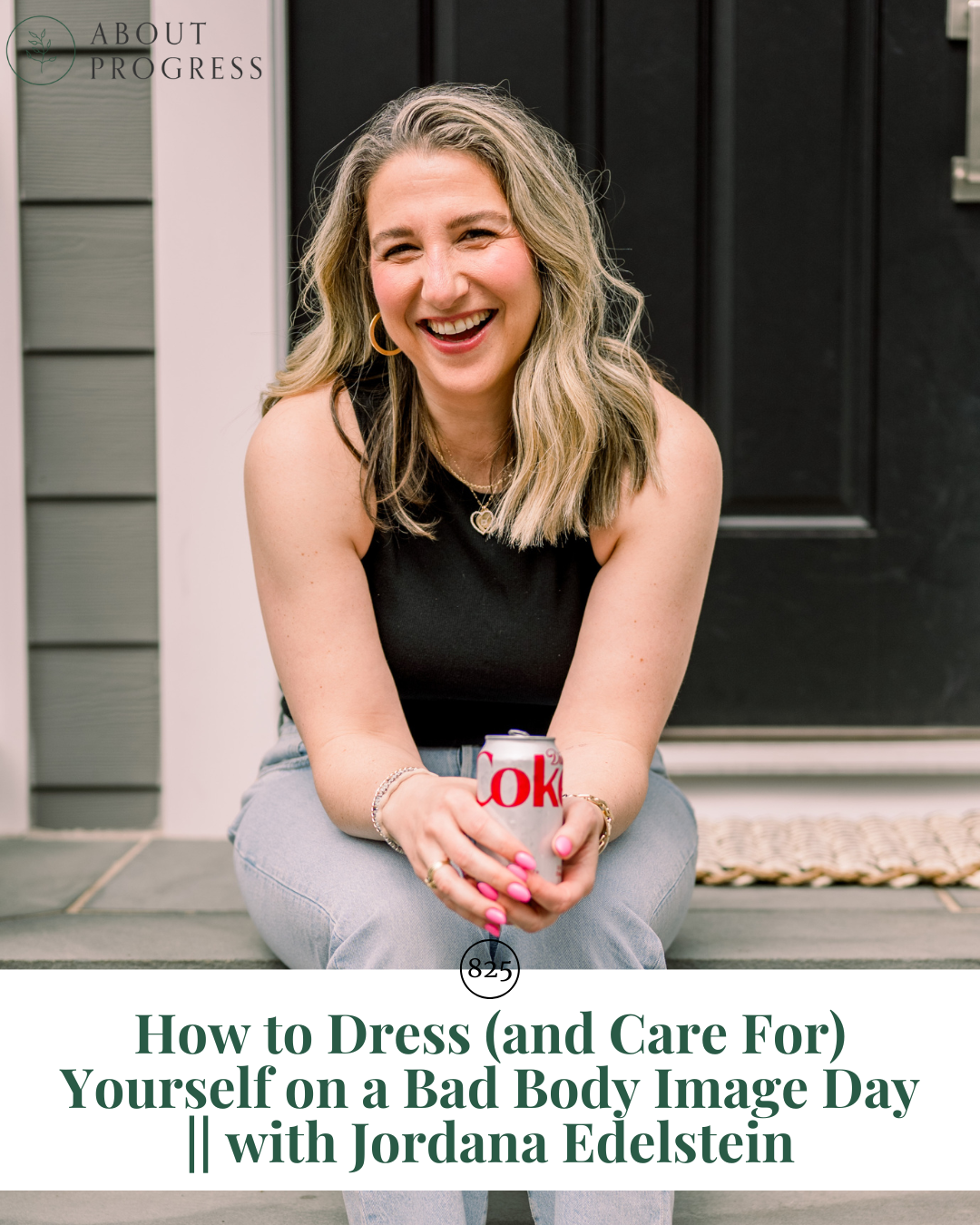
What if you don't have to love your body to feel good in it? In this episode, I sit down with body image and food relationship coach Jordana Edelstein to talk about how to stop waiting for your body to change before you start living well in it. Jordana shares her deeply personal journey through two decades of body shame and disordered eating, and how she now helps women break the cycle of chasing a "smaller body" that was never going to be the answer.
We dig into why how you feel about your body and what you eat are inextricably linked, why getting dressed with intention is one of the most powerful tools you have on a bad body image day, and how to quiet the inner mean girl who shows up when you're standing in your closet picking apart everything you see. If you've ever had a bad body image day -- and who hasn't -- this conversation will give you surprisingly simple, practical ways to care for yourself, starting with what you put on tomorrow morning.
Jordana's website, Instagram
Order Sticky Habits (now available as an audiobook!)
Leave a review of the book
Get the Archive Pass for the More for Moms Conference with $10-off code: “LISTENER.”
Join the Supporters Club to keep About Progress around for good.
Watch this episode on Youtube
Go to Quince for free shipping on your order and 365-day returns at https://www.quince.com/monica.
About a few other things...
Sign up for the Go Getter Newsletter to get Progress Pointers in your inbox every Wednesday.
You can listen to the episode below, on Apple Podcasts, or on your favorite podcast app. If you like the show please share it, subscribe, and leave a review!
SHOW NOTES
Access exclusive supporter benefits
Leave a rating and review for the podcast!
Lend your voice and experience + be featured on the show HERE
Join Monica on Facebook and Instagram
Songs Credit: Pleasant Pictures Music Club
TRANSCRIPT
Jordana Edelstein: [00:00:00] we have this belief that when I'm smaller, I will feel better about myself, and we're all just chasing someone else, but the person that we're chasing is actually thinking the same thing that we are, and they're chasing someone else
We're never gonna get there.
We're chasing something that doesn't exist
Monica Packer: Hi, this is Monica Packer, and you're listening to About Progress, where we are about progress made practical
What if you don't have to love your body to feel good in it and to take care of it? This may not seem like that hard of a question, but for many women, it's way more complicated to put into action, especially if you are having a bad body image day
just think about those mornings when you are standing in your closet trying to figure out what to wear, and you're frustrated with how your clothes fit. You're picking apart your appearance, and you're just [00:01:00] wishing your body looked different.
Those are the sorts of mornings where our frustration follows us the rest of the day, and it doesn't have to be that way
A bad body image day doesn't have to be a bad everything day. In fact, on the days where you don't feel great about your body, it should be the sort of days where you take care of it even more. And I'm not talking about the ways we typically think. Today, I am talking with body image and food relationship coach Jordana Edelstein about how to stop waiting for your body to change before you start feeling good in it.
she's sharing surprisingly simple ways to get dressed, quiet your inner mean girl, and care for yourself, especially on the days where you don't love what you see in the mirror. Because, and we're gonna say it again, You don't have to love the way your body looks to feel better in it and to treat it with care
Jordana Edelstein is a board certified health [00:02:00] and wellness coach for women who are exhausted from years of dieting, second guessing every bite of food that goes into their mouths, and endlessly trying to fix their bodies. drawing from her expertise in behavior change and her own decades-long experience with disordered eating and negative body image, Jordana teaches women the skills to make food feel easy, build trust in themselves, and find their best weight without putting their lives on hold until their bodies change.
Jordana works with clients virtually all over the world and is also the host of The Diet Diaries podcast
While you're listening to this, if you think of a friend who struggles with bad body image, this is definitely worth a share with her. My conversation with Jordana is coming up after a quick break for our sponsors
Monica Packer: I have fantastic news for you on the book front. First, if you didn't hear, . My book, Sticky Habits, A Woman's Guide to Reclaim Happiness, Ditch [00:03:00] Perfectionism, and Create Habits at Last, was published September 8th of this fall. And now the audiobook is out too.
Since you are a podcast listener, I am sure you would love to listen to the book. And I have to tell you, I am incredibly proud of the audiobook. It thrilled me to hear just the other day from someone who was already nearly finished listening to the audiobook that she is loving it.
She told me, Monica, I have read countless books on habits. This is the best one by far. It's a 10 out of 10." I'm hearing from other listeners that listening to the audiobook has been a wonderful way to learn the material, to implement it, and also to have the friendly voice you are accustomed to hearing guide it all.
You can get the audiobook on Audible you can also check it out through your local library via apps like Hoopla or Libby. I'm also hearing Libro FM has it and Apple Books should as well soon. If you are an audiobook listener, or maybe this is your first time, I encourage you to check out Sticky [00:04:00] Habits via audio form.
And if you love to read too, of course, get the bright pink book that everyone is loving anywhere books are sold. You can go to stickyhabitsbook.com right now to check out all the major online retailers, including an independent bookstore, or reserve it from your local library today. Again, the book is Sticky Habits, Whether you listen or you read, get the book today
Monica Packer: Jordana Edelstein, welcome to About Progress
Jordana Edelstein: Thank you. I'm so happy to be here
Monica Packer: you've been doing such a great job on Instagram period, but I've been in particular loving the series where you're in your closet, you're getting dressed, you're talking about your choices while getting dressed. But more than that, you're talking about your own internal choices on how you're navigating that with your own body, and I was curious how that series came about for you
Jordana Edelstein: Over the past two years, I've spent a lot more time figuring out my own personal style
Monica Packer: Yeah
Jordana Edelstein: really investing that [00:05:00] time, energy, and attention into getting dressed. And so much of what I see around that on social media and on the internet are these finished outfits on sometimes a variety of body types, but it's the whole thing. It's not just the outfit, it's the shoes, it's the bag, it's the sunglasses, it's the coat. It's the whole thing put together, which always looks great. But guess what? I work from home in my, in my office attic, which I'm sitting in right now, and some days I don't- only leave the house to drive carpool. I'm not putting all that together. And I wanted to show people what it was like to get dressed in a body, A, that you don't always love how it looks, and B, when you're not putting together this whole outfit but you still wanna feel good, and you still wanna look good and feel great about yourself. Because one of the things I've discovered and that I talk about so much is that the most important days to get dressed are actually the ones when no one else is gonna see you, because then you're doing it for you. You're not doing it to, you know, wear a cute outfit so someone'll give you a compliment or so that you don't look like a hot mess or any of the [00:06:00] things we say about ourselves. You're doing it because of how it makes you feel, and that has been such a huge shift, and I want women to see that and understand that, but then also see, like, the behind the scenes of what that's like. So in my closet I'll try things on. I won't like it. I'll try something else. I'm in my bra and underwear on the internet, which still blows my mind coming from someone who was deeply ashamed of her body for about two decades. , So really it's about sharing this kind of behind-the-scenes process that has been so transformational for me and helping women see how they can do that for themselves.
Monica Packer: Well, you, you spoke to your own history. I mean, two decades of being deeply ashamed. That's not a small thing to say. That's not a light thing to say.
Jordana Edelstein: Yeah
Monica Packer: I want to know how that led to your own passion then to help women with their body image, and also how they're treating their bodies too. I mean,
You're a body image coach and a food relationship coach, and how those two things really do go together so deeply.
So, [00:07:00] so tell us why that is and how your own history has informed the connection you're trying to make, uh, um, with the people that you work with
Jordana Edelstein: Yep. Yeah. So if you think back to, and when I say you, everyone who's listening, to the first time that you felt bad about your body, for whatever reason that it was, and then you think about what you were going to do to try and fix that feeling, I would bet a large sum of money it was about food. It was about changing something that you were going to eat, because we've been taught that if I eat less, I will be smaller, right?
We've
been taught that basically since birth. It's the, it's the air we breathe. So how you feel about how you look, and what you eat are inextricably linked. And for me, I grew up as a child in, in very average-sized body, and then once I became a teen, somehow could not, not immediately, but wore a size 10, 12. And I grew up, I'm 46, so I'm, was a teenager of the '90s, [00:08:00] um, and most of my friends at that time were much smaller than me. I was the larger friend, not because I was overweight or anything. I was just, I just had a larger... I'm tall, I just had a, a larger build. But I already felt bad about it. I already looked and could see and compare myself and felt this isn't right.
There's a problem with this. And then I went to college and, uh, I have PCOS, and that was when my onset of PCOS came on, so I had a huge weight gain my freshman year, not a freshman 15. It was well beyond that. And, where I went to school, and it was just culturally very different, and there were just not a lot of the girls who, again, looked like me. So how am I gonna fix this? What am I gonna do about it? I'm gonna, I'm gonna diet. I'm gonna restrict. I'm gonna cut out carbs. I'm gonna cut out sugar. I'm gonna do all the things that we've all done so that I can look a certain way, except the gap there was that my body was never going to look the way that I wanted it to look, which were the [00:09:00] bodies that I've only ever seen represented to me.
Monica Packer: Mm-hmm
Jordana Edelstein: And so then I'm chasing something that actually I'm never gonna get. But I didn't realize that until many years later. it just became this sort of vicious cycle of constantly going after something that I would never find, feeling frustrated, blaming myself, giving up, saying, you know, "Screw it, I'm gonna, I'm gonna start over," and always, always blaming my body for being that problem
Monica Packer: That blame I think is so shared. All of us have shared experiences in blaming
Jordana Edelstein: हम्म,
Monica Packer: our bodies, our- ourselves as well for not being able to control our bodies and make them be exactly the way we are supposed to have them look, in quotes, you know. Um, and that blame I think in many ways informs beliefs that we carry about our body, about our own value related to them.
Also, how we'll feel about them
Jordana Edelstein: Mm-hmm.
Monica Packer: [00:10:00] if and when they can look a certain way. If and when I can feel good in my clothes, then I'll feel good about my body. If and when I can feel good in my body, then I'll feel good in my clothes.
Jordana Edelstein: Mm-hmm.
Monica Packer: Let's dissect that belief because that's something I see you do so well. That seems part of what you had to unlearn.
Jordana Edelstein: Yeah. It's like you just said it so well. It's like the, if I do this, then I'll feel this way. When I do this, then I'll feel this way. It's this future, like dangling carrot that we're grasping for, grasping for that's always feels just out of reach that we never get there. And the problem is that we rely on that to feel good about ourselves,
and that's where the problem is.
We're relying on this thing that we can't actually grasp to feel good about ourselves, and then we're just living our lives in pursuit of that. so the work I did and the work I coach is about shifting that reliance and no longer relying on something that you can't control and relying on things you can control, like [00:11:00] the clothes you choose to put on your body every day, the way that you choose to respond to the inner mean girl inside of your head. The skills that you use to think about the food that you're eating, you know, outside of is this healthy or unhealthy or the, you know, the classic, "Oh, this is so good, this is so bad," whatever it is, learning different ways of thinking about that. those are all actions we can control, as soon as we start doing those things in any form, there's a shift because now there's no longer this reliance on this thing we can't control.
It's like, oh, I can put on an outfit that I love and feel great in actually feel great even if I don't love how my body looks, even if I am unhappy with the number that I saw on the scale this, this morning. And it feels sometimes like a leap for people because we're so used to relying on those things, and that's why we take it little bits at a time and start with really small actions, little tiny habits, , that we can slowly build on.
So you get that proof, you get that evidence of, oh yeah, when I take ten minutes in [00:12:00] the morning to put on an outfit that I really love, that I love, that fits, that's comfortable, that's kind of like my little framework for that, it actually does change how I interact with my kids, how I show up at work. I'm not snapping at my partner as much. You know, all these domino effects when we are not relying on something that we can't control.
Monica Packer: That's what we want to shift today. We want to shift that reliance. We want women to, as you so beautifully illustrated, we want them to be able to, even if they don't love the way their body looks, be happy with the clothes they have on the body
Jordana Edelstein: Mm-hmm
Monica Packer: and to, to feel good about their outfit. And I know that seems, quote-unquote, "superficial," but it is not.
And I, I would actually love for you to make a case for that, for the people who are like, "Is that superficial, though? Like, If, if I love my clothes, then I'll feel [00:13:00] better?"
Jordana Edelstein: Mhm
Monica Packer: practical sides to this that I wanna , walk through. But
Jordana Edelstein: Yeah, sure. So look, the reality is we all care about our appearance. We would all be lying to each other if we said that we didn't care about how we looked. That is part being human. But the thing is, there are so many aspects to our appearance, and the size and shape of our body is one of them. And there are so many other levers to pull independent of that. Clothing, hair,
Monica Packer: Yeah.
Jordana Edelstein: accessories, the way you smile, the way you carry yourself, your body language. There are so many pieces to this that we have control over. But again, we've learned that size and shape are the only things that matter.
Monica Packer: Yes. Mm-hmm
Jordana Edelstein: Um, and so I-- and I also think like a... I, I, I do like clothes.
I, I, I am sort of into fashion, but I'm not like a fashion person. But fashion has historically been a way that... an [00:14:00] art form of the way that people express themselves, right? makeup artistry, hairstyles, all of these things are forms of art and creativity. And so I think through that lens, I think that helps kind of, you know, reframe the, "Well, does it feel superficial?"
Well, no, these are our forms of expression. These are way we kind of communicate who we are, what we value, what's important to us. , You know, people just like there's colors and patterns and cuts and fits of things, and different people like different things because we have different opinions, because we have different lived experiences. , So I think there's some form of creative expression there that's so valuable, , that helps the-- I think can be a reframe for the, the, that superficiality piece where our brains tend to go
Monica Packer: I think it's even helpful to see it as a sh- you know, a tool to aid the shift that you said. Like, if we're trying to rely less on feeling good about our bodies in order to dress them the way that we would like,
Jordana Edelstein: Mm-hmm
Monica Packer: doing the reverse will help [00:15:00] a- you know, shift that reliance we're having on feeling good first.
Jordana Edelstein: Mm-hmm
Monica Packer: really important, and actually that's what I wanted to move into is let's imagine someone is having a, quote-unquote, bad body image day, a bad body day. We all have them. It doesn't matter what size you are. That's part of what, why we're trying to shift because there is not a correlation really.
Like, once you feel, once you look smaller, you're not always feeling better about your body.
Jordana Edelstein: A
Monica Packer: What, once you're stronger. I mean, how many people have lived that out
Jordana Edelstein: Yes.
Monica Packer: in one way or another? Okay
Jordana Edelstein: I mean, I think the, the perception is that once I look this way, once I hit this number on the scale, once I fit into X number size clothing, then I will love how I look. And it, it never comes true. I have
Monica Packer: Just never
Jordana Edelstein: women, so many clients in smaller bodies, and by smaller I mean a size two, size four, size six, who have the same internal struggles about how [00:16:00] they look as women in larger bodies.
Now, obviously, women in larger bodies are vastly underrepresented, and that's a whole other issue that's part of this. But we have this belief that when I'm smaller, I will feel better about myself, and we-we're kind of just chasing each other. But I've had women, I've had women comment and look at me and say, "Oh, I would kill to look the way that you look as a size 12."
And here I spent 20 years of my life
trying not to be a
size 12, trying to look like Jennifer Aniston. She was the person that I idolized and wanted to look like as a, as a child of the generation of Friends. and it, and it just proved to me that we're all just chasing someone else, but the person that we're chasing is actually thinking the same thing that we are, and they're chasing someone else
Monica Packer: Yes
Jordana Edelstein: We're never gonna get there.
There is no finish line. There's
Monica Packer: Yeah
Jordana Edelstein: that we're ever actually going to attain, not that we, not that we want this to be a trophy to begin with, but we're chasing something that doesn't [00:17:00] exist
Monica Packer: Mm-hmm.
Jordana Edelstein: Taught to do that
Monica Packer: Yeah, it's a false finish line.
it's
all a fallacy.
Jordana Edelstein: Yep
Monica Packer: okay. So with that, let's, let's have the cognitive, like, shifts there in mind, and we're approaching a day where we're like, "I really extra don't feel good about my body today." I would love for you to walk us through how they can move through that day when they're struggling with a bad body image, starting with getting dressed
Jordana Edelstein: Yeah
Monica Packer: and, and how you could help them do that
Jordana Edelstein: Yeah. what's so interesting is the tendency when we have a bod-ba-bad body image day, the tendency is to want to shrink, hide, put on kind of your, your baggiest, maybe yuckiest clothes.
Monica Packer: Mm-hmm
Jordana Edelstein: And the thing is, it's actually kind of the opposite that we need to do. Not that you need to put on your fanciest outfit, because this isn't about, like, wearing sweats can, can still fit with this. It's about the thoughtfulness and the, and the intention that you put [00:18:00] behind it, right? the language that you're using to talk to yourself when you do this. So if you wake up in the morning and you look in the mirror or you get on the scale or some-something happens, you do one of your body-checking actions that we all do,
Monica Packer: mhmmm。
Jordana Edelstein: are having a, "I feel crappy, I feel fat, I feel gross, I feel big," whatever it is kind of day, noticing the urge and the instincts to wanna cover it, to wanna hide it, the noise around food, where your brain goes, "I'm gonna, I'm gonna cut out this.
I'm gonna cut out carbs, I'm gonna cut out sugar, I'm gonna eat less, I'm gonna skip breakfast," there's gonna be a lot of noise around that. And then taking a breath and saying, "Oh yeah, there's my inner mean girl," and
noticing she's in your brain, 'cause she's in
there.
Monica Packer: Yeah
Jordana Edelstein: your inner mean girl, and then there's you. And what's so cool in there, and she's really good at her job, so good at bossing you around and telling you everything that's wrong with you. She's a pro at [00:19:00] it. She's been well trained over the course of your life. But then what you get to do as someone who's learning and practicing these skills, and as someone who wants to be able to show up and just feel good in her life, you get to respond back to her.
Typically, what we do is react. We react. We let-- we
listen to her. We let her push us around.
Monica Packer: Mm-hmm
Jordana Edelstein: cut out the food. We hide. We put on the, you know, the old gross clothes. We say, "Okay, I hear you. I know you're in there, but I'm gonna do this instead. I'm gonna go in, I'm gonna pick out an outfit that I love, that fits, that's comfortable." So I briefly mentioned this before, but I wanna talk about it here 'cause it's such an important skill
Monica Packer: yeah.
Jordana Edelstein: Directly to what you're saying.
Monica Packer: Mhm.
Jordana Edelstein: That little acronym, LFC, love, fits, comfortable, those are the three checkpoints you wanna think about when you're shopping, when you're getting dressed, when you're cleaning out your closet. And in no particular order, do I really love this thing? does it fit? And is it comfortable? It's like a little Venn diagram. ' Cause you take one of those away, and then what happens is your attention's going to your [00:20:00] body. You're tugging, you're adjusting, something's squeezing you. Your pants are tight, and you're thinking about that. Or you're like, "Ugh, this is kind of ugly. I don't like this. I don't look good. Are people looking at me?" And it just takes that body image noise, that body noise, and it it up.
Monica Packer: Hmm.
Jordana Edelstein: So that becomes a really helpful check-in. And you don't need a lot of clothes like that. You need just really a handful of things that you know you can turn to. And then when you do that, when you put on an outfit That, that you love, that fits, that's comfortable, going to shift things. Is it gonna make sunshine and rainbows appear out of the sky and make everything go away? No. But it's gonna turn that dimmer switch, right? 'Cause we're not flipping a switch.
It's gonna turn that dimmer just enough for you to be able to redirect your time, energy, and attention for the day to all the things that matter instead of being on your body. That would be the first big thing, but I'll take a breath and I'll pause there for a
Monica Packer: No, I, I, I am, I'm fascinated with this just because this feels more [00:21:00] in- inside out than outside in. A lot of times when we're getting dressed, we're thinking about how will other people perceive me?
Jordana Edelstein: Yep.
Monica Packer: does it look cute to them? Does it fit well in their eyes?
Jordana Edelstein: Yes
Monica Packer: what would they notice that's bad or weird about this outfit?
And instead it's the reverse. It's all internal
Jordana Edelstein: Yes. That brings up my least favorite word when it comes to getting dressed, which is flattering.
Because we so often say to ourselves, "Is this fl-" And it's everywhere. " Is
Monica Packer: Yes, it is
Jordana Edelstein: Flattering, I don't know what the definition is actually in the dictionary, but it has come to mean, does this make me look smaller?
Does
Monica Packer: Exactly.
Jordana Edelstein: right? That's what flattering means.
Monica Packer: Mm-hmm
Jordana Edelstein: so we look at every outfit through that lens instead of, do I love this? Does it fit? Is it comfortable? been following and reading a bunch of Substacks from a lot of stylists who are really into oversized looks, and they talk about how inherently, no, I guess it's not flattering, but I love this [00:22:00] look, and it feels so good, and I love the proportions.
And I
think thinking about proportions is really, really helpful. of our bodies, 'cause they're all different, meaning you might have longer legs and a shorter waist or vice versa. , And proportions of clothing, things that are, you know, bigger, smaller, a lot baggier, all these things. And I'm certainly not a fashion expert.
But to your point, starting to figure out when you look in the mirror, what feels good for you, instead of that mean girl saying, "That's not flattering. That's not flattering." Or this is flattering, but maybe it feels a little tight, or maybe I don't actually love It just maybe I think it looks flattering.
And then again, we're not-- ultimately not helpful
Parenting courses abound, but what if there was a course just for a mom to feel more like herself? To feel like she could reclaim her life as her own, to experience more happiness, to have supportive habits, to increase her [00:23:00] health, to improve her home life, and to have more hobbies.
Well, I have that for you. It is now the More for Moms conference ready for you in a course-like form, thanks to the archive pass. I've archived all of my 25 speakers from the general public, but you can get each of them with lifetime access With the special archive pass at aboutprogress.com/moreformoms.
For my listeners only, I have a special $10 off code as well. You can use the code listener at checkout. We just finished the live version of the conference, and I had countless women who participated who told me this is the best online conference they ever attended, and that they loved to listen to the material, especially on the go.
With the archive pass, you can not only watch all the videos like a self-paced course, pick and choose whichever ones you want to see the most. You can do the same by listening on a private ad-free podcast feed we have set up exclusively for those with the archive pass. Again, get $10 off now with the code listener at [00:24:00] aboutprogress.com/moreformoms.
If you're a mom, you deserve more
Monica Packer: When you first started to transition to looking more inward, to moving through you and just getting dressed from the inside out, , what did you do when your clothes, like, largely weren't reflecting those, those three pillars, I guess, like we could say?
Jordana Edelstein: It's a good question. It's so funny 'cause I take a picture of what I'm wearing every day. I've been doing that for several years, which I
Monica Packer: You, really?
Jordana Edelstein: Is a really helpful tool to
Monica Packer: Interesting. Yeah
Jordana Edelstein: it helps you start to remember what you love, what you
Monica Packer: Mhm, mhm
Jordana Edelstein: pictures have- pictures are not... anecdote.
I put on this outfit this morning. I looked in the mirror. I loved it. I took my picture and I looked at the picture. I'm like, " my boobs look huge and not in a good way."
Monica Packer: Oh
Jordana Edelstein: it was a huge 180 from I saw the mirror and
then I saw the picture. So [00:25:00] the pictures can definitely sometimes get us up in our heads, but it's really helpful to remember things that you loved and to kind of keep track of that and to see kind of how things fit together proportion-wise.
But, it was a lot of trial and error and I look back at photos and I'm like, " what was I thinking?" But at the time, I liked it and it felt good. it really helped me see where, where there were gaps in my wardrobe where I was, I think definitely buy a lot of things because I saw someone wearing it on Instagram and I'm like, "Oh, that looks cute.
That looks cute. That looks cute. I'll just buy it." And then it would come and I'd put it on. I'm like, "Well, it looks so cute on her. I'm gonna... I want it to look cute on me." And then I'd kind of blame myself that my body,
that I'm the problem when, no, that thing just wasn't made for me. So I think there's a big trial and error process.
There's experimentation.
Monica Packer: Mm-hmm
Jordana Edelstein: knowing that not gonna nail it every day. And love [00:26:00] sometimes is a strong word, meaning of the love fits comfortable.
Monica Packer: Mhm
Jordana Edelstein: just really liking it is good enough.
Monica Packer: yeah.
Jordana Edelstein: Um,
Monica Packer: OK
Jordana Edelstein: learned, I think this is one of the most helpful skills, when I would find myself talking myself into something,
Monica Packer: Mm.
Jordana Edelstein: either wearing it or even more so when I would buy something and try it on, if I'd heard that it was cool or I saw someone else wearing it and it looked great on them and I'd put it on and I'd be like, "Hmm, really like this," but I'd be like, "But it looks so cute on her.
But this is what everyone's wearing." And now as soon as I even hear that little voice where I'm trying to talk myself into something, I'm like, "No, it's, it's not right. It's wrong." And that took practice and
doing that, talking, talking myself into things less and less and spending less time doing that and choosing things where I was talking myself into them has also played a huge role in getting closer and closer to a place where my closet is now full of things [00:27:00] that I love, truly love. And when I find things that I don't, I'll put them in a bag for donation. I will constantly be editing
Monica Packer: I, I love that this truly is a process. I mean, 'cause a lot of women, that's that cycle of reliance that we talked about,
Jordana Edelstein: Mm-hmm.
Monica Packer: and also self-blame is part of it,
Jordana Edelstein: mhmm
Monica Packer: and dressing your body is part of it from the outside in. Like that, those patterns are so entrenched that it's going to be a process to challenge them as we're learning to get dressed from the inside out and make our closets reflect that.
Jordana Edelstein: Mm-hmm.
Monica Packer: Um, so I see how those two do go hand-in-hand, and both are processes that we have to work together, um, and play the long game. But I love hearing about how you are, are at that point where you mostly love what you have and you're, you know, curating in an ongoing way. So that's giving us a lot of like this is what we can [00:28:00] expect.
So now let's move back into this woman who's having a
bad body image day.
Jordana Edelstein: Yeah
Monica Packer: She's gotten dressed in an outfit that she loves, it fits, it's comfortable,
Jordana Edelstein: Mm-hmm.
Monica Packer: but she still has a full day ahead of her. So how would you recommend she continues to move through this kind of day?
Jordana Edelstein: Yeah. So knowing that you've, you've your foundation putting on this outfit, , and knowing that that doesn't mean the mean girl's gonna go away. She's probably still gonna show up. sometimes just being ready for that, knowing that she's gonna be there, talking about her as a person, and maybe that sounds a little woo-woo, but it really is true, right?
We have these, these voices inside of our head talking to us, and knowing that, A, we don't have to listen to them, and B, what they're saying is not the truth,
Monica Packer: Mhm
Jordana Edelstein: that apply to so much, not just body image,
Monica Packer: Exactly
Jordana Edelstein: especially around body image, it becomes really helpful. And again, it doesn't mean that she goes [00:29:00] away, but when you can say, "I, I don't have to listen to this.
I, I
Monica Packer: Yeah
Jordana Edelstein: gonna, I'm gonna choose to something else instead," and I can talk about what that is.
Just recognizing that just because you hear that doesn't mean it's the fact, doesn't mean it's a fact, doesn't mean that you have to follow through on it. I think especially, 'cause I haven't really spoken to food yet, and I think this is
Monica Packer: Mm-hmm
Jordana Edelstein: really where it comes into play because so often when we have a bad body image day,
I we want to fix it, and we react by changing what we're gonna eat
because it makes us feel, "Oh, if I eat less, if I take away this food, I'll be good. It will help me start to be smaller. It will help me feel better about my body It doesn't, right? Because the skills to feel better in your body are sep- related, but separate from what you're choosing to eat. so there's a skill around food that I use, another acronym, [00:30:00] I'm a big acronym person, um, called NSF, which stands for nutritious, satisfying, and filling.
Monica Packer: Yes, OK
Jordana Edelstein: check-in, right? And you mentioned this, you said this so well earlier, we're so used to using these external measures, validation, opinions to tell us what to do, and that could not be any truer than it is around food.
Monica Packer: Yes
Jordana Edelstein: starts to pull that more inward,
right? Do I have something nutritious on my plate? Is that a protein? Is it a veggie or a fruit or something of fiber, something that has some nutrition on it? Is it something that I'm gonna enjoy? That's the satisfaction piece,
because that is where we tend to go
Monica Packer: just eliminate that. Yeah.
Jordana Edelstein: Because
Monica Packer: or nothing with it.
Mm-hmm
Jordana Edelstein: yep. We've been taught that if it tastes good, can't be good for me, can't lose weight if
this tastes
Monica Packer: yeah.
Jordana Edelstein: Good,
Monica Packer: Mhm.
Jordana Edelstein: can't be healthy. But then what happens is when we spend our time eating food we don't like, that's what's turning up food noise. That's what's turning up cravings and leading to binges and plays a [00:31:00] role in emotional eating. So is this nutritious? Will I enjoy it? And is it filling,
Monica Packer: yeah
Jordana Edelstein: Is this gonna fill me up for four or five hours so that I'm not thinking about food or looking for a snack in, again in two hours? And using that every day, not just on bad body image days, on bad body image days, having that way to think about food, and again, respond to that mean girl who's gonna say, "Don't have bread at lunch. Don't have that cookie. Don't, you know, have that candy after dinner." This gives you structure. It gives you a way to respond back and a way to think about food versus just feeling like the only thing you can do is feel like you're at the mercy of this, this bossiness in your head
Monica Packer: Those, uh, parameters are really, really helpful. And again, that the shift is different inward out. What will feel good, what will taste good, what will help me feel satisfied and filled. , That's gonna be a big shift for a lot of women, and I can see how it will take [00:32:00] another process
of, of experimenting and figuring it out and, and knowing what does work for me to fit those three pillars.
Jordana Edelstein: Yeah
Monica Packer: , So with that, let's say they are taking this on. They have the foundation of still, you know, dressing themselves. It feels like an act of love, honestly. Feeding themselves, like
Jordana Edelstein: Yes
Monica Packer: also an act of love. I know that sounds really woo-woo too or cheesy
Jordana Edelstein: It doesn't. It is, that's truly what it
Monica Packer: It's kind of like you're caring for... I mean, and that's how I see, like, when I have a bad body image day is to be like, "It's my job to care for you.
Like, you're just, like, a hurt little person,
Jordana Edelstein: Mhm
Monica Packer: And everything you've described so far fits that bill
Jordana Edelstein: Yes, it is. It's very much about care of yourself and keeping yourself company. There's an author, um, named Geneen Roth who used that line in a book that she wrote, and it really stayed with me because we're so quick to kind of [00:33:00] abandon ourselves and walk away and
Monica Packer: Yes.
Jordana Edelstein: things.
Monica Packer: Uh-huh.
Jordana Edelstein: yourself company, staying with yourself, taking care of yourself, thinking about food in this way, thinking about getting dressed, because it makes you stay with your body even when you're uncomfortable, even when you don't like your body, 'cause I am, I am not the coach that's gonna tell you that you ever need to love how your body looks.
You don't. The place is we're working towards a place of neutrality.
Monica Packer: Hmm.
Jordana Edelstein: but to be able to s- to be able to stay with your body even when it's in a place that feels unfamiliar or hard or you don't like because there's been changes or whatever it is, that is such an act of love. It's, you know, because w- I'm a mom, you're a mom, everyone who's listening is a mom.
It's, it would be like staying with your kid when they're really struggling with something, right? You're not gonna walk away. You're not gonna abandon them. You're gonna help them through it. We're doing the same thing for ourselves. It's much [00:34:00] harder, much, much harder, but that's ultimately what it is.
Monica Packer: That's what, that's what you need.
Jordana Edelstein: Mm-hmm
Monica Packer: So y- with that kind of nurturing attitude in mind, as well as the awareness of the mean girl,
Jordana Edelstein: Mm-hmm.
Monica Packer: you said you had some other suggestions on what they can do to navigate the mean girl voice and how to do things differently. Um, so what would that look like as they're still moving throughout the day and those inner voices come back into play?
Jordana Edelstein: Yeah, I mean, it's gonna be a lot about noticing it,
right? It's a lot about noticing when that voice pops up, noticing that your instinct often gonna be to react,
Monica Packer: Mm-hmm
Jordana Edelstein: it's like when the doctor, when you were little, would tap your knee with a mallet, and it would straighten and bend, and it was [00:35:00] just automated, right?
Those thoughts are automatic. They are coming out. We can't control them, but then we choose how we get to respond. And sometimes it's gonna feel easier, and sometimes it's gonna feel harder. At first, it's gonna feel hard because this is brand new and because you haven't really been You've been paying attention to her, but more in this way that, like, that's the only thing that you know.
But now that there's this awareness of, oh, just because I hear that doesn't mean I have to listen to it, is so powerful. And the reality is it is practicing that, me, over and over and over and over and over again. And sometimes you're gonna do it, and it's gonna go great, and sometimes you're gonna do it, and it's gonna go terrible, and sometimes you're totally just gonna forget, or you're gonna choose not to do it, and that's okay. , Because it's about, we talked about this when you were on my podcast last week about what consistency is, right? And building up to doing this most of the time, not all the
Monica Packer: Yeah
Jordana Edelstein: for [00:36:00] perfection. 'Cause if you think about where you are right now and how often you're letting that mean girl boss you around, and if even with, like, two out of 10 times you were able to shift that, that will have a shift in your quality of life. So it is, it's throughout the day noticing that, having this framework, this structure around food because we're eating three times a day, so food is constantly coming up. We think about food, planning food, what am I gonna eat, almost more than any other life responsibility that
Monica Packer: true. Yeah
Jordana Edelstein: structure around that, um, it's, it's really kind of a c- there's, there's other skills around, around movement, around what we call, like, body functionality, right?
What does your body do for you? Those are amazing, wonderful skills. They're kind of a little bit bigger picture and maybe a little
Monica Packer: Yeah
Jordana Edelstein: less, like, in the moment, I'm
having kind of a bad body image day.
Monica Packer: Mm-hmm
Jordana Edelstein: certainly your [00:37:00] body in some way can be helpful. Now, your brain may go to, oh, yeah, let me go burn some calories, and then that's again, that's where the response comes in, the, the, the talking back to that voice and saying, "No, I'm doing this because it feels good, because I am capable of going for this walk or going to this dance class or going to lift weights, and I can that experience in my body." - And then there's pieces of that over time which are totally related but separate skills kind of from what we were talking about that can also then help to turn down that mean girl voice over time, right? The way you're thinking about exercise, the things that you're doing, , the way you feel in your body when you're, you know, when you're engaging in those things and kind of those conversations that you're having internally
Monica Packer: Mm-hmm. Yeah, one of the things that I have learned in, in so many facets is that noticing is half the battle.
Jordana Edelstein: Mhm
Monica Packer: of the battle. And I think if all I can do is notice, that's good enough. [00:38:00] Even if I'm just tracking the mea-
the,
the way I'm being mean to myself or, like, the fear that's coming up or the anxiety, even if I notice it, it's gonna be a lot better than letting it just do its thing and take full control.
Uh, even the awareness of it helps.
Jordana Edelstein: Yes
Monica Packer: in the, the realm of doing something differently, like responding, um, I would, I'd be curious to hear more of your advice there. I had just two things that have helped me with this as, as, as an example, and I'd love to hear more about the doing something differently.
Like, i- in terms of responding, I mean, one of the things that I challenge myself not to do is to keep looking in the mirror.
Jordana Edelstein: Mm-hmm.
Monica Packer: come back to the mirror and just keep looking throughout the day,
like, to just check,
Jordana Edelstein: Mm-hmm.
Monica Packer: Like, once I've got that solid foundation on and I felt good about what I was wearing,
Jordana Edelstein: Yep.
Monica Packer: let it be,
Jordana Edelstein: Yes.
Monica Packer: continuing to body check or look at the outfit again or anything like that.
Jordana Edelstein: Yep
Monica Packer: Okay, that's one s- uh, example I had. And another I thought of is to still not restrict. I mean, we wanna [00:39:00] feed ourselves, right? But I, I've learned, like, yes, I am gonna intentionally eat this sweet treat
Jordana Edelstein: Mm-hmm
Monica Packer: and not restrict myself and be here and, like,
Jordana Edelstein: Mhm
Monica Packer: love this and be grateful for the experience 'cause,
Jordana Edelstein: Yes.
Monica Packer: restriction is a form of punishment for me specifically, and I'm sure for a lot of women.
So
Jordana Edelstein: Yes
Monica Packer: in the realm of doing things different,
Jordana Edelstein: Mm-hmm
Monica Packer: you know, as they're noticing and they're gonna respond differently,
Jordana Edelstein: Mm-hmm
Monica Packer: other kind of micro kinda suggestions like that that can help them as they continue to move throughout their day?
Jordana Edelstein: Yeah. love, I love both of those that, that you talked about because being aware of those body checking behaviors is really, really helpful. For some women, it's looking in the mirror. For some women, it's adjusting their clothing or touching certain parts of their body, feeling what those things feel like,
Monica Packer: yeah
Jordana Edelstein: doing certain body movements to notice how, like, the body proximity feels.
There's lots of things that, that we do and just, again, noticing that we do that and what does it feel like to delay that a little [00:40:00] bit or
to try not to do it maybe one time versus, you know, immediately going to that. So I just wanted to respond specifically to that. But really helpful tool that can really be used in the moment, kind of these small changes, is when that noise is getting loud or when you're feeling really uncomfortable and it feels like there's some Mack truck running through your brain about everything, about everything that's wrong with what you look like, doing a very short, small what I'll call, like, a somatic practice, and by that I mean, like, of the body, which can be some type of breathing or some type of body scan, right?
And you can choose whatever feels better because it starts to just shift your attention away from everything that's happening and more to just something in your body. Um, and again, these are tools that apply to so many s- so
Monica Packer: yeah
Jordana Edelstein: areas of life. Um, and it can be as simple as three slow breaths in and out. It could be as simple as doing a quick body scan, something like [00:41:00] just feeling your feet on the ground. Like, just even saying this, I just adjusted the position of my feet. Feel
my feet. Feel my, you know, my tush sitting on my chair. Feel my arms resting on my, armrest because it just gives you something else to pay attention to, , and it reminds you that there's something else going on besides what's happening in your head and besides what your body looks like. Again, these are skills. They take practice, and we've talked about so many things. So as, as, as people are listening, choosing one of these things,
Monica Packer: Yeah.
Jordana Edelstein: right,
Monica Packer: Yes
Jordana Edelstein: that versus feeling like, " I have to do all these things?" No, no, no. No, definitely not. I mean, you're the-- that's like you're the pro at teaching people about that.
But one of them to practice and seeing how does this work for me? How does this not work for me? You know, what helped, what didn't? And then, you know, adjusting and, um, iterating from there
Monica Packer: Yeah, but you just keep coming back to everything is a process. It takes practice. So be patient with that and know that ultimately [00:42:00] things will shift. And, and I'd actually like to, to end with that, to hear what is different for you now than 20 years of, of being deeply ashamed about your body? What's different now for you?
Jordana Edelstein: So much.
Monica Packer: Mm-hmm
Jordana Edelstein: there's two things that really come to mind. One is that I can... I have a 14-year-old son, and so there's lots of foods that he likes to eat. There's this place called Dave's Hot Chicken. It's like a fried
Monica Packer: yes.
Jordana Edelstein: fry place. I'm not sure if it's, if it's out on the West Coast,
Monica Packer: I've heard of it though, yeah
Jordana Edelstein: um, we go there for, like, lunch dates, and I can go, and I can order a meal there, and I can eat it, and I can enjoy it not a thought in my brain other than how, how good does this taste how awesome is this that I'm having lunch with my teenage kid? When years ago, the thought of eating food like that would have consumed me because how is that gonna impact my body? I took a bite of fried chicken, my [00:43:00] pants instantly feel tight.
Monica Packer: Hmm.
Jordana Edelstein: is one piece, which is a huge, I mean, a, a change in quality of life that I can't even put all the words to. then the other piece is to be able to go shopping and get dressed and not walk out in tears because something didn't fit. Because I know now if something doesn't fit, that thing just wasn't for me. I'll go find something else that is for me. Instead of feeling like that piece of clothing was dictating or telling me what kind of person I was, I just go and find something that I, that I love, that fits and c- that's comfortable.
And if it takes me 10 stores and 10 shopping trips or 10 online orders, so be it. and that is also a huge quality of life shift because the time, energy, and attention that went to all of that takes away from all other parts of your life. And it's-- That is-- The freedom of that is something I will never take for granted
Monica Packer: You know, even one of those [00:44:00] things would be completely transformative for most women listening. Both of them would change their lives.
Jordana Edelstein: Mm-hmm
Monica Packer: it doesn't sound like, I don't know, Nobel Prize worthy,
you
in terms of,
like, aspirations. But just to think of how much freedom in mind and in body, and what else you can do with your mind and your body when you are freed from the chains of both of those things,
Jordana Edelstein: Yes
Monica Packer: it is life-changing.
And it means we can also change more and around us, and do more. And not, like, in, in a productivity way, just more in a fulfilling, like, live your life way.
Jordana Edelstein: Yes.
Monica Packer: I'm so grateful for you illustrating that for us today, too, um, giving us ways that we can really make these micro changes, even just beginning with how we get dressed for the day.
This was so beautiful. Jordana, I wanna welcome people to check out your podcast and Instagram. Will you name both of them for them, as well as where else they should go if they wanna connect more with you?
Jordana Edelstein: Yes. [00:45:00] So I have a podcast, it's called The Diet Diaries. , It's been around for six years, so there are lots and lots of episodes to listen to. It's amazing resource. Uh, most of the episodes are under 30 minutes, and there's lots of actionable tips in there. So it's, it's coaching, and so you can really take away things that you can go work on immediately, and it's available wherever you get your podcasts. , I am on Instagram every day in Stories, in the feed, and it is just my first and last name, Jordana Edelstein. And I love DM-ing, I love hearing from people, I love having conversations. So those are really the two places, , where you can learn more and we can connect.
Monica Packer: I have so enjoyed tagging along with you and learning more from you. Like, we're both grandma podcasters, I
guess,
Jordana Edelstein: we
Monica Packer: which is really fun, yeah. Yeah, so, so fun to have a fellow grandma here. But Jordan, I've learned so much from you today,
Jordana Edelstein: Yep
Monica Packer: is, what is one small way listeners can take action on what they learned today?
Jordana Edelstein: I would say honestly right now, whatever you're wearing listening to this right now, use that [00:46:00] LFC check-in
and see where you're at. You might have all three, you might have none, and that's okay. It just starts to, to your point, bring about that quick awareness, that noticing. Where am I at? What's one thing that I can change now for tomorrow when I get dressed that might change how I feel about myself and how I move through the day
Monica Packer: Beautiful. Yeah, I found myself doing that was, as you were talking through it. So yeah, it's so helpful. Well, Jordana, I am, again, so appreciative of your time, your expertise, and what you were able to share for us today, so thank you
Jordana Edelstein: Thank you so much for having me
Monica Packer: Well done. Yeah, so I'll be able to bloop
I hope this episode gave you the hug and kick in the pants you need to grow. I'll now share my progress pointers. These are the notes I take so you don't have to, and those on my newsletter get them in an expanded graphic form each week. You can sign up at aboutprogress.com/newsletter.[00:47:00]
Number one, you don't have to love your body to take good care of it and to feel better in it. Number two, on bad body image days, dress for how you want to feel, not how you want to look.
Number three, remember, your inner critic isn't always telling the truth. Number four, Don't punish your body with food restrictions on these days. Instead, aim for meals that are nutritious, satisfying, and filling. And number five, small changes can create big shifts in your body image, whether it's checking the mirror less or taking a few calming breaths or choosing an outfit you love.
Practicing one small change consistently can help you build a healthier relationship with your body. That last tidbit there was an example of an expanded version of what I share, just that very last takeaway. And again, you can get our weekly takeaways at About Progress. And again, you can get access to our weekly progress pointers by signing up for the newsletter at aboutprogress.com/newsletter.
I'm lucky to have been a guest on Jordana's podcast as well. Again, it's The Diet Diaries, [00:48:00] and we talk a lot about why women must do habits differently and how it applies so much to the ways that we care for our bodies. So be sure to check out The Diet Diaries after you listen to this episode.
This podcast is listener supported. Members of the Supporters Club make my work with About Progress free and available to all without having to put About Progress behind a paywall or add a significant number of ads. In return, supporters get access to three levels of exclusive benefits from more time to more content with me, including my private premium ad-free podcast, More Personal, where I get to lean into the personal side of personal development.
Please join the Supporters Club now by going to aboutprogress.com/support. And you can always support the show for free. The best way to do that right now is to leave a rating and review on Apple Podcasts. And doing so also automatically enters you to the Favorite Things giveaway that I'm going to start raffling off prizes for very soon.
I'm pulling from any reviews left on Apple Podcasts in twenty twenty-six, and that's the only [00:49:00] way you can enter the giveaway as well. So again, leave a rating and review on Apple Podcasts. Thank you so much for listening. Now go and do something with what you learned today.
Monica Packer: you're a body image coach and a nutrition coach.
Jordana Edelstein: Mm-hmm.
Monica Packer: Did I get that right, by the way, nutrition coach? I can-
Jordana Edelstein: started using the term food relationship coach, but nutrition coach also works great
Monica Packer: Ooh, I like that better actually.
Jordana Edelstein: I know, I do too.
Monica Packer: Yeah, okay, so let me just say that again. I'll delete that part out.
Jordana Edelstein: Okay