
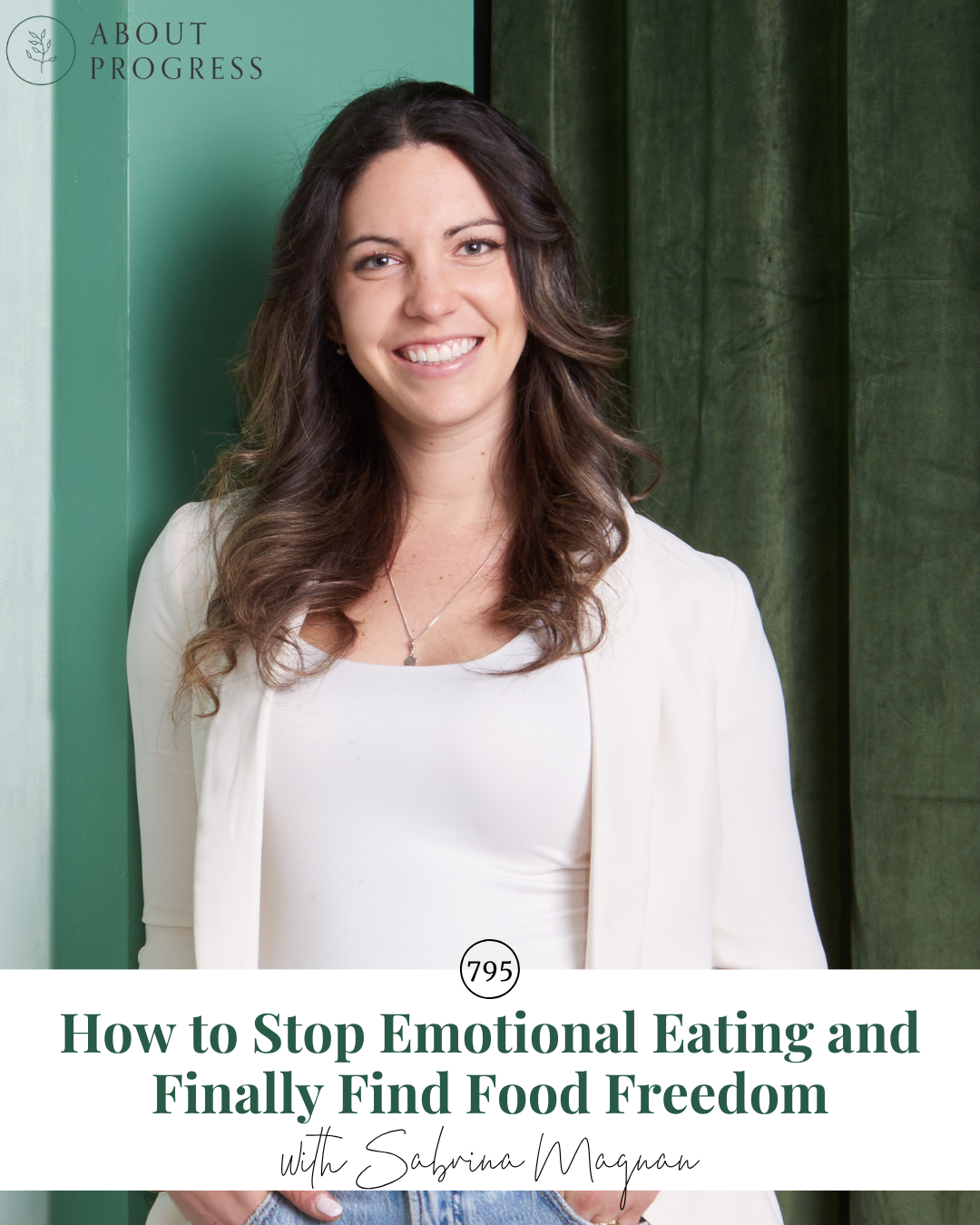
How to Stop Emotional Eating and Finally Find Food Freedom || with Sabrina Magnan
Jun 22, 2026
I recently had the opportunity to dive deep into the world of emotional eating and food freedom with Sabrina Magnan. As someone who battled eating disorders and the pervasive influence of food on my life, this conversation resonated profoundly. Sabrina shared her personal journey from synchronized swimming to food freedom, revealing how much our eating patterns are tied to emotions and control. Her insights on the deeper purpose food serves and the steps to rebuild a healthy relationship with it were incredibly eye-opening. Sabrina's approach emphasizes compassion, curiosity, and the need for internal change over external willpower. By addressing disordered eating patterns and fostering self-trust, Sabrina's method offers a roadmap to reclaiming your life from food obsession. This episode reinforced the belief that healing from these ingrained patterns is possible and deeply transformative.
Sabrina's workshop, Instagram, website
Complementary episodes: Interview with Alyssa Blask Campbell on the nervous systems; Interview with Dr. Anna Packard, eating disorder therapist on healing your relationship with your body; Solo episode on the N’s of Numbing Out
Preorder Sticky Habits book today!
Join the Book Launch Committee for behind-the-scenes and first peeks at all things book.
Join the Supporters Club to keep About Progress around for good.
Get 50% off last year’s More for Moms All-Access Pass with code LISTENER at checkout.
About a few other things...
Sign up for the Go Getter Newsletter to get Progress Pointers in your inbox every Wednesday.
You can listen to the episode below, on Apple Podcasts, or on your favorite podcast app. If you like the show please share it, subscribe, and leave a review!
SHOW NOTES
Access exclusive supporter benefits
Book Launch Committee
Leave a rating and review for the podcast!
Lend your voice and experience + be featured on the show HERE
Join Monica on Facebook and Instagram
Songs Credit: Pleasant Pictures Music Club
Get your AquaTru water purifier with the discount code “MONICA.” Get your teen Knix with code “PROGRESS.” Go to Quince for free shipping on your order and 365-day returns.
TRANSCRIPT
Sabrina: relationship with food, and especially if we're talking about binging and emotional eating, those things are serving a purpose in your life.
we don't turn to food because we're undisciplined. We turn to food because it's doing something for us that we haven't learned how to do for ourselves.
Monica Packer: Hi, this is Monica Packer, and you're listening to About Progress, where we are about progress made practical When I started the podcast, I was a newly minted 30-year-old who was breaking free from the shackles of perfectionism.
As part of that, I started to get a lot more honest about my own struggles, and that included finally sharing about how I was 10 years into recovering from eating disorders, issues that I had not openly shared with anyone in the last 10 years since I had been diagnosed. And yes, that includes my husband, who only vaguely understood that I had eating disorders.
Why was I so quiet for so long about something that was incredibly challenging? I was ashamed my long health issues with food started thanks to years of intense restriction, but grew into disordered patterns that included uncontrollable binging and purging.
Essentially, I thought I had the wrong eating disorder, that I was basically a failed anorexic
At the root of my issues were early patterns of emotional eating, roots I know many of us share and feel at a loss to help. These are the roots that have been some of the most challenging for me to personally understand and shift away from.
In the almost 800 episodes that I've aired on this show, we have talked about intuitive eating, healing our relationship with food and our bodies, and more, but I've never specifically covered emotional eating as a topic. It's not only a very touchy one, it's often very misunderstood, and one that tends to be covered with a healthy dose of misinformation.
If you have ever wondered, "Why can't I just get a handle on this when it comes to food?" You're not alone. Whether it's stress eating after a long day, feeling out of control around certain foods, or constantly thinking about what you should or shouldn't eat, many women assume the answer to emotional eating is more discipline.
But what if it's not about willpower at all? In this conversation, food freedom coach Sabrina Magnan shares her own journey through restriction, binge eating, and food obsession, and she explains why our eating patterns are often serving a deeper purpose. Together, we explore the hidden role of stress, emotions, nervous system regulation, and self-trust play into our relationship with food.
If food takes up more space in your mind than you would like, this episode might help you understand why and show you a gentler way forward. Sabrina Magnan is a women's relationship with food coach and the host of Live Unrestricted, a podcast dedicated to helping women break free from food obsession and reclaim their lives
Through her signature program, Food Freedom Academy, women who've spent decades consumed by dieting and food noise finally find the freedom they stopped believing was possible. Sabrina is on a mission to change how the world understands why women struggle with food and what it actually takes to heal I did wanna be clear before we go into the interview that while this is an episode on emotional eating, there can be crossover into disordered eating and eating disorders, and that is a past both Sabrina and I share, so we do talk on that, too.
There are listeners who could find the content of this episode triggering, so be sure to proceed with care. And if you're not sure if your emotional eating has moved into the disordered territory, it never hurts to get answers and support from professionals like a doctor, dietician, a therapist, and I recommend you do so.
Because as informative as this episode will be, it shouldn't replace professional or medical help, especially if your emotional eating feels more pervasive in nature. As you're listening, you may think of someone in your life who has expressed frustration with their relationship with food. You can send this episode to them as you're listening, not as a way to fix their issues, but more as a let's do this together and to help them understand that it doesn't come down to willpower.
That interview is coming up after a quick break for our sponsors
Monica Packer: I am never two feet away from my water bottle, and that's because I'm always parched. And what helps me maintain my habit of drinking water is not only does it taste good, but I know it is clean too. Did you know that three out of four US homes have toxic chemicals in their tap water?
Even though contaminated water looks clear, it could put you at risk for health concerns from fatigue, hormone disruption to cognitive decline. Surprisingly, standard fridge and pitcher filters do little to remove most contaminants, and bottled water contains microplastics.
So what's the solution? Get AquaTru like my family. It's a countertop water purifier, tested and certified to remove eighty-four contaminants, including chlorine, lead, forever chemicals, and microplastics. Its patentint four-stage reverse osmosis system goes way beyond ordinary filters. For pure, healthy water you can trust, no plumbing, no installation. We have had ours for a long while, and when we first got it, my kids were enthralled with it, mostly because of the taste.
I replaced the filters many times, and it's so easy to do. It also looks pretty good on the counter. Join ninety-eight percent of customers who say their drinking water is cleaner, safer, and healthier.
Go to aquatru.com now for twenty percent off your purifier using promo code Monica. AquaTru even comes with a thirty-day best-tasting water guarantee. That's A-Q-U-A-T-R-U y- A-Q-U-A-T-R-U.com, promo code M-O-N-I-C-A, aquatru.com.
Monica Packer: Last year I embarked on creating the largest project of my entire career as a podcaster, an exclusive online conference for moms who are ready for more. Thousands of moms enrolled to the More for Moms conference, and I had some of the best conversations I've ever recorded with 25 world-class speakers, helping women access more in their happiness, habits, health, home, and hobbies.
As I now prepare for round two of this conference for this coming fall, you now have the opportunity to access year one's content with the special archive pass and now at a special discount. Imagine a year's worth of About Progress interviews, but all in one place, serving one clear purpose with zero ads and a private podcast to boot.
You can watch on video or read the transcripts as well if that's what you prefer. Speaker sessions range from super deep to extremely practical, with each one being tailor-designed for any busy mom who has that inkling for more. You can now get 50% off a recently discounted price of 2025's archive by using the code listener at checkout at aboutprogress.com/moreformoms.
That new lower price breaks it all down to just ninety-four cents per speaker session.
Again, use the code LISTENER for 50% off the archive pass of 2025's content by going to aboutprogress.com/moreformoms before this content is archived this August
Monica Packer: Sabrina Magnan, welcome to About Progress.
Sabrina: Thank you so much for having me.
Monica Packer: I'm really eager to discuss our topic today. One, because it is so prevalent, but also so hidden, so shame-driven. It's emotional eating, can lean into binge eating, um, and just how to learn to find foot- food freedom, which I think can, can be almost like a miraculous, like, a never gonna happen kind of goal for a lot of women listening, regardless of where they are in that spectrum, um, of eating.
So I w- actually wanted to begin, though, with your own history, as I'm sure it's, it's super important to how your work has, um, evolved and what you help women work through. So tell us a bit about your own history with food, eating, food freedom.
Sabrina: Yeah. so many women who end up doing this work to help people in the same way that you have, you have a personal history of knowing how deep and how complicated this issue is, and I, um, I grew up as a synchronized swimmer. I was
Monica Packer: Wow.
Sabrina: swimmer uh, eight years,
And it's a sport, I know that you were a dancer, so you would know that it's a sport that is focused on perfection and looking a certain way, and your worth is just subtly attached to how long your legs are or how small your legs are. And so- I always felt like I was too big, and I didn't have a thigh gap or a six-pack. And so when I retired from the sport at 16,
remember thinking that the worst thing that could possibly happen is for me to gain weight, because my weight has so long been linked to how worthy or how successful I was. And so I went from training 25 hours a week to not
training at all. And so I started I started tracking my food. I started thinking, "Well, if I
wanna be able to maintain a healthy weight,
then I have to spend two hours at the gym, and running, and doing all of these
things that f- felt really miserable at the time. And I
need to count my calories, and I need to... Everything has to
be low calorie, low carb, sugar-free." And my relationship with food, like, evolved over time because I, I went through a couple of years where it was deep binging, where
I would do, quote-unquote, well all day, and I would be the healthy person, and I would say no to the pizzas. And in front of other people, I would eat super well. And then at night when my parents would go to bed, would binge on anything that I could get my hands on.
And it was either nights or it was weekends. And it felt like such a huge failure for someone who saw herself as successful, who did well in school, who did well in sports, and it was like, "W- why can't I have the same
discipline that I have in these other areas of my life with food? And the more out of control I felt, the more I tried to rein in
Monica Packer: Yeah.
Sabrina: back in control. And it's like that Chinese finger trap,
where the more you try to pull yourself out of it, the m- the deeper you get into it. then I went to university, and it was the first time I was living away
from home, and I felt... I was, I was not in my home city. I felt ungrounded. And so
food became this way to feel a sense of control. I remember I got my Fitbit Which can be a great thing for some people, but for
me it was like, "Okay, well now I can track everything into MyFitnessPal, and I can also track every single calorie that I burn." it became almost this, like, competition within myself because I
noticed that, okay, well, when I, when I move more and I eat less, I lose weight, and I
get compliments about it.
Monica Packer: Yeah
Sabrina: I would, you know... I, I wouldn't describe my family as-
fatphobic, but in a way
knew by the comments that my
parents made about other people's bodies
Monica Packer: 嗯
Sabrina: being in a bigger body was seen as something that was really negative, that it
meant you were lazy or that
you just didn't know how to take care of yourself. so I can now know this, looking back on it, that it was a protection mechanism of, well, if I can show people that I've got-- I
know how to take care of myself, that I'm healthy, that I'm disciplined, and I get these compliments as I'm doing it, it like, it's fuel to the fire. And
I remember hit my
rock bottom when I was at my sister's baby shower and she was having, this was my first niece that I was ever having, and I binged the entire time.
Monica Packer: Hmm ... at the buffet table, and I just, I couldn't stop myself. I just kept going back for a second plate and a third plate. And then eventually, I won't go into details, but I made myself
Sabrina: sick because I was so full and uncomfortable. And there's a picture of my sister opening her presents, and I'm sitting right next to her, and
I'm on my phone, and I know that I was putting everything I had binged on into MyFitnessPal
Monica Packer: Oh.
Sabrina: to try to make myself feel better of like, "Okay, maybe it wasn't that bad.
Maybe the damage I
did here wasn't that bad." And I remember sitting in my, in my
parents' basement that night, and I, I just had this moment of like, "What am I doing here?" I
was the, the smallest I
had ever
been at that point. I had an eating disorder, and I did not
know it. And I... my hair was thinning out. I was cold all of the
time. I was 30 pounds underweight. But I thought, "This is, this is what health is.
And if I just, if I just
hit a certain weight, then I
will feel a certain way. I will feel happy. I will feel
confident. I will feel loved." And that was my thought process. The entire time I was doing this, that was my
thought process. But then I got to that point where I was at the
smallest I had ever been, and it was like this
wake-up call of, "I'm, I'm not feeling those things.
I'm actually
feeling the most miserable I have ever felt, and the most anxious and the least happy and the most isolated." it was like the first time that I actually started questioning, what am I doing all of this for?
Like, I thought that it was gonna make me feel a certain way, and it's, it's not And long story short,
I, I ended up going to Italy that summer to work as an au pair,
Monica Packer: Hmm.
Sabrina: um, which
is like a live-in nanny for a family, and you teach them English. And I did that because I just, I needed to break out of my
funk. I needed
something that was going to terrify me, and it did.
Like, I remember when I told people I was going to Italy, they were like,
"You know you're gonna have to eat carbs there. You know you're gonna have to eat cheese there. You're gonna gain so much weight there." And for someone who
has a hidden
eating disorder, that is, like, that sticks with you. But I knew I had always wanted to go to Italy, and I knew if I
s- I stop myself from going because I'm scared of gaining weight, I'm, going to do this for the rest of my life.
I'm going to stop myself from living my life
Monica Packer: Hmm ... of my relationship with food and my
Sabrina: body. ended up going, and I experienced, like, I
really think that that trip was, like, put
on my path for a reason I got to experience what a healthy relationship with food looks like. Because in Italy, they don't talk about calories.
They don't spend hours at the gym. Food is
not something to control or to feel guilty about. It's revered. It's celebrated. It's connection. People eat slowly. People don't talk
about burning off the gelato. And it was, like, a, a contrast from the way I was living. I realized, oh,
if I eat more, and if I allow myself to
eat the foods, and if there's not this guilt and this shame, and I can actually start listening to myself, I feel better than I have in years.
And so that trip really planted the seed of,
okay, something, something is h- is here. Like, there's something seriously
wrong about my relationship with food, and I want to go home, and I want to learn more about
how to overcome this for real so that I can maintain
some of those things that I started seeing in Italy. that's really what sent me on
this trajectory of becoming obsessed with everything there is to know about
your relationship with food and eating disorders and binging and food obsession. And, um, that's why I, I got certified as a coach and I started doing this because once I healed, I was like, it, changed my
life in a way that I can't even explain, and I knew that so many people were also going through it
but didn't have the right tools or resources to heal it the right way
Monica Packer: Thank you for sharing your story. It's really incredible to me that witnessing food freedom Is what shook you up in a good way
Sabrina: Mm-hmm.
Monica Packer: and helped you see like, this doesn't, this isn't how it has to be, and it can be different, and here's what I actually want.
We, we miss that a lot, I think especially in the US, we don't tend to witness that kind of freedom with food and having a healthy relationship with food. It's just so around us. And I also wanted to tie that into something else I think we often don't fully understand, and I think it is emotional eating and even binge eating.
Sabrina: Mm-hmm.
Monica Packer: are so many things we just automatically assume about people who do that, including ourselves, and that creates a lot of shame. Um, things like undisciplined, lazy, those are some of the things you brought up. I know I felt the same as someone who's dealt with these things myself. Like, I'm just not...
What's wrong with me? Like, why am I not disciplined enough? Why can't I just control it? Why can't I just think through it differently? What do you think a lot of women w- would be surprised to know about unhealthy relationships with food that lead to those kind of patterns?
Sabrina: Yeah. I think the biggest thing that I would want people to understand is that relationship with food, and especially if we're talking about binging and emotional eating, those things are serving a purpose in your life.
And we don't turn to food because we're undisciplined. We turn to food because it's doing something for us that we haven't learned how to do for ourselves. So I mentioned that my eating disorder evolved over time. There was a period of binging, and there was a period of, on the other extreme, which was restriction. But it all comes down to the same thing, which is I was using food as a way to change my internal state. I was feeling... If I didn't know how to sit with uncomfortable emotions, because in my family, we didn't talk about emotions. My dad, I still have never seen him cry. I've never s- heard him say the words, "I'm feeling" anything. so I had never learned how to handle those uncomfortable emotions of anxiety or lack of control or boredom and loneliness. And so when I would feel those things, I had learned, well, when I turn to food, that goes away. your nervous system is always trying to help you survive.
And if you have learned that those emotions are dangerous or they shouldn't be there, or you haven't learned that you can handle discomfort, you're gonna wanna run away from them And it's, it's actually a survival mechanisms. It's not because there's something broken in you. And the more you repeat the pattern of, "I'm feeling this discomfort, and I do this outside behavior, and it makes it better," even if it's temporarily, even if after that you are met with so much shame and so much guilt and regret, nervous system is going to learn this pattern of food makes this feeling go away. then it stops being something that you consciously do. It happens unconsciously. It becomes a protection mechanism. And that's why so many people describe binging as like, "It feels like I'm no longer in the driver's seat. It feels like I, I am in the pantry. I'm already grabbing something out of the bag, and I haven't consciously made that decision." Because at that point, it's that 95% of your subconscious mind that is driving your daily actions and your behaviors. And willpower, it lives in that of your conscious mind. So it's like if you're fighting these deeply rooted patterns of protection with your conscious mind and you're trying to think your way out of it, course you feel frustrated. Of course it feels like you start the day off and your willpower is high and you're like, "Today's gonna be a different day. Today's gonna be a good day." But then as the day goes on, your capacity decreases, stress increases. You have to make decisions. And so that's when that autopilot starts to kick in, and then you fall back into patterns that feel safe and that feel familiar to you.
Monica Packer: Yeah, I know these patterns really well. I mean, you talked about being diagnosed with an eating disorder. I, I too was, but one of the things that was hard for me in the beginning was at, at first they didn't tell me I was officially diagnosed, so I just thought I have, like a discipline or lazy problem, or I was just emotional eating or binge eating.
I didn't realize I had a binge eating disorder or eating disorders. It was more than just one, and having it validated was really helpful. But I wanna speak to the women who are like, "But I haven't been diagnosed with like an eating disorder." Like it's not like an eating disorder. One, maybe it is, but also two, it doesn't really matter.
Sabrina: Modern
Monica Packer: Like y- it s- while it's important to get real help if it is for sure at that level, yes. Even if you just feel like you have an unhealthy relationship with food or you get stuck in these patterns, regardless of how intensive they are, all-consuming, you know, to the disorder level, it's still something To, to validate as a problem.
Sabrina: Mm-hmm.
Monica Packer: And I just wanted to get your feedback on that for the people who are like, "But maybe it isn't actually a problem. Maybe it's, like, just a me problem still. Like, I still think maybe it's just a me thing."
Sabrina: There is, there is never a time, and I've said this to so many people, I have never met someone who it's just a you problem, you're just born with it. eating, eating issues, they run on a spectrum, and you've got on one side of it, you've got the eating disorders, but then in the middle is where we talk about disordered eating. And people kind of get that
mixed up, but disordered eating is still when you feel like food takes up way too much space in your life. It is creating these negative consequences in how you feel, in your anxiety, in your guilt, in your self-worth. When you start attaching your worth to food and your body, it's affecting your relationships. That, say, it's time to get support in your relationship with food when it's negatively impacting your life
Monica Packer: Yeah.
Sabrina: any way. Because we have this belief, especially as women, that, "Well, I should-- I did this for so long, I should just be able to figure this out on my own." And I, when I was in university, I would book an appointment with a therapist on those nights where I would, like, binge so hard that I, I realized like, "Okay, this is a real problem.
I need to get help." I would, like, panic, book an appointment for the therapist, and then the day of, I would talk myself out of it, and I'd be like, "It's not that bad. I can figure this out. I don't need support," and then I would cancel it. And I would do that over and
over and over again. And I truly think that deep down, this, this voice that tells us that it's just a you problem, you can figure this out, it's going to go away, is just a protection mechanisms from your ego to not have to look at what is underneath
Monica Packer: Okay.
issues
with food Yeah, and I, I... You know, I'm glad you brought the spectrum there, and that's what I was trying to get at. Like, there is the disordered... Like, eating disorders, like, get clinical help for sure. But those patterns started way back on another end of the spectrum and they grow in intensity and con- you know, in consistency, um, that create that.
But regardless of where you are, know that these are patterns that you'll need to work with.
Sabrina: Yeah
Monica Packer: let's talk about that. How can they begin to work on these patterns if they know that it's not just about willpower, it's not just down to their own goodness and grit,
Sabrina: Mm-hmm.
Monica Packer: like there are deeper things at play here, it's serving a purpose.
How can they begin to work through interrupting those patterns and changing them regardless of where they are on the spectrum?
You are not bad at habits. You've just been using methods designed for men. My first book will be published this fall. It's called Sticky Habits: A Woman's Guide to Reclaim Happiness, Ditch Perfectionism, and Create Habits That Last. It's set to release September 8th, but you can pre-order the book right now for three special pre-order bonuses, from a listening companion guide that took me hours and hours to create to a free pass to my online course, Finding Me, and our exclusive virtual launch party on September 8th with some special guests, This book is not about doing more. It's about building habits that survive real life, creating routines that flex instead of break, letting go of perfectionism that keeps you quitting, and learning how to keep promises to yourself.
and that's even on the hard days. In a world of self-help that too easily ignores the invisible labor women carry, that changes everything, because women must do habits differently. Sticky Habits will teach you how. Please pre-order the book now and check out the special pre-order bonuses again by going to stickyhabitsbook.com.
That's linked for you in the show notes. I am so thrilled for this book to be out in the world. It is several years in the making, and I know it will change so much for you. Again, go to stickyhabitsbook.com to pre-order the book now
Sabrina: Yeah. So what I can do is I can kinda take you through the five phases of
Monica Packer: That'd be great?
Sabrina: clients through so that they can have an understanding of what that process will actually look like. Um, the first phase is always discovery and alignment. And so you cannot heal something that you don't know it's there, right?
We have to bring awareness to what is food doing for you. The question is: are you afraid would happen if you no longer could binge, you no longer could use food emotionally, or on the other side of the spectrum, you no longer restricted and obsessed over every calorie? What would be left? And that's where you might
start noticing, I've heard this from clients before, like, know who I am when I'm not obsessing over food. don't know what I would think about," or, "I would have to sit with such uncomfortable emotions. I would have to confront parts of my life that haven't been working,
whether it's my job, my relationship, or that feels out of alignment, that feels off. I would have to confront it instead of distracting myself."
Because at the end of the day, like food is a very convenient distraction from things that we don't wanna look at. So the first piece is to get really honest with yourself about what might food be doing for you.
Monica Packer: Mm-hmm there's so many... Everyone's different. Everyone has a unique blueprint to their relationship with food, and for some people, it's going to be
Sabrina: it's protecting them from being isolated from their family. If there's a
part of them that
believes that being in a smaller body, restricting, which often
leads to binging, is keeping them as someone who's accepted in their family,
then to no longer do those behaviors feels
like death because isolation as a human feels like death. And so, of course, it feels like I know that this isn't good for me. I know that this
is creating these negative impacts in my life. But if in your body not doing those things anymore feels like death, we will protect ourselves over thriving every day of the week.
Monica Packer: Yeah
Sabrina: that first phase is
really about, I always say, get curious instead of critical Hmm Whenever I
notice that there's like, I'm
working on a goal, I'm working on a goal in my business, as you would know, like sometimes your goals are bigger than you and they trigger a lot of fear and self-doubt and
anxiety, and we consciously want the
goal, but then there's a part of us
that is terrified of it. and people don't pay attention enough
to that part of us that's terrified.
of no longer binging, of having freedom. So it's like, let's look at that part of us with compassion and curiosity of like, what are you afraid is gonna happen if you no longer can binge or you no longer restrict? Or if you allow your body to
get into the body that feels healthy for you?
What are you afraid
is gonna happen? And really follow that thread because it's going to give you so much clarity on what it's protecting you from.
Monica Packer: I know my answer way back when would've been like, "I'm afraid I'll get fat," you know, if I leave these patterns of restriction and binging behind. Um, but that was a surface level fear,
Sabrina: Yeah.
Monica Packer: right? So I love that you're really encouraging us to get more curious. Well, what would be rad about that?
Sabrina: Mm-hmm.
Monica Packer: What would be wrong about that?
What are you afraid of? Um, even just that I think is an important... I mean, that's everything. Uh, so I love that first phase. What's the next phase?
Sabrina: So the next phase is about rebuilding body connection and trust.
Monica Packer: Okay.
Sabrina: so many women are living in survival mode without even realizing it.
Monica Packer: Mm-hmm.
Sabrina: They're living in chronic fight or flight,
Monica Packer: Yeah.
Sabrina: dysregulation.
And so you're living in chronic dysregulation, everything feels like a threat. Everything feels dangerous. Because in, in survival mode, you're always looking around at what could potentially hurt me and threaten my survival. And so it is really hard to do any of that higher level thinking of changing your thoughts, of sitting with your emotions, if ultimately you're just trying to get through the day.
And so the second phase is about making sure that your physical needs are being met. You can listen to what your body is asking you,
whether it's if you're chronically sleep-deprived, or you're not eating enough food, or when you're hungry, you're telling yourself, "I'll just drink a coffee instead." And your needs, your body's needs are not being met. It is so hard to do any of that higher level thinking. So it's in this phase that we really teach our clients how to listen to the signals of their body,
Monica Packer: Yeah.
Sabrina: prioritize self-care, like the foundational. We're not talking about taking a bubble bath here. We're talking about are you getting enough sleep? Do you have any kind of boundaries? Do you have any time for yourself? Are you eating consistently and enough? That, and are you able to honor the signals of your body when it's asked, "I've had enough. I'm good. I don't need more"? needs to happen because ultimately, if you wanna become someone just feels normal around food, then you can't do it by listening to external noise. have to learn how to listen to yourself, your intuition, your instincts, and trust those signals.
Monica Packer: Mm-hmm. Yeah, you are helping me piece together a lot of why recovery was so difficult for me for a long time, and how it would've been difficult even if I had started years earlier before it was a bonafide eating disorder because of that disconnection piece.
Sabrina: Hmm
Monica Packer: And that's something I had to learn on my own, I think largely.
I had great therapists, but it was more about my thoughts,
Sabrina: Mm-hmm.
Monica Packer: and I had to learn to do that, and that's really what helped the healing in dramatic, more dramatic ways, I'd say. So I-- Yeah. Again, you're just making, making connections for me that I wish I had made a long time ago, but I can see now were really pivotal.
Sabrina: Mm-hmm. What's the third phase?
So the third phase is developing emotional regulation. once
your body has the foundational pieces to feel safe enough, then that's when you're able to build the capacity to handle those emotions. You're able to look at all of these different energies that get stuck in your body of fear or anxiety around gaining weight, around not restricting, around sitting with your emotions. Because if you don't feel like, we, we were talking about this before, if you don't feel like you can trust yourself to handle stress or handle boredom
or handle loneliness, then you don't feel like you can let go of those behaviors that are keeping those things in check. And so this is where I, I talk a lot about learning about. your nervous system. What does it feel like when you are dysregulated, when you're in fight or flight? How can you
notice when you're starting to get into that phase? Because if, if we don't learn how to bring internal safety, if we don't learn how to regulate our emotions, our nervous system
in a way
that is
grounded and actually helpful in the long term, instead of just using a buffer like food, then you're not gonna learn how to
change your internal state yourself, and you're gonna keep needing something that's external. So whether it's food, what we're seeing now is people are going on GLP-1s,
And they're not doing this work to
learn how to regulate that discomfort and those emotions on their own. So it's like playing Whac-A-Mole. Well, now you're not using food, but you're being consumed by your anxiety because now it has nowhere to go. Or you're using your phone now because the anxiety needs an outlet, and you don't know how to release it on your own, so you're turning to something else. So it's about learning how to regulate those states and how to bring yourself back to safety because ultimately, that's what it's about. When you're turning to binging or you're you're turning to your phone or you're turning to binge-watch TV, it's because your body's like, "This doesn't-- The way I feel right now doesn't feel safe.
It doesn't feel good, and so give me something outside of me that's going to make me feel
better right now." And so when you have those tools that you know
how to change your internal state by yourself or through other people, co-regulation, through ways that are healthier for you and that are actually going to serve you in the long run, then what happens is you build a life where you no longer need food It's not about I'm just gonna stop binging, I'm gonna stop restricting.
It's how can I
build the internal skills so that I don't even need food anymore?
Monica Packer: We've, we've had, uh, quite a few episodes on that, one in particular, and it's also another multi-leveled skill set.
Um, but, but I, I think again, it's another vital step to this.
You're, again, making more connections for me. So, um, I'll reference a couple in the, in the episode for them, but I do wanna make sure we get to the other two phases as well. So tell us about those.
Sabrina: Yeah, so phase four is about rewiring your mind. now that you have a body that feels safe enough to think clearly, because anyone who's ever been in fight or flight or in survival mode knows that you're not thinking about the long term. You're not able to think clearly in that state, and that's why, like, I think that talk therapy is so helpful. But if your body is consumed with anxiety, then you're not gonna be able to actually change your beliefs and change your
Monica Packer: Yeah.
Sabrina: in the most efficient way. And so it is important because so many of our thought patterns are deeply wired in our brain. So that's why it comes in phase four, is now you have the capacity to challenge the beliefs that you've created about food, about your body, about exercise, about your family, that you can wire in more helpful, more positive, more empowering beliefs that are going to serve a healthier relationship with food and your body.
Monica Packer: Mm. Okay. And yet that's where we often are told to start.
Sabrina: Yeah.
Monica Packer: Yeah, so it's not neglecting this as a, a real vital part of the recovery and, and, and, and forming your own healthy relationship with food, but it's saying, let's, let's do this when you actually have the, the capacity to do it and the other skill sets needed.
Okay. And then what's your fifth and final phase?
Sabrina: And then the fifth phase is called cementing. And cementing means now that you have established this healthy foundation with your mind, with your body, with your emotions, now you have the capacity to expand to, okay Well, if I wanna prioritize my wellbeing, my physical wellbeing, my emotional wellbeing, then you get to expand to if you wanted to change your nutrition habits in a healthy way, if you wanted to move more, if you wanted to establish meditation or journaling or all of these self-care habits, you can do it from a healthy place. You're no longer doing it from restriction, fear, punishment, I need to move my body in order to fix myself or in order to feel good. Now you're approaching these habits from a place of genuine love and self-care. And when you're establishing these habits, and I know that you know- you're so good at habits, when you're establishing it in a way that is progressive and that is sustainable and that goes at the speed that you need to go, then you're creating a life that is
yours. You're creating a life that you're not afraid that when life gets stressful, when you go through a loss, every- all of the work that you've done is gonna fall apart. You have so much self-trust and so many of the skills that you need that these are just part of your new normal, and that is how food freedom becomes your new normal.
Monica Packer: I was just going to ask you to describe what's on the other side. Like, what is food freedom? I think you just said it. It's creating a life that is yours because it's not owned by these patterns or the, by the fears related to the patterns.
Is there anything else you would add to that on what, what are they aiming for?
Why does this work matter?
Sabrina: Because it clears up your brain space and your energy to focus on things that matter to you. When food is no longer this thing that takes up 95% of your brain space, and it's just something that you can eat and move on, you can listen to your body, you don't have to feel guilty for having a donut, and these healthy habits come naturally to you, then you have this tremendous release of energy to focus on whether it's building a business or becoming a parent or
Monica Packer: volunteering
Sabrina: whatever matters to you and your life's purpose, you get to discover that. because when food is so and it's so heavy, it literally does not allow you to tap into that.
Monica Packer: Yeah.
Sabrina: why I find it important.
Monica Packer: I mean, truly life-changing. That's definitely not hyperbole. That's what this is. It's getting your life back.
Sabrina: Yeah
Monica Packer: This has been so instructive, um, Sabrina, but also revolutionary in a way, but also without it being so foreign that it feels impossible. I appreciate how deep and practical you were able to get with us today.
Where should listeners go if they want to learn more from you?
Sabrina: Yeah, they can come find me on my podcast, , the Live Unrestricted podcast, where I dive deep into all of this, and you were such a beautiful guest on it. , And then they can also find me on Instagram at sabrinamagnanhealth. Send me a DM. And, um, my program is called Food Freedom Academy, where you get to work with me, an amazing community of women, and, I guide you every step of the way because this is not something that is easy to do alone.
Monica Packer: Yeah. And, and that's- One other final takeaway I think I would give to people is you don't have to do this alone. So, so find out more, learn more, get support, get help that you need to. Um, let's end with what is one final way listeners can take action on what they learned today?
Sabrina: Hmm. I... This is gonna be the first thing that's coming up for me, and people are gonna not like it, is, um, some time in silence. Spend some time allowing yourself to just get curious and, and putting the phone away, putting the distractions away, and, and allow yourself to see what comes up when, when you just spend time in silence. Every time I've been bored, it has been so uncomfortable, but it has showed me so many things that I was not able to see when I was constantly just filling my head with noise.
And so spending some time in silence is, is so simple, and I think that's why people don't do it, because it's going to require a certain level of discomfort.
Monica Packer: that's a good push for me today. Yeah thank you for your expertise and for your heart in sharing it in ways that I think are gonna help a lot of women today. So I really appreciate the time that you took with us at About Progress. Thank you.
Sabrina: Thank you so much for having me. This was so fun.
Monica Packer: Oh, You did an amazing job. I'm gonna, um, reference
I hope this episode gave you the hug and kick in the pants you need to grow. I'll now share the progress pointers. These are the notes that I take so you don't have to, and those on my newsletter get them in a graphic form each week. You can sign up at aboutprogress.com/newsletter, and what I share here is a shortened version of what will be in that graphic.
Number one, discover what food is really doing for you. Number two, rebuild trust with your body. Number three, develop emotional regulation skills. Four, challenge the beliefs driving your behaviors. And five, create habits from self-care, not self-punishment
Your Do Something challenge for this week is a unique one. It's to sit in some silence and kind of challenge the discomfort that that brings up for you. I thought that was a great Do Something challenge I have linked to a couple episodes in the show notes that will help you with the nervous system regulation piece, as well as healing your relationship with food and your body and intuitive eating.
There have been so many powerful conversations we've had on the show about all those topics, so be sure to check out the show notes for that, as well as how you can connect with Sabrina. And I should be on her show soon as well, if I'm not already aired, so be sure to check out her podcast, Live Unrestricted, as well.
This podcast is listener supported. Members of the Supporters Club make my work with About Progress free and available to all without having to add in a paywall or additional ads. The Supporters Club in return, members get access to three levels of exclusive benefits from more time to more content with me.
Coming up, I'm gonna be taking a break from new episodes in July, but I will still be airing new episodes on More Personal, my private premium ad-free podcast for two levels of the Supporters Club. So if you miss new material, be sure to join the club by going to aboutprogress.com/support, and thank you for doing so.
You can always support the show for free. Simply share this episode with someone who you know would love to hear about it, even if it's someone who hasn't understood your own relationship with food. Maybe they haven't struggled, and it's someone close to you, and you just wanna help them understand what it feels like in your body and the support that you would need moving forward to really heal.
Copy the link of this episode and text it to them right now. Thank you so much for listening. Now, go and do something with what you learned today
Monica Packer: can you make sure I'm saying your name right?
Sabrina Magnan?
Sabrina: Yeah, so there's two ways to pronounce it. So you
Monica Packer: King
Sabrina: which is usually the easier way. It's a French name,
Monica Packer: Ooh.
Sabrina: it's Magnan.
Monica Packer: Magnon? Mag...
Sabrina: but it's so hard to pronounce for someone who doesn't speak French, so
Monica Packer: I do not speak French.
Sabrina: is perfect.
Monica Packer: Okay. I'm so sorry. I will be that, that, like, very American
Sabrina: Oh my God, it's
Monica Packer: person.
Sabrina: It's so fine.
Monica Packer: Magnon? See, like, I can't even try.
Sabrina: I know. That's why I'm usually... Like, people, people are like, "I'll get it. I'll get the proper one." And I'm like, "I think it's better off to just say Magnin,
because
Monica Packer: If...
Sabrina: works as well."
Monica Packer: Okay.
Sabrina: Yeah
Monica Packer: if you don't care, then I'll probably stick to Magnan.
Sabrina: I don't.
Monica Packer: Okay. 'Cause I will butcher that. I will. Okay. Um, okay. Then I'll welcome you to the show, and we'll, and we'll, we'll dive right in.
Sabrina: Beautiful.