
The Martyr Mom Trap: How Knowing Your Core Values Sets You Free as a Mother|| with Rachel Nielson
Jul 27, 2026
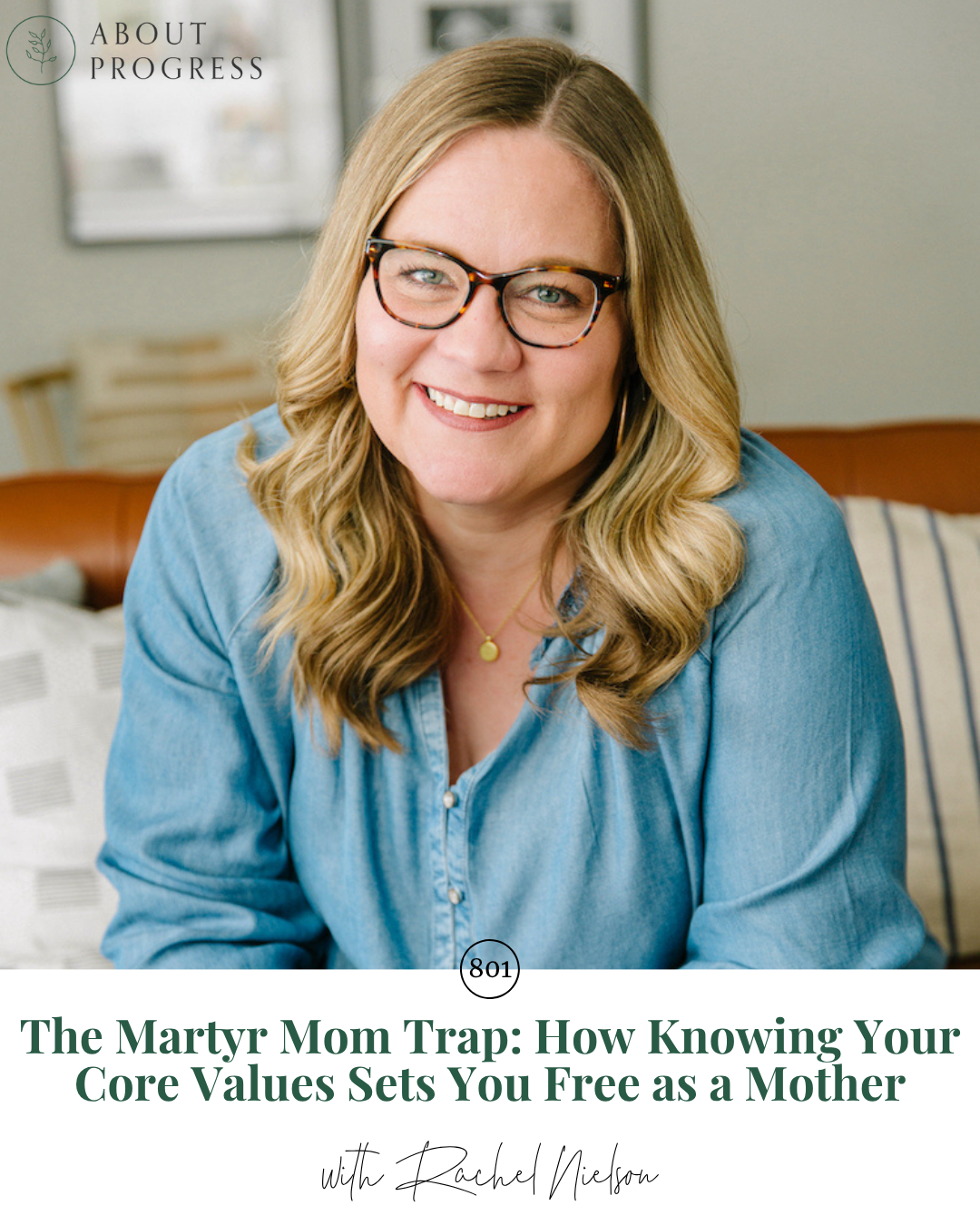
In this episode, I chat with Rachel Nielson about the all-too-familiar feeling of being a 'martyr mom' and how it can leave us feeling drained and disconnected. We dive into the idea of embracing our personal values as a way to get out of that rut and truly enjoy motherhood. Rachel shares some fantastic tips on how to figure out what matters most to you and how to bring those values into your life in small but powerful ways. You'll hear us talk about why understanding and owning our choices is key to escaping martyrdom and finding fulfillment both for ourselves and our families. Whether it's planning fun adventures or just playing your favorite music during car rides, these little acts of self-care can make a big difference. Tune in to learn how to live a more authentic and joyful life as a mom!
Complementary episodes: How to Be the Mom You WANT to Be, Not Who You Think You SHOULD Be
Rachel’s IG, PODCAST, and WEBSITE
Get 50% off last year’s More for Moms Archive Pass with code LISTENER at checkout.
Preorder Sticky Habits book today!
Join the Book Launch Committee for behind-the-scenes and first peeks at all things book.
Join the Supporters Club to keep About Progress around for good.
About a few other things...
Sign up for the Go Getter Newsletter to get Progress Pointers in your inbox every Wednesday.
You can listen to the episode below, on Apple Podcasts, or on your favorite podcast app. If you like the show please share it, subscribe, and leave a review!
SHOW NOTES
Access exclusive supporter benefits
Book Launch Committee
Leave a rating and review for the podcast!
Lend your voice and experience + be featured on the show HERE
Join Monica on Facebook and Instagram
Songs Credit: Pleasant Pictures Music Club
Go to Quince for free shipping on your order and 365-day returns. Get your teen Knix with code “PROGRESS.”
TRANSCRIPT
Monica Packer: [00:00:00] Hi, this is Monica Packer. This month on About Progress, I am bringing you a special series featuring select sessions from last year's More for Moms conference.
Last year, I created this online gathering for mothers who know there's more available to them than simply surviving motherhood. More happiness, more fulfillment, more fun, more progress. This conference was born out of my own experience as a mom who loved her family deeply, but still found herself feeling depleted, at times resentful, and almost always disconnected from herself.
I have learned that when moms have more in their lives, they have more to give, not because they're sacrificing less, but because they're finally including themselves on their own priority lists. Right now, this month, I am neck deep in prepping for the second round of the More for Moms conference.
So throughout July, I am sharing a small handful of some of my very favorite sessions from last year's conference right here on the About Progress feed. [00:01:00] These conversations are practical and encouraging. They are deeply relevant for any mom who wants to feel more like herself again. If you love what you hear, good news.
You can get instant access to all twenty-five conference sessions from twenty twenty-five's conference with the archive pass. This includes lifetime access to all videos, transcripts, a private podcast feed, and speaker resources, all ad-free, which will be different than what you hear this month as I have to put ads on any episode that airs on the About Progress feed.
You can use the code LISTENER right now at checkout at aboutprogress.com/moreformoms to get an additional fifty percent off the archive pass, which has already been discounted, so it now amounts to ninety-four cents for each speaker session. The content for 2025's conference is set to officially archive this August so I can make room for 2026 content.
Use the code LISTENER at checkout at aboutprogress.com/moreformoms to get lifetime access [00:02:00] to all of the soon-to-be archived content. I cannot wait for the new content coming your way, and also hope that you'll take advantage of this discount and get that archive pass.
It's linked for you in the show notes. \ It's now time to share one of my favorite sessions from last year's content. That speaker session is coming up after a quick break for our sponsors
Monica Packer: You are not bad at habits. You've just been using methods designed for men. My first book will be published this fall. It's called Sticky Habits: A Woman's Guide to Reclaim Happiness, Ditch Perfectionism, and Create Habits That Last. It's set to release September 8th, but you can pre-order the book right now for three special pre-order bonuses, from a listening companion guide that took me hours and hours to create to a free pass to my online course, Finding Me, and our exclusive virtual launch party on September 8th with some special guests, This book is not about doing more. It's about [00:03:00] building habits that survive real life, creating routines that flex instead of break, letting go of perfectionism that keeps you quitting, and learning how to keep promises to yourself.
and that's even on the hard days. In a world of self-help that too easily ignores the invisible labor women carry, that changes everything, because women must do habits differently. Sticky Habits will teach you how. Please pre-order the book now and check out the special pre-order bonuses again by going to stickyhabitsbook.com.
That's linked for you in the show notes. I am so thrilled for this book to be out in the world. It is several years in the making, and I know it will change so much for you. Again, go to stickyhabitsbook.com to pre-order the book now
Rachel Nissen a big welcome to the More for Moms Conference. I'm so glad you're here.
Rachel Nielson: [00:04:00] Thank you so much for having me, Monica.
Monica Packer: We're gonna be talking about something I think we've all experienced but are embarrassed to admit to, and it's when we become a martyr mom.
Rachel Nielson: Mm-hmm.
Monica Packer: You know, like your whole life is just about sacrifice and why doesn't anybody honor you?
For that and give you an award.
Rachel Nielson: Mm-hmm.
Monica Packer: It can be a cycle, it can be a phase, it can just be a season that you're experiencing. I wanted to begin by asking you if you've ever experienced that.
Rachel Nielson: Oh, for sure. Has in every mom experienced that?
Monica Packer: I hope so,
Rachel Nielson: I definitely
Monica Packer: but also don't want them to, I just, yeah.
Rachel Nielson: I know, I think it's part of most mom's journey at
some point to feel like I'm the only one doing anything around here, or I have to do this, I have no choice in my life and poor me. And what's interesting, Monica, is that when you suggested this topic to me, I thought hard about the word martyr and I, I looked up some definitions of it [00:05:00] because I'm like. Real martyrs are people that we look up to because
they owned their choices and their beliefs and their values. So like religious martyrs or like Joan of Arc, or different people like that are people who really stood behind what they valued and what they believed. Whereas when we use it in more of this like colloquial way, like stop being such a martyr, we don't mean it as a compliment, we mean it as. Stop being so dramatic and not owning your choices. So, so the definitions, when I looked online, the, the first definition was someone who's willing to die for their beliefs, usually religious beliefs. But then the definitions underneath that were a person who displays or exaggerates their discomfort or distress in order to obtain sympathy or admiration.
Monica Packer: Mm-hmm.
Rachel Nielson: then the next definition was a constant sufferer.
Monica Packer: Yeah.
Rachel Nielson: ailment, and I think that's really what we're talking about [00:06:00] with martyr moms, is we can fall into this place where we feel like we are constantly suffering as a result of our motherhood, of our children, of our daily life. And we maybe even exaggerate that discomfort or distress. Because we wanna A, we want to obtain sympathy or admiration or some sliver of support.
Monica Packer: Yeah.
Rachel Nielson: it's not really our fault, but I think it's important to notice when we're there, like I'm being a martyr and not in the good sense of a martyr.
Monica Packer: Yeah.
Rachel Nielson: am acting like my family is a constant source of suffering for me, and that's not. Who I wanna be. I don't wanna be that kind of a martyr, mom and boy have I been there? Um, you know, especially early on in my motherhood journey before, I feel like I had really figured out a lot of what I value and what I wanted my motherhood to look like. Day to day, fell into that martyr, burned out resentment place. But even in the [00:07:00] years since there'll be moments, there'll be seasons, there'll be times when I suddenly have to check myself and say like. You're in victim mode right
now. You are in martyr mode. You're not owning your choices. You're blaming everything on everybody else. You're super burned out, and it's time get honest with yourself about what you're choosing, what you value in the mom that you wanna be.
Monica Packer: Mm. There's a couple parallels there I definitely wanna bring up, but I wanna also, I want, I want to mention, I hear the compassion in your voice about it, because it's so easy to get lost into motherhood and to. Accidentally become a martyr mom. I don't think it's cognizant for, for most women I, and it nor an intentional thing.
And so this constant state of suffering is, I don't believe chosen,
Rachel Nielson: right.
Monica Packer: comes because of our lack of choices, which is something you've been saying a lot about choices.
Rachel Nielson: we feel is our lack of [00:08:00] choices, and that's very real. that we truly may feel a little bit trapped in our circumstances, in our motherhood, in our experiences.
Monica Packer: Hmm.
Rachel Nielson: And it's a mindset shift to realize that we're not trapped and we do have choice in how we live out our motherhood and our daily lives. But for sure I would never blame a mom for going to that place of martyrdom. But I think you realize you're there, once you become aware of it, which a lot of us maybe aren't aware of it, but once we get that self, that, you know, that conscious understanding, it's up to us to figure out what we wanna do differently so that we're not a martyr and we're not putting that. Burden on the people we love to sort of prop us up and admire us and give us those things that we're longing for.
Monica Packer: So it seems like some signs they can look for those feelings of being trapped, that they don't have a choice, that there is no way forward, that they're the only ones who [00:09:00] can do this, that they have to sacrifice. There's a lot of suffering. Burnout, maybe resentment, sadness. I mean, I think the list can just go on and on and on, but if you're recognizing.
Those feelings in yourself to own that. I'm just in a martyr mode period right now, and I have to choose how I'm gonna move forward, and that's what we're gonna talk about. But first I want to understand the how, like how did we get to this place? As moms, what do you see are the common threads for the women that you work with who find themselves in this position?
Rachel Nielson: I think most of us end up in that place because we have a whole lot of unconscious shoulds that we've put on ourselves we've maybe inherited from. Our family of origin or our religious culture or the media of what a good mom should be. And so we feel very weighed down and trapped by all of
that. Um, and that's what can lead [00:10:00] us to this feeling of being completely overwhelmed and burdened and not having a choice in our lives, is just all of those heavy shoulds that we sort of take on in our own definition of what a good mother is.
Monica Packer: Okay, so that weighed down. Praise that you just shared like that to me. Is it like that's the feeling, it's just the heaviness,
Rachel Nielson: Mm-hmm.
Monica Packer: that trapped feeling too. So let's talk about how then do we move through it? How if we can own, okay, I'm in this place. I can see that the shoulds that have weighed me down, whether I chose 'em or not.
Is how I got here.
Rachel Nielson: Mm-hmm.
Monica Packer: It seems like the way out is making a choice. Making choices.
Rachel Nielson: You.
Monica Packer: Can you explain why? Like why does that help? Why does making choices help us get outta that martyr mode? And what does it have to do with values?
Rachel Nielson: Mm-hmm. I think as human beings, we really crave autonomy [00:11:00] and someone whose work I follow that, I know you follow her work as well because you're, who introduced me to her as Jennifer Finlay and five. talks about how human beings crave to know that they belong to themselves and they belong to the people that they love.
Monica Packer: Got it.
Rachel Nielson: so when we feel like we don't belong to ourselves, we feel like we don't have a choice. That
the only thing that we belong to is these people who need us. Whereas when we bring back in that feeling of, and I still belong to myself and I still have a choice. I can decide how I want to belong to these people who I love and show up for them.
Like you have to have both in order to really feel.
Monica Packer: Yeah.
Rachel Nielson: and settled. I do think that a lot of it comes back to understanding what you uniquely value and how you want that to show up in your motherhood. That motherhood doesn't have to look a specific way for everyone. [00:12:00] Those shoulds are not actually real. That you know, that we put on ourselves of a good mom should want to do this, or a good mom does this. It's like, well, am I and how am I gonna bring that to my motherhood? Because
that's what my good motherhood looks like. It has to be a reflection of me and
Monica Packer: Okay.
Rachel Nielson: And my gifts, and that takes a lot of sort of unpacking. To figure out, those things and how you want your motherhood to look and how to show up. What's interesting is that I think when I was the most burned out in my motherhood, when I felt the most lost was when I was a full-time stay-at-home mom when my kids were younger and I felt very trapped. And yet don't think I would've chosen differently for myself if I knew that I had a choice, if I truly
felt that I had a choice. I think I would have chosen to stay home with them even though it was a big sacrifice. But the resentment came from the fact that I felt like I should do [00:13:00] this it was expected of me from my religious culture, from, our families, from my family, and my husband's family, that this is what a good mom does. felt like I had no choice, so I felt so jealous of my husband who had a career. And you know, once I eliminated that should and sort of gave myself permission, look, you can go back to work if you want to and still be a good mom. I was like, I actually don't think I'm ready to go back to work yet. I actually think I choose this.
My circumstances were the exact same, but all that had shifted was that I decided it's what I wanted. Setting
aside all of those shoulds, I realized I do want to be home with my kids full-time right now. Once one or both of them starts school, then I may want to go back to work. But this is my choice. I'm not basing it off of all of these other outside influences.
And even just that shift brought me so much more happiness [00:14:00] once I felt like I belonged to myself and to my family at the
same time.
Monica Packer: I hear you talk about values, I see. I see it almost like this definition that values are a reflection of who I am. They are a reflection of myself, and that, like you said, can require a lot of unpacking.
Rachel Nielson: Mm-hmm.
Monica Packer: I wanna talk about what you recommend women do, who want to do that work, who are ready to figure out, okay, what are my values so that I can make choices in my life, even if that means I am choosing the shoulds that I, that I'm in the middle of right now.
Rachel Nielson: Right. Even if I end up choosing the exact same thing that's making me feel like a martyr right now, I will no longer feel like a martyr because I chose it,
Monica Packer: Mm-hmm.
Rachel Nielson: Um, yeah. Un uncovering your values is sort of, it's like a very meta process. It's, you know, thinking about the things. so deeply innate in you that you almost haven't named them and making them conscious, like, what [00:15:00] are
the attributes of living that really speak to me and spark joy in me? Um, and so if you look online, you can find a big list of values. Brene Brown has a famous one, and they're, they're concepts like integrity. Um. Connection, adventure. I'm trying to think of more honesty. What are some
Monica Packer: Creativity, beauty, which is one of mine that I was like, nos
Rachel Nielson: I
Monica Packer: a bad value.
Rachel Nielson: fighting against that,
Monica Packer: Yeah.
Rachel Nielson: grit,
Monica Packer: Hmm.
Rachel Nielson: thrift, you know, there's
Monica Packer: Yeah.
Rachel Nielson: different types of things that a person can care about. And when you look at the list at first you think, well, all of this matters.
Monica Packer: Yes.
Rachel Nielson: true. It does all matter, but not all of it matters. Equally to you. And so when you can really hone down and get to the heart of, okay, from this big list, if I can only pick five or [00:16:00] three, my top values, what really describes me? What do I need in order to feel like myself? And once you identify those things, then you can start to analyze, well, why is this situation so triggering for me? Oh, it's because I really value respect, and. What, how my kids are talking to me does not feel respectful or I really value gratitude. For me, my top value is contribution, and so when I was a stay at home mom, I felt so lost and unfulfilled.
I didn't have words for it then because I
Monica Packer: Yeah.
Rachel Nielson: values.
Monica Packer: Mm-hmm.
Rachel Nielson: But looking back now, I can see like, oh, I, it was the first time in my life really since my teen years anyway, that I hadn't been contributing. To a cause outside of my home and outside of myself in sort of a big way, and obviously raising my children, I was contributing to their wellbeing, but. I had been a teacher, I had been a camp counselor for kids with disabilities [00:17:00] all throughout my teen years. I'd been an international volunteer in orphanages, and so to go from all of this sort of outside contribution to causes I really cared about to suddenly being home with my two little kids who I loved deeply, but I felt lost because I wasn't living out that value that made me feel like me and. What helped me come out of the, my burnout and resentment was I got involved in something that I really cared about. I started writing for the Power of Mom's website, and then over time, that's over years. like
Monica Packer: Years.
Rachel Nielson: Over years. That led to me starting my podcast, which became. Meaningful work that I could do from home.
So I could still be the mom that I wanted to be and work and contribute. But until I started living out that top value in my motherhood, I felt really lost and not like myself and like a martyr.
Monica Packer: Mm-hmm.
Rachel Nielson: so just. Again, [00:18:00] I didn't know yet that that's why. But now that I know my values, I can see that just infusing that value into my life in some way made me feel so much happier. So for moms listening to this conference, if you can do the work of identifying your values, and I have a whole work worksheet that I'm gonna direct you to, um, where you can do this work. Make it conscious, then you can start to think, is my current life circumstances matching these top values that I have?
If not, no wonder I don't feel like myself. And
Monica Packer: Yeah.
Rachel Nielson: can I do to start bringing these values into my life in more obvious ways so that I can feel more fulfilled and more like myself?
Monica Packer: I think this is a good time to actually refer to your freebie, which is, the actual how to, to figuring out what your values are. Um, do you wanna share what it is?
Rachel Nielson: Yeah, so I put together, I have a program for women called The Self-Assured Motherhood, and our very first. Unit that we do [00:19:00] is called Voice Your Values, and so we dive deep into this work and articulating what is most important to you. And I pulled out my section from my workbook for the Self-Assured Motherhood Program and created it as a standalone. Freebie for women who attend this conference where you can do that exercise that I lead the women in my program through in order to voice your values. And you can get that by going to three and 30 podcast.com/more since this conference is called More for Moms,
Monica Packer: Love that.
Rachel Nielson: I do think that identifying your values will help you to figure out how to bring more of yourself to your life.
Monica Packer: Mm-hmm. That's gonna be linked for peoples too, so they don't have to try to remember the URL, although that's really memorable. So well done. . The next big question I have then is, what changes deeply and practically in motherhood when women isolate those values?
[00:20:00]
Last year I embarked on creating the largest project of my entire career as a podcaster, an exclusive online conference for moms who are ready for more. Thousands of moms enrolled to the More for Moms conference, and I had some of the best conversations I've ever recorded with 25 world-class speakers, helping women access more in their happiness, habits, health, home, and hobbies.
As I now prepare for round two of this conference for this coming fall, you now have the opportunity to access year one's content with the special archive pass and now at a special discount. Imagine a year's worth of About Progress interviews, but all in one place, serving one clear purpose with zero ads and a private podcast to boot.
You can watch on video or read the transcripts as well if that's what you prefer. Speaker sessions range from super deep to extremely practical, with each one being tailor-designed for any busy mom who has that inkling for more. You can now get 50% off a recently discounted price of 2025's archive by using the code listener [00:21:00] at checkout at aboutprogress.com/moreformoms.
That new lower price breaks it all down to just ninety-four cents per speaker session.
Again, use the code LISTENER for 50% off the archive pass of 2025's content by going to aboutprogress.com/moreformoms before this content is archived this August
Monica Packer: what changes deeply and practically in motherhood when women isolate those values?
Rachel Nielson: mm-hmm.
Monica Packer: How it makes you understand yourself better. You can infuse your values into your motherhood, but can you, can you flesh it out a little bit more?
Rachel Nielson: Yeah. I think what changes is that you're happier because you can bring more of yourself to your life, you know? And
so if you discover. have a high value for adventure, then maybe you start planning a weekly or a monthly adventure with your family and you push through the [00:22:00] inconvenience because it will be inconvenient to go
Monica Packer: Yeah.
Rachel Nielson: with your family. But it gives you that motivation of, I know this is a lot of work and leg work and getting the snacks together and planning and driving and everyone's whining and nobody wants to do this, but this is my value. And once we get out there and we make it happen. Chances are I'm gonna feel pretty great. And then you sort of reflect at the end of your outing. How do I feel right now? Oh, I do feel that little spark of joy. I do feel more like myself. This was totally worth it. And then little by little, it helps you to build your emotional resilience, that you are going to prioritize your values within your day-to-day life as a mom, whatever those values may be, because it gives you the spark and the motivation to keep doing the hard drudgery parts of motherhood, because not,
not every moment is gonna be tied to those values and the
Monica Packer: Yeah.
Rachel Nielson: Parade. I wish it could be, but, but you can get through the harder [00:23:00] parts because you feel fulfilled from knowing that you are working on bringing more of your values into your daily life. And I do advise women, start with yourself. Figure out your own values first. Really start bringing those into your life and, and introducing those to your children and doing those things.
And then over time you can. Expand that a little bit and you could, you know, find out your spouses, have them do the do the sheet or even your children's if they're a little bit older, you could help them go through the exercise or you could talk with them about family values that you
Monica Packer: Yeah.
Rachel Nielson: and you're really building a values based home. it starts with you figuring
out Who you are and what you want to bring to your day-to-day life as a mom. And then the happier and more fulfilled and more confident you get. more you can share that with the people around you.
Monica Packer: That happiness piece you brought up, I think is tied to the choices, through line that you brought up too. [00:24:00] Uh, because it seems like once you know your values and you are living them out, you can better own the choices you've made.
Rachel Nielson: Mm-hmm.
Monica Packer: maybe things don't even change, but you still, you own them better and differently and or you can make new choices.
Rachel Nielson: Yeah. Absolutely. 'cause sometimes you will make new choices. Sometimes like in my case, I said, I think I would've made the same decision
Monica Packer: mm-hmm.
Rachel Nielson: without all of the resentment. But sometimes you may look at it and think, no, actually I want to make a different decision. I want to set our life up differently now that I am aware of these values. And that's okay too, to
totally make a different choice, but have it be based in those values instead of in martyrdom.
Monica Packer: So what about guilt if we're trying to go away from the martyr mindset? I think one of the fears is that we're gonna go to the other side of this pendulum swing, and then it's only gonna be about us and how every single thing we do, even down to how we do laundry, has to be about our [00:25:00] preferences or our values.
I think I'm gonna paint this picture just a little bit more by saying I, I mentioned earlier one of my top values is beauty. And when I was going through all those value lists and beauty kept popping up and I kept doing all these quizzes where they'll show you at the end, oh, here are your top three or five values.
Beauty kept being on there. And I just kept thinking, that's dumb or That's selfish. Yeah. Or superficial. And I finally realized that. It's not about, it's not about like, I need to look beautiful. It's more like, I like to make things beautiful. I like to notice the beauty around me and how doing that myself with, with interior design kind of things, like it's helped me be a better mom and I can help teach my kids how to appreciate the beauty around us and go on nature walks and look at things and make art and all that stuff too.
So with that. Story in mind, what would you say to the women who are worried about being selfish?
Rachel Nielson: Something that I often say to the women in my selfish assure, motherhood or SAM [00:26:00] program as I call it, is that values are morally neutral. And I really, truly do believe that, that, you know, we sometimes put a lot of weight onto and moral weight onto and say, I shouldn't want that. I shouldn't care about those things. But values really are morally neutral. They, I feel like you're born with them. You don't really get to choose them. And so the fact that you are drawn to beauty as a value was sort of out of your control. What you do with it is not always morally neutral.
Monica Packer: Yeah.
Rachel Nielson: you know, if you. You were obsessed with the way that your kids look and you were criticizing them and forcing them to, you know, do things they didn't wanna do, so they'd be more beautiful.
Like I'd say maybe that's crossed into the line of your value has been taken too far to the point that it is harming relationships and the
Monica Packer: Okay.
Rachel Nielson: But as long as your value is just being used to bring joy to yourself and others. morally [00:27:00] neutral. Whether that is, you know, some people may have a high value or like ambition and or even wealth, you know, and people are like, oh, I should not admit to that one.
And I'm like, no. Some of the most inspiring people in the world who are, are super ambitious people who have figured out how to build wealth by developing really cool businesses and pushing themselves if they're going to use their wealth to like. Squash down other people or make other people feel bad or use it for immoral then yeah, maybe they've taken that too far. But I think we all know that wealth can bring incredible goodness to this world from people who have built that wealth. And so if you're worried that it's selfish to live a life based on your values, I would just encourage you. That living your values is gonna help you be your truest best self, and you have the power to check yourself and to
call yourself
out.
If it's taken too far and you realize, oh, this actually is [00:28:00] harming my relationships, then you'll scale it back. Like you have to trust yourself enough.
You have to have the metacognition, like you have to have the awareness to even know what your value is, and then you can call yourself on it and be like, oh, the reason why I am so like. Adamant that my child gets straight A's is because I have a high value for achievement. But is that fair to put that on my child? Like maybe they don't have that same value. And so I need to scale that back and focus on my own achievement and not my children. But until you even have the words to be able to vocalize your values, you're not gonna know how to do that sort of self coaching
Monica Packer: Yeah.
Rachel Nielson: yourself down from being selfish. I looked up definitions for selfish before we talked. I'm very big into looking at words and some of the definitions of selfish that I saw online were concerned chiefly or only with yourself and your advantage to the exclusion of [00:29:00] others someone. It also said someone selfish goes beyond just taking care of themselves and actively takes from others. When defined that way, I'm like, living out your values is not actively taking from others unless you let it go too far. And so it is not selfish to want to be fully yourself within your life. And you do have the ability to stop yourself. If you realize that you're taking it too far and it is taking from others, or it is at the exclusion of others, then you, you bring yourself back and you redirect.
Monica Packer: Mm-hmm. There's so much more awareness and trust to that, than I think women know they are capable of, and it's largely because the shoulds have reigned so dominant
Rachel Nielson: Yes.
Monica Packer: that we actually are good people
Rachel Nielson: Yes,
Monica Packer: and that we can trust ourselves. Where we can recognize when the virtue has been, has been taken too far and is turning into a vice.
Rachel Nielson: I would say if somebody [00:30:00] is concerned that they are going to be selfish or become selfish, that's a pretty good sign that they're not a selfish person,
Monica Packer: Yeah.
Rachel Nielson: they can trust that they're going to notice if it's been taken too far, if they're even, if they even have that concern to be begin with. They're not a selfish person.
Monica Packer: Yeah. It's one of those things I always try to tell myself, like if I'm worried about it, that I'm doing well,
Rachel Nielson: Yeah.
Monica Packer: have to be in a perpetual state of worry, but if I'm aware of it, if I'm. Thinking through it, then I'm doing as well as I can.
Rachel Nielson: Absolutely. And you know, sometimes I think Monica, the key is just to start and see how something feels, and then you can evaluate whether it still feels aligned for you or whether it does feel a little bit selfish and then you can bring it back. One thing that I decided to do was to put my daughter in full day preschool. and I was worried about that. I thought like, is this a selfish choice? Am I not giving enough of myself to her? Is it going [00:31:00] to negatively impact her that I want to work on building this business, this podcast because of my high value for contribution? And is it right, is this unfair to her? But I just had to start and see evaluate, and if I
Monica Packer: Yeah.
Rachel Nielson: seen that a few months in. My daughter was really struggling and suffering, and I was totally consumed by this thing, and I wasn't showing up as the mom I wanted to be. Then I could have changed course, and I could have pulled back and we could have taken her outta that preschool. But as scary as it was for me to give myself permission to try something new in my motherhood, to do something different, to send her to the preschool, and as much as it ripped my heart out those first few days, and I thought, oh no.
Is this wrong? by little I could see, oh, she's absolutely thriving. She loves it there. I'm loving the work I'm doing while she's there. Like everything is good. But it took me taking the steps, trying something new, and being willing [00:32:00] to reevaluate if, if things weren't going well for our family.
Monica Packer: Mm-hmm. And that's where they really should start. I think beyond. Finding out what the values are. Um, I think women don't even do that part because they're at the starting line and they're overwhelmed by all the choices they will have to make, whether it's to own the choices they've already made or to make new choices.
And they're thinking about it from the top bottom, like in terms of internally, but also practically with their house and how they're doing things as a system, like systems in a family. So instead it's know the values and then start just experiment.
Rachel Nielson: experiment. Take one step. And I remember thinking. Before I enrolled Sally in that preschool, I know that what I've been doing for the last six years, I'd been a full-time stay at home mom for six years at that point. I, I know how that has been going. And I love my children deeply. I think they're having a great experience at home with me as their primary caregiver, but I know that inside of [00:33:00] myself, I am resentful.
I'm not as happy as I'd like to be. I'm a martyr. I don't know that they really knew that, but
Monica Packer: Yeah. Mm-hmm.
Rachel Nielson: so I already know what that experience is like. I'm going to try something new and see if we can have a different outcome for a few months and. Everything shifted when I gave myself that permission to do something unknown and scary and take a small step.
And like I said, the first few days, even first few weeks of that were uncomfortable for all of us. So sometimes you gotta give it a fair shot and
Monica Packer: Yeah.
Rachel Nielson: And, but then within a month or two, like it was like very clear that. She was great. She was doing well, and I was thriving in a way that I had not been thriving for the
previous six years, and that I was actually a better mom.
I was more connected. I was happier. I was less of a martyr. I was owning my choices day to day,
and the Good fruits came from the result of taking that chance [00:34:00] and making
that choice.
Monica Packer: You know, I also think in, in addition to starting small, so much of why what you teach is so impactful is because you honor women's seasons and how there are times and seasons, but it's still not a zero. Some game. Like it doesn't mean if it's not your season to do something, you deeply value and desire to do that.
You can't do it at all. I was thinking about this, back to when I, I had my baby a couple years ago, my last baby, and I just felt all these feelings we were talking about, I, I, I felt burdened and trapped and like I was suffering. Nothing, no. Part of my day was my own. Like I couldn't even empty the dishwasher.
Like it was so down to the bare bones basics of what it takes to even be able to thrive in a day. And this is my fifth kid. So you think, oh, you know what you're doing, so what's wrong with you? And I realized I do choose this right now. And I chose to have this child. It took many years for us to decide, and we were lucky enough to be able to have him.
So I had [00:35:00] to own my choice to own, and as part of that, to own my season. But also know it. I could still choose small ways to bring in what I want. And that started as simple as playing Brandy Carlisle on the carpool,
Rachel Nielson: Mm.
Monica Packer: Like that's all I could do is I could play the music I loved that made me feel like me, even while none, like no part of my life was something that I felt like I had total control over.
Rachel Nielson: Yes.
So,
Monica Packer: honor your season.
Rachel Nielson: you know, defaulting to the kids want Patrol music or whatever, it's like, no, every once in a while I get to choose I, and this is makes me, Brandi Carlisle makes me feel like myself. So I'm gonna play that, you know? And
Monica Packer: Yeah.
Rachel Nielson: I love that simple example, Monica, especially because you and I both have strong-willed kids.
Monica Packer: Mm-hmm.
Rachel Nielson: so I understand that there may be times when you have the child that is so strong-willed that if you play Brandy Carlyle, they're just [00:36:00] screaming the entire time and it completely takes away from the
good experience of listening to Brandy Car while, and I would say, okay, well figure out how you can still make that happen.
Monica Packer: yeah,
Rachel Nielson: you have a separate like iPod
Monica Packer: yeah. I was gonna say air
Rachel Nielson: Yes. That you. Play their music in the car
Monica Packer: Yeah.
Rachel Nielson: in your own AirPods and listen to the music that you want. It's not always as simple as just saying, well, get over it kid. I'm gonna play the music I want. When you have those super strong-willed kids and but you can get creative and figure out how can I be me, how can I prioritize myself and a little bit of soul care even in little moments throughout the day. To make sure that I am still and alive and part of this family, and that it's not just all about them.
Monica Packer: Yeah. This is so compassionate, but also a good push, I think, for all of us to really take stock of where [00:37:00] am I at in my motherhood and how can I do a little bit more to ensure that I am fulfilled as a person so that I can ri arrive to my motherhood as a self-assured mom, which you teach so, so well.
Um. We always like to end with the final question, but before we do that, would you be willing to share where women should find you if they want to learn more from you?
Rachel Nielson: Yeah, so I have a podcast. My podcast is three and 30 takeaways for moms. Each 30 minute episode has three actionable takeaways. That's why it's called three and 30. So I would love for women to come and listen, and I would love for women to come get that values guide that we mentioned before to help you to start to articulate and figure out what your unique values are.
And that will be at three and 30 podcast.com/.
Monica Packer: Fantastic, Rachel. The final question we're asking each speaker is, what is one way you are currently seeking for more out of your life?
Rachel Nielson: I love this question. [00:38:00] One way that I'm seeking for more right now is I want more connection with my husband, so I am working on prioritizing that. I feel like for a lot of years I've prioritized. My kids and my work, if people are familiar with the Enneagram, my husband is in Enneagram five, which is the most withdrawn of the Enneagram
Monica Packer: Yeah.
Rachel Nielson: He's very independent. He allows me to be independent, which I love. He's like, do your thing. Go build your business, or whatever. And so things are fine. Things are good in our marriage, they're fine, but I want them to be great. I want us to not be doing our own thing with our independent natures, but to. more fun together, to be more connected, to choose each other and prioritize each other, and so that is something that I'm prioritizing right now. By, um, we're doing couples therapy, which we haven't done. I've done a ton of individual therapy over the last 15 years, [00:39:00] but I invited him and asked him if he'd wanna start doing couples therapy and learn how to strengthen our marriage and get more connection that way, which he graciously agreed to do, even though I think it is outside of discomfort zone. Um, and prioritizing date night and just challenging and asking myself every day, what would it look like to choose my marriage to show up in my marriage? In a way that is more
Monica Packer: Yeah.
Rachel Nielson: more than just the status quo or what's easy, I'm excited. It's energizing for me to think about, you know, what, what was it like when we were dating?
We'll be married 20 years
Monica Packer: Yeah. Yeah.
Rachel Nielson: And I'm like, I want some of that magic, that flirtation, that fun, that connection back and have it not just be like good but great. And
Monica Packer: Yeah.
Rachel Nielson: I'm working on right now in my life.
Monica Packer: And this so perfectly illustrates what it is like to be a mom who wants more, you know?
Rachel Nielson: Yes.
Monica Packer: [00:40:00] So that's what I love so much about it. It's again, it's going back to that pendulum when we talked about wanting more is a good thing
Rachel Nielson: Mm-hmm.
Monica Packer: everybody.
Rachel Nielson: Yes, absolutely.
Monica Packer: Well, Rachel, it's been an honor to have you, and we'll make sure we link to everything that you have to offer, including the voice your Values Guide and your podcast Instagram all below for those who are watching and thank you.
Thank you for spending the time with us.
Rachel Nielson: I love everything you do.