
Think You’re Bad at Decorating? How to Find Your Design Style and Create a Home You Love || with Dani Watson
Oct 12, 2026
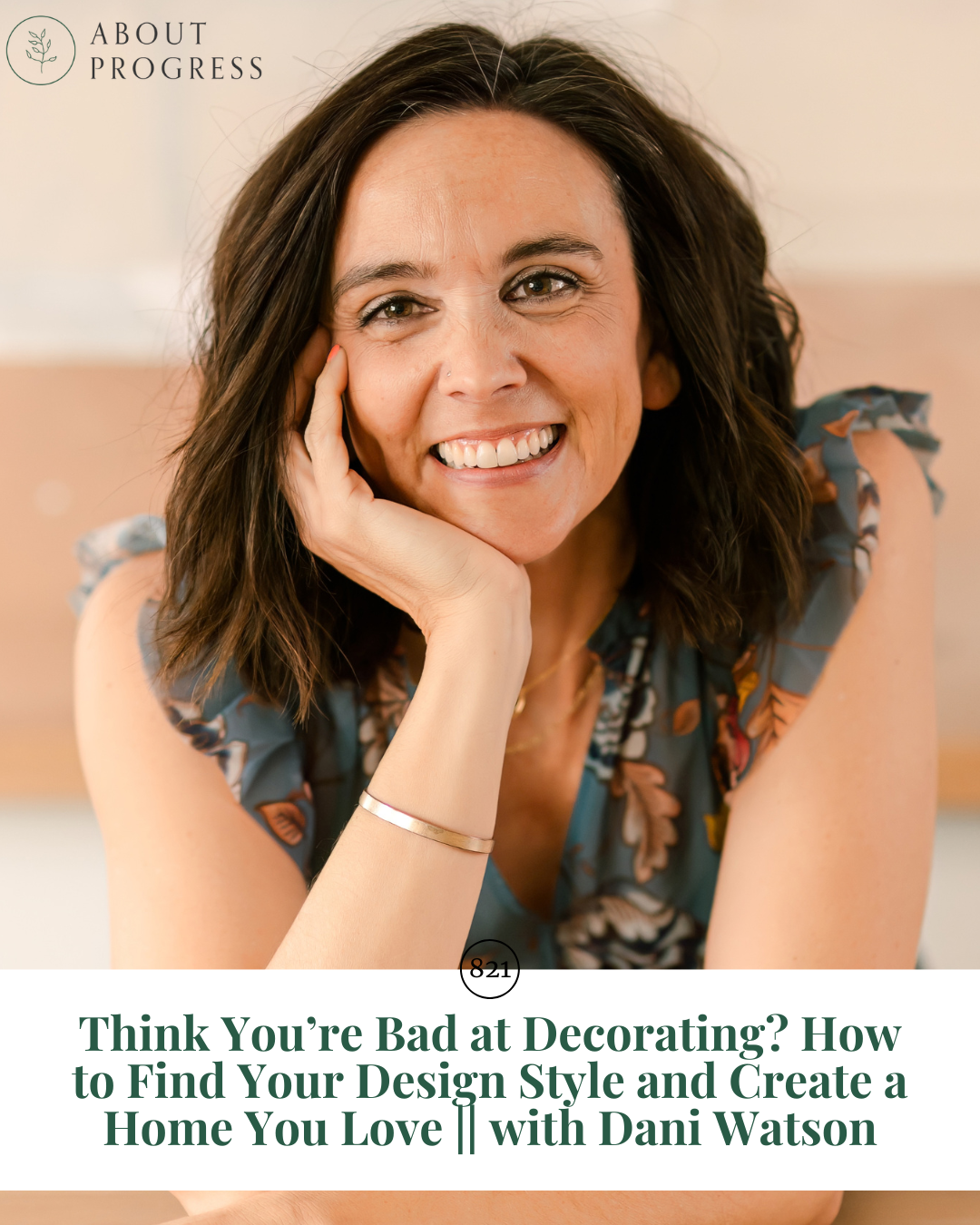
Have you ever looked around your home and thought, "I'm just bad at this"? I've been there too — wrong-size rugs, bad paint colors, the works. In this episode, I talk with interior decorating educator Dani Watson about why perfectionism — not lack of talent — is what really keeps us stuck. Dani shares her own messy learning journey and teaches us that decorating is a skill anyone can build.
We dig into her four principles for confident decorating: defining your personal aesthetic, choosing how you want your home to feel, telling your family's story through meaningful pieces, and working within your budget. Dani also makes a beautiful case for "slow decorating" — the idea that a home with soul can't be bought in a weekend, but is curated over time. If you've been waiting for permission to stop chasing Pinterest perfection and start enjoying the process, this one's for you.
Dani's Instagram, website, design guide
Order Sticky Habits! (now available as an audiobook!)
Leave a review of the book
Get the Archive Pass for the More for Moms Conference with $10-off code: “LISTENER.”
Join the Supporters Club to keep About Progress around for good.
Watch this episode on Youtube
This episode brought to you by Quince for free shipping on your order and 365-day returns
About a few other things...
Sign up for the Go Getter Newsletter to get Progress Pointers in your inbox every Wednesday.
You can listen to the episode below, on Apple Podcasts, or on your favorite podcast app. If you like the show please share it, subscribe, and leave a review!
SHOW NOTES
Access exclusive supporter benefits
Leave a rating and review for the podcast!
Lend your voice and experience + be featured on the show HERE
Join Monica on Facebook and Instagram
Songs Credit: Pleasant Pictures Music Club
TRANSCRIPT
Dani Watson: [00:00:00] decorating is really fluid. It is not meant to be a I do it one time and it stays there for the next 10 years. The goal is a little bit of fluidity.
to remember that it does not have to be perfect to be beautiful. It can be a little bit imperfect, and there's beauty in that imperfection. It's important to tell those stories in your space
Monica Packer: Hi, this is Monica Packer, and you're listening to About Progress, where we are about progress made practical Over the years, I've been surprised by how many progressors have expressed to me their insecurity over decorating their home. Perhaps it's because it's something that I personally love to do.
But when I look back on why I love interior design, I know the history. The history of being really bad at it for a long time. A history of being overwhelmed by decisions that needed to be made, decisions that were tied to money, even if it [00:01:00] was trying to spend as little as possible.
And mistakes such as a rug that was too small for the room, or painting the walls bright yellow and realizing that's not really a great color for a bedroom that you wanna sleep in. I think a lot of us know that decorating a home isn't a simple process, but we blame ourselves as the decorators when really we weren't given this skill.
It doesn't just come naturally when we're born.
If you think you are bad at decorating, I want you to think about how perfectionism is actually a big player in that insecurity. I know it was for me because, again, the stakes feel high, the desires are good, and you're always looking at a finished product, in quotes, that
If it doesn't quite align with the vision that you had or that you wish you could have in your head, even if you can't even come up with a vision, that inner perfectionist really comes out. Today, interior designer Dani Watson is helping us take the pressure [00:02:00] out of creating a home we love.
We talk about how to discover your own personal aesthetics, the simple filters that make decorating decisions easier, why your home should tell your family's story, and why slowly creating a home over time might actually be the point. You don't need a huge budget, you don't need perfect taste, and you definitely don't need a Pinterest perfect house to decorate a home you love to be in.
Dani Watson is an interior decorating educator, podcast host, and founder of The Collective, a home decorating membership. She helps women confidently create homes they can't stop gushing about without second-guessing every decision or chasing perfection. Dani believes creating a beautiful home isn't about better taste or bigger budgets, it's about having the right plan.
She teaches a simple, structured approach to decorating that eliminates overwhelm, [00:03:00] restores confidence, and helps homeowners finish their spaces with clarity and intention. You can find more about Dani at figandfarmathome.com.
I know you have another friend or two that always complains about decorating their space, so make sure you share this episode with them as you're listening. My conversation with Dani is happening after a quick word from our sponsors
I have fantastic news for you on the book front. First, if you didn't hear, . My book, Sticky Habits, A Woman's Guide to Reclaim Happiness, Ditch Perfectionism, and Create Habits at Last, was published September 8th of this fall. And now the audiobook is out too.
Since you are a podcast listener, I am sure you would love to listen to the book. And I have to tell you, I am incredibly proud of the audiobook. It thrilled me to hear just the other day from someone who was already nearly finished listening to the audiobook that she is loving it.
She told me, [00:04:00] Monica, I have read countless books on habits. This is the best one by far. It's a 10 out of 10." I'm hearing from other listeners that listening to the audiobook has been a wonderful way to learn the material, to implement it, and also to have the friendly voice you are accustomed to hearing guide it all.
You can get the audiobook on Audible you can also check it out through your local library via apps like Hoopla or Libby. I'm also hearing Libro FM has it and Apple Books should as well soon. If you are an audiobook listener, or maybe this is your first time, I encourage you to check out Sticky Habits via audio form.
And if you love to read too, of course, get the bright pink book that everyone is loving anywhere books are sold. You can go to stickyhabitsbook.com right now to check out all the major online retailers, including an independent bookstore, or reserve it from your local library today. Again, the book is Sticky Habits, Whether you listen or you read, get the book today
[00:05:00]
Monica Packer: Dani Watson, welcome to About Progress
Dani Watson: Oh, thank you so much for having me. It's a joy to be here
Monica Packer: So we're here to talk about interior design, which is something I love, you obviously love. This is what you do. But I know you know better than anyone, a lot of women get really stuck in decorating their homes. And I wanted to begin with something I've already learned from you, that this isn't just about struggling to pick a paint color or the right couch or the right rug.
It goes a lot deeper in ways that women might not be understanding of, and if they understood, then they'd be able to actually help the decorating side. So if you can tell us, let's start there. Why does it go deeper?
Dani Watson: Yeah. That is such a good question. You know, I think a lot of th-the times people think that when I wanna decorate my home, it is too frivolous or it is about picking the perfect product. Um, and we [00:06:00] jump right to the part that I call the sexy part, the going and buying the pillow or picking the paint color. , But there's a lot of hesitation, and I've heard every... I don't even wanna say excuse, but I've heard every reason in the books why they shouldn't do it. I've heard, um, "Because my kids are too little, and they're gonna ruin it." Um, "My husband and I don't agree on any of our style. Things are too expensive," or, "I've made mistakes before, and I just don't wanna do that again." , And those are the things that ultimately keep them being stuck, but I think they all boil down, Monica, to this idea of, um, a, a fear of perfectionism. And
Monica Packer: Yeah
Dani Watson: surrounded so much by this culture of everything has to be perfect, it looks beautiful on Pinterest, it looks beautiful on Instagram, it looks beautiful on those shows that are highly curated, we can't live up to that.
And,
Monica Packer: mhmm um, so we're combating that. And most of us have a regular, [00:07:00] everyday livable home that is not perfect. And
Mm-hmm.
Dani Watson: we see all of these visual images around us, we compare. We get frustrated when we can't figure it out. We think that we're bad at decorating, and it is not about any of that. But I do think it boils down to, And of course everyone is a little bit different, but I think there's that element of I have to be perfect, or I'm afraid to make a mistake
Monica Packer: Okay. I mean, that, that makes sense, but when you say it that way, it kind of removes that whole reason I'm just bad at this,
Dani Watson: Mm-hmm
Monica Packer: when really it seems like in order to get good at it, you have to make space for being bad at it.
Dani Watson: Yeah. Oh, of, yes, exactly. You do. Just like anything that you want to learn, you know, going back to, like, maybe the f- one of the very first memories of you learning something like how to make a peanut butter and jelly sandwich,
Monica Packer: Ja
Dani Watson: probably made some mistakes, right? We got the jam [00:08:00] all over the counter. We didn't clean up well.
Maybe we put the bread on the... I, who knows what happened. It's, we had to learn it. We had to learn how to, to cook, and ride the bike, and, you know, go to school. We had to learn all of those things, and that is no different than decorating. In fact, I don't know if you know this, Monica, I am not , didn't go to school for this.
I learned it on my own. And so if I can learn it, it is, it's teachable. It is teachable, and it all comes down to these foundational, don't even wanna call them truths, truths, because there's so much flexibility in home design. It really goes back to, , so many different things. But understanding who you are, why you want to, , pursue a, a home that looks a little different than you have today, how you wanna feel in your space, and then I tie this right back into the legacy you're leaving for your family that you're sharing your home with. Like, your home is a s- is a canvas for storytelling, and your [00:09:00] kiddos, and your spouse, or your partner, or your puppies, or whoever you're sharing your space with, that is the canvas. Those are your legacy. So creating a space that feels good for everyone, , is, I think y- you're doing more of a disservice not to address that than you are to stay stuck in I'm afraid to fail, or I can't learn it, so I'm not gonna do it.
Monica Packer: So I wanna come back to those foundational principles you just brought up because that's a lot different than other go-to ways I've heard on how to learn how to decorate, and they seem really... It seems like otherwise we're putting the, the cart before the horse if we're just going right to, like, well, you've gotta choose your rug first, and then you've gotta choo- Like, so, so I wanna come back to that.
But first, you hit on something there that made me think about why this matters to you.
Dani Watson: mhmmm।
Monica Packer: Our home is our canvas. When did you come to believe that for yourself? And then how did that tie into your own [00:10:00] burgeoning skillset in this area? And, uh, and, and frankly, I'm ca- I'm asking were you good at it right away?
Dani Watson: Oh,
Monica Packer: Or-
Dani Watson: No, I was
Monica Packer: Mm-hmm. Okay. Love hearing it. Tell us all about that
Dani Watson: Yeah. You know, my girlfriends just asked me this question.
Monica Packer: Oh, yeah
Dani Watson: , why did it become important to me?
Monica Packer: Mm-hmm
Dani Watson: And I grew up in a home that really uncomfortable to be in. I love my family, but I did not want anyone to come over unannounced. , It was very embarrassing. We had, like, my mom was a wonderful gardener. She just made these immaculate gardens, but inside was a different story, think the garden was an escape for her. She had six kids. I'm the youngest. Um,
Monica Packer: Yeah
Dani Watson: did the best that she could, but it, our environment didn't feel inviting, and I lived there. So I think that kind of stemmed from that.
Um, or, you know, if I really go back and peel back the layers, I [00:11:00] think it started
Monica Packer: Yeah
Dani Watson: , I do, of course, love crafting and I'm artistic and I love, like, um, beautiful things just in general.
Monica Packer: Mm-hmm
Dani Watson: so my eye is always, like, trained to find that in nature, like, even in, like, the beauty of different colored rocks or, you know, what have you. So I have a propensity for that, but I don't think that equals or is equal to the ability to design your home,
Monica Packer: Mm-hmm, mm-hmm.
Dani Watson: just means I l- like what I like and sometimes I don't. But no, I did not start successfully. No, I did not. I made some really great mistakes, and I have pictures to show some of those great mistakes.
You know, having a home that was like a patchwork quilt. You know, every room was different and different colors all over and
Monica Packer: Yes
Dani Watson: There was no cohesive element that tied it all together. And, every time my husband would go away for, like, a, like, a internship, he was, uh, doing med school,
Monica Packer: [00:12:00] Mm-hmm
Dani Watson: he would go away for a little bit.
I would use that time to experiment and play and, you know, to practice a few things, and it was terrible. It was terrible. And so I did that all on a really, really small budget. didn't have a lot of extra money. It was all experimental, all on a Goodwill shopping, ramen eating budget
So, you know, I, I grew from practicing, from paying attention to, paying attention to things like Pinterest, paying attention to things like magazines or stores, but not being beholden to those big principles that we're, we hear over and over and over again.
Monica Packer: So do you have... I mean, this is just kind of memory lane for a [00:13:00] moment. Is there a particular room or color or kind of project you took on that you look back on and you think, "Ugh," but also like, "Hey, past Dani, I'm so proud of you for trying"?
Dani Watson: Absolutely. You know, the, the one that immediately comes to mind is our very first nursery. So I'm a mama of three boys, we had a really cute 1950s bungalow in Iowa, and
Monica Packer: Oh
Dani Watson: room, I wanted to do kind of a forest-y theme colored room, and I thought it'd be great to do chocolate colored walls. The trim was light, and I did three walls that were chocolate, a really lovely deep rich color, but one wall that I made really extra large, maybe 24 by 24 grid squares that were pastel.
Monica Packer: Oh, yes.
Dani Watson: Not a great combo together.
Monica Packer: Yeah
Dani Watson: But we did the best we could, and my husband, bless him, he has learned over the [00:14:00] last several years how to do woodworking, and he's made so many wonderful things for our
Monica Packer: That's so cool
Dani Watson: But his very first project was in that nursery, so we did a great job of coming together in that very first project, and the shelves he built were a little wonky. They were, they were juvenile. They were
Monica Packer: Yeah
Dani Watson: But it was a great starting point. We both experimented, and we've both grown so much
Monica Packer: You know, I, I told your audience about my do something list, and one of those things was to take on a few in- interior design projects in my home. And, and at one point I decided I was going to submit my application for this interior design firm, and I took pictures of all the rooms I had worked on and submitted.
Never heard back. So of course I eventually replied and said, "Hey, did you get my application?" And they're like, "Oh, yes. Thank you. We're not... Like, thank you, but no."
Dani Watson: Ja
Monica Packer: And I looked through those photos recently, and I was rolling on the ground because I just thought it was so funny what I thought was good, like that would make [00:15:00] them want to look at me.
But I, not in like a regret like way, but also like that's so interesting how much we evolve. And so with all of this, I see you embodying the spirit of you've gotta try.
Dani Watson: Ja
Monica Packer: you're doing this because this is your canvas, and your canvas is allie- allowed to change. Your taste is allowed to change. The point is the process of this, the fun of it
Dani Watson: Absolutely. And, you know, decorating is really fluid. It just, it just is. It is not meant to be a I do it one time and it stays there for the next 10 years. And I do think I run into clients who believe that, who think that, and there are times when they will say, "Okay, we're done, and I need to take a picture so that I can then remember what happens after I put the Christmas tree in and then remove it."
Monica Packer: Yeah
Dani Watson: the goal is a little bit of fluidity.
Monica Packer: Yes
Dani Watson: fun, to experiment, to play, to remember that it just, it does not have to be perfect to be beautiful. It can be a little bit imperfect, [00:16:00] and there's beauty in that imperfection. There's beauty in the scratches on the dining room table that the kids
made
Monica Packer: hmm
Dani Watson: coloring. There's beauty in the way that that antique chair is sitting in the corner, but it has a little bit of a broken leg, but you know what? It There's so much beauty in that, and those connections to history are of, of our own families, or even a secondhand piece. It's important to tell those stories in your space
Monica Packer: Hmm. I, I'm remembering this episode from Friends. I don't know which character it was that everyone loved her style, but it turned out she just kept buying exactly what was in the window of the Pottery Barn store, you know, and just copy/paste. Um, and I think that's another thing we fall into, right? Is thinking like it has to fit a particular style or aesthetic.
Dani Watson: Mm-hmm.
Monica Packer: Um, and, and just that altogether quality of it is what m- adds the pressure, but also kind of robs you of the heart and the joy of it.
Dani Watson: Yes
Monica Packer: So I love this, the space for [00:17:00] imperfection, and, and that fluidity seems really, really important too. So thank you for bringing this up
Dani Watson: It is. And it's, Monica, honestly, , learning, when you can become a little bit more familiar and in tune with your own personal aesthetic,
Monica Packer: Hej
Dani Watson: you can break free from that perfection. So that example that you just gave me is something that I hear and I see all the time, and it's the, I'm gonna look on Pinterest because Pinterest is such a powerful tool. I do believe we're using it, misusing it. Um, but when we take an idea or a beautiful picture on Pinterest and we say, "Ooh, I can recognize beauty," that's great. But when we transfer that and those products directly into our home, there is a disconnect. It is a copy and paste that is not, like, connected to your s- your heart and to your soul and your story. but there's a, there's a really great way that you can learn how to recognize those beautiful pictures and , find the elements in there that are [00:18:00] your aesthetic, and then pay attention to those and bring those things in without the copy and paste
Monica Packer: Okay. I, I would like to get into that actually, about how to uncover our personal aesthetic. Does this tie into the principles you mentioned earlier? Okay,
Dani Watson: Yeah, absolutely
Monica Packer: so let's combine those two and, and teach us how... And actually, just a quick pause then. What's the difference between personal aesthetic and style?
Dani Watson: Ooh, that's a great question. we think about style, lot of times as consumers, we're thinking about what the merchandisers or the manufacturers are telling us. Well, first there's a, there's a larger, broader umbrella like, contemporary
Monica Packer: Ah
Dani Watson: uh, mid-century modern or traditional.
Those are really, really, really big, broad umbrellas. Then we have another understory, and those are things like California casual
Monica Packer: 嗯。
Dani Watson: cottagecore or
Monica Packer: Yes
Dani Watson: even Joanna Gaines. We could probably just put Joanna Gaines
Monica Packer: Yeah,
Dani Watson: its own little
Monica Packer: yeah
Dani Watson: But Monica, if I asked you what is [00:19:00] cottagecore to you, and then I asked five of my girlfriends what is cottagecore, we would probably all have very different ideas of what that is.
There would be some similarity, but it'd be very, very different. is the bigger, generalized, uh, no nuance way to say what broad categories are. When your aesthetic, when you're in tune with your aesthetic, it is highly, highly personal to you, then you can name it whatever style you want. I want mine to be, I want it to look like Dani.
I want people to come in my home and say, "Oh my gosh, Dani, it looks just like you."
Monica Packer: hmmm
Dani Watson: for example, is, I've dubbed it, I've named it, um, vintage modern whimsy. I mean,
Monica Packer: Yeah. Uh-huh
Dani Watson: a store like that. And so paying attention to what those little elements are that you are gravitating to every time, or time and time again, I should say, uh, from pictures, from going [00:20:00] shopping, from watching TV shows, those are the things that help define that. , Manufacturers do the best they can to help us out by s- by putting labels on it, like boho or, , flea market. But
Monica Packer: ம்
Dani Watson: I mean, it's, we have to interpret that. What does that mean?
Monica Packer: So it's not, it's not bad to borrow or to get inspiration from what you see around you. It's just more in the application to, to, to let those things inform what about that is your personal aesthetic, what about that is calling to you. Okay, so let's talk about that personal aesthetic now paired with those foundational principles you brought up, which I heard to be who, who are you, why does this matter to you, , how do you wanna feel?
Dani Watson: Mm-hmm.
Monica Packer: the three?
Dani Watson: Yeah.
Monica Packer: Okay, break those down for us if you, if you could, how this works.
Dani Watson: um, w- in fact, I use actually three core principles.
Monica Packer: Okay.
Dani Watson: defining your aesthetic,
Monica Packer: Hm
Dani Watson: is creating a feeling word,
Monica Packer: Okay
Dani Watson: one is family story, and then I'm gonna throw the fourth one in, which everyone wants [00:21:00] to get to, which is budget.
Monica Packer: Oh yes
Dani Watson: But when you're, when you're in a room and you're in a space and you're thinking about your aesthetic, , one thing...
And that's, this is honestly where to start. When people ask me, "Where do I start?" You start here. You put your credit card away. You put, you put it in the freezer, something. Don't go buy anything, even though it's so exciting. And then we're gonna use some of the tools that we're so inclined to use, like Pinterest or Instagram or those magazines, we're going to be a student of design.
And I, I love Pinterest. It's my very favorite medium because can now store them digitally. We can store the ideas digitally. one of the things that I love doing is I say, I tell my clients, "Pick three pictures. What- whatever you're, you know, you're scrolling and you're kind of going fast, pick three that kind of catch your attention in a big way. Pick three. That's it. Don't, don't do more." And then very slowly, almost as if you are [00:22:00] stalking the room, like you're getting from this side of the screen into the room, if you can imagine yourself doing that, what is it that you love about that room? is it? Write everything down. Do you like... And, and these are big details, and these are tiny, tiny, tiny, tiny, tiny details.
The tinier we can get, the better. So many of us say, like, "Oh, I like it. It's so pretty. I like it because it's gorgeous." Well,
Monica Packer: उह हूँ।
Dani Watson: but what is it that makes it gorgeous? What is it that makes it pretty?
Monica Packer: Mhm
Dani Watson: And we're paying attention to things like- nail head trim uh, the way that the sofa arm rolls or doesn't, the color on the trim of the curtain. We're paying attention to maybe the plaid on the area rug, the basket weave and the tone of the basket. We're paying attention to, , the brass elements on the bookshelf. We're paying attention to all those teeny-tiny little things, and then we're doing it to the second picture and the third. [00:23:00] And every time you have a repeating element,
Monica Packer: Hmm
Dani Watson: that becomes part of your aesthetic. when things repeat and you start noticing like, "Oh my gosh, I gravitate to birds all the time. Birds."
Monica Packer: Mm.
Dani Watson: " I gravitate to moody colors. I gravitate to, huh, there's a tassel in every single one of these. I didn't know I liked tassels." It's that, that kind of observation.
Monica Packer: Okay, that's so much more helpful. Yeah
Dani Watson: And you have- Yeah, and you have to, you have to slow down. You
Monica Packer: Mm-hmm
Dani Watson: be present. You have to stop the scroll, and you have to quite honestly go way deeper than just saying, "I like that because it's really pretty
Parenting courses abound, but what if there was a course just for a mom to feel more like herself? To feel like she could reclaim her life as her own, to experience more happiness, to have supportive habits, to increase her health, to improve her home life, [00:24:00] and to have more hobbies.
Well, I have that for you. It is now the More for Moms conference ready for you in a course-like form, thanks to the archive pass. I've archived all of my 25 speakers from the general public, but you can get each of them with lifetime access With the special archive pass at aboutprogress.com/moreformoms.
For my listeners only, I have a special $10 off code as well. You can use the code listener at checkout. We just finished the live version of the conference, and I had countless women who participated who told me this is the best online conference they ever attended, and that they loved to listen to the material, especially on the go.
With the archive pass, you can not only watch all the videos like a self-paced course, pick and choose whichever ones you want to see the most. You can do the same by listening on a private ad-free podcast feed we have set up exclusively for those with the archive pass. Again, get $10 off now with the code listener at [00:25:00] aboutprogress.com/moreformoms.
If you're a mom, you deserve more
Monica Packer: So instead of, you know, copy, paste with Pinterest, that's how you misuse Pinterest, it's more of slowing down and extracting those elements, the smaller the better, and then seeing what replicates,
Dani Watson: Yeah.
Monica Packer: almost becomes a theme,
Dani Watson: Yep
Monica Packer: for you that you want to incorporate in your life. Okay, so and that will help you define your personal aesthetic.
Dani Watson: Yes, exactly.
Monica Packer: Okay
Dani Watson: and this is so important because we're gonna now use this
Monica Packer: Mm-hmm
Dani Watson: as a filter for when we go shopping, when we start making decisions, when we start making a plan, when we go out thrifting and we really wanna thrift for really fun things. We're gonna use it as a filter and say, "Huh, are all of those des- like, that piece I just picked up at Pottery Barn does this match my filter?
Does it match those design elements that were in my aesthetic? yep, yep. Nope. Okay, that doesn't fit. I'm not gonna take it home."
Monica Packer: So are [00:26:00] those words, is the aesthetic where you start to n- name it with ac- ac- actual words?
Dani Watson: So for example, for me, part of my aesthetic is rattan, , I like a little bit of moody colors. I love stripes. Give me a stripe any day. , Love pom-poms or tassels.
Monica Packer: Uh-huh.
Dani Watson: I love scallop. That's a new one. You know, it will dev- evolve and change over time, but scallops are something that I just realized this last, maybe a couple months ago, "Oh, I like that."
I'm
Monica Packer: Mm-hmm. Yeah
Dani Watson: and over. Um, hobnail is another one of mine. So you can see how it's like these aren't big paint colors. These are teeny little details that you could miss if you don't slow down enough to pay attention.
Monica Packer: And I like how specific those are. And also, I'm sure they will inform more the bigger words like you used, whimsy, um, was one of the words you used. Is that part of the other principle that you brought up?
Dani Watson: Yeah, exactly. Yeah,
Monica Packer: what's that one?
Dani Watson: so now, so now we [00:27:00] have aesthetic.
Monica Packer: Mhm
Dani Watson: go into feeling, and feeling is so important actually, because you want to feel a certain way in your home. Again, you know, your home is a canvas for storytelling. This is your space. We hope that you will, when you walk into your space at the end of a long day, it will feel like a breath of fresh air. It might feel like a warm hug. It might feel delightful. Whatever that feeling is. that feeling word doesn't have to be, again, a generic, " I want it to feel w- warm and cozy." That's a- actually a word I hear a lot, "I want it to feel cozy." now my question again is, well, what does cozy mean? What, what does it mean to you?
So go deeper. do you want it to feel? Well, I want it to feel like I can actually relax, and I can have really co- like I wanna sink into my couch, and I wanna have Ch- a Cheeto on my couch without worrying about,
Monica Packer: Yeah.
Dani Watson: you know,
Monica Packer: Relaxed that way, yes
Dani Watson: worrying about it. Um, one of [00:28:00] my f- my feeling words in my home is playful. I want it to feel
Monica Packer: Mm-hmm
Dani Watson: So here come the stripes. Here come the maybe unexpected colors or the pattern play that is maybe a little bit, , different. I have a pink piano, Monica, and
Monica Packer: That's so neat.
Dani Watson: and then a
Monica Packer: Yeah
Dani Watson: So that is kind of my play,
Monica Packer: Mm-hmm
Dani Watson: just translates to physical items. , So thinking about what you want your home to feel like and then going deeper to really digging deep, you're gonna use that as a filter as well. So now you have two filters. You have your aesthetic. You have your feeling word.
Monica Packer: So aesthetic is what you're drawn to.
Dani Watson: Mm-hmm.
Monica Packer: Okay, and then, and then feelings is what you, it's like self-generated, like what you want to create in your home feeling-wise. Okay
Dani Watson: Yep. And then, , when I'm going out and I'm shopping and I think, "Okay, I want the pl- I want it to feel playful," how does a brown big leather sofa feel? Does it feel playful? Mm, maybe not.
Monica Packer: [00:29:00] Ja, gerne
Dani Watson: something different so I can have a playful pillow on it, or maybe I'll choose fuchsia. That's playful. You know? So it l- it helps you inform that decision, but you're also, you're not using feeling only. You're combining it with your aesthetic in order to make thoughtful, mindful, informed decisions that honestly, they, gosh, they help you so much reduce the confusion and the frustration. Because when we're standing in front of a aisle full of pillows or
Monica Packer: mm-hmm.
Dani Watson: you mentioned, is really confusing. is so confusing. And when you're making a small decision like a pillow, but then you go to the paint store, I mean, forget about it. It can be too overwhelming.
Monica Packer: I agree. I agree. Okay, so we've got these built-in filters now. You mentioned, you know, if, if the home was a canvas for a story that we are telling, how that connects back to the third principle you brought up about the family's story.
Dani Watson: [00:30:00] उह
Monica Packer: What do you mean when you say that, the family's story and how that's reflected in, in the design?
Dani Watson: Y- a lot of times, you know, we think about it in terms of, like, personal pictures, and that's true. But going deeper, just like we do with each of these other filters, we wanna think about what is inherent to our family, what are our family values? And, um, that sometimes can be, like, like our family for example, we love, we love adventures.
We love to go hiking. My boys and I, I mean, and I'm including my husband as a boy, my boys and I have rappelled, we have snorkeled with, um, stingray, not
Monica Packer: Wow.
Dani Watson: manta rays. We
Monica Packer: Yeah
Dani Watson: We've walked around the, uh, Mount Rainier, which is 92 miles. We've done a lot of
Monica Packer: Amazing
Dani Watson: are kind of adventuresome. so my story is reflected in our home through things that we have displayed on our shelves or on our walls. Sometimes it's in the colors we choose. But it's not overt. It's not like I have a pillow [00:31:00] that says mountain on it, but I have a really lovely piece of art sitting above my piano that is of Colchuck Lake in the Cascade Mountains, and that was where my husband and I had our first date we went hiking on this, to this, um, lake. And so that is the, the tie to story that I'm talking about, where it is not face in a way, but there's just those little connections. And you could come over, Monica, to my home, and you might not know what those things are,
Monica Packer: Mm-hmm.
Dani Watson: I would know.
Monica Packer: Mm-hmm.
Dani Watson: Oh.
Monica Packer: They're like artifacts through your home.
Dani Watson: Exactly.
Monica Packer: Mm-hmm
Dani Watson: And it allows, those little artifacts allow you to then, um, make mindful decisions when you're out and about.
Maybe you're traveling Italy or you're doing a train trip across the country or wherever you're going, and it allows you to pick up a little piece here and there so that you can have it, know, somewhere in your space. Um, but it doesn't all have to be, of [00:32:00] course, on the wall or on a shelf. It can be, um, you know, useful items, too
Monica Packer: Okay. Yeah, I love the usefulness too. Uh, okay, so that's, that one is something that I think makes the biggest difference, like the smallest thing when you are living in the home. I think the, the kids notice those things. Like in, in our little display bookshelf we have, they ask me about these big rocks that I have in there that go back to something we did when I was pregnant with my third, and, and a little hike we went on in the riverbed and, and I wanted to collect that.
Or I have this little tiny ice skate that a first grade student gave to me when I worked in an afterschool program that made me decide I wanted to be a teacher.
Dani Watson: Yeah.
Monica Packer: And I'm not an ice skater.
Dani Watson: Yeah. Yes.
Monica Packer: I'm not, but that's what that reminds me of
Dani Watson: And then, the, you know, those are the little things,
Monica Packer: Mm-hmm
Dani Watson: But then there are sometimes pieces like grandma's hutch or a
Monica Packer: Or a [00:33:00] blanket or quilt, yeah. Mm-hmm
Dani Watson: quilt or things like that, that, you know... And, and that can get a little tricky because sometimes we're gifted those things and we don't like them.
Monica Packer: Mm-hmm
Dani Watson: sometimes we're gifted those things and we don't know how to work them into our space. So that, that can be a little trickier, but that is your story too, and we can own it or we can say, "Okay, I'm gonna bless this with
Monica Packer: Yeah. Yes, exactly. Yeah, we, we're, we have a lot of things from my grandma's home.
Dani Watson: उह
Monica Packer: I even have, like, a little marble table behind me that's from her, like this little... You know, the stains are on it, and all, I just... Yeah, you're right. Those, I think that's the biggest difference to me of what makes it really feel like ours.
I'm glad that you brought up that, and then you also mentioned budget. I know we could probably spend an hour on that topic alone, but how do those first three principles then tie into the money factor that many think is the number one obstacle, actually?
Dani Watson: E- exactly, and a lot of times it just really is not. You can create a [00:34:00] beautiful space on pennies. You can
Monica Packer: Mm-hmm.
Dani Watson: beautiful space using just what you have and reimagining it a little bit. But one thing, uh, it all comes down to making a plan, Monica, and knowing you have, for example, the room you're working on, and you know what purpose you have for that room, what you want the room to do for you, and deciding, too, the things that you already have in it, are they helping with that purpose or are they fighting against it?
So what needs to be removed, basically. And then deciding, okay, what kind of things might I need in order to have this room function for me and my family the way I need it to? That is pivotal, and that's all part of planning. But a lot of times we get so excited because maybe we've figured out, okay, I like brass, I like pom-poms, I'm ready to rock and roll, but we really still need to dive into, what do I want the room to do, how is the stuff I have helping that or hurting it, and what do I need to do next? I do believe that now here's where those things come in that we [00:35:00] hear from other designers or we hear from YouTube or Instagram, and it's you have to pick the rug first. You have to pick the paint first. You have to pick those
Monica Packer: hmm, hmm।
Dani Watson: those first principles, where we make mistakes.
Monica Packer: Okay.
Dani Watson: But
Monica Packer: Okay
Dani Watson: we know kind of where we're going, it's like having a, a map.
We know the end destination, but now we have to kind of work backwards in order to get it. And there are things that help um... They make bigger impact change than others, and they are not always expensive. In fact, the very first few that I have that I usually tell my clients, they're n- they're, not a lot. They might be under $100. The biggest impact change you can make in your space, not the couch.
Monica Packer: hmm
Dani Watson: the wall art. It is not the area rug. It's something different. But you have to know, you know, where you're going first. And sometimes we then use a picture, like a Pinterest picture, to get [00:36:00] inspiration, not to copy, we're using it to kind of think, "That's kind of what I want.
It aligns with my aesthetic. Here are my aesthetic. Here's my filter for my how I want it to feel, and now I'm headed that direction. What is the first stop along the way?" And sometimes that is light fixture or paint or curtains or what have you. It just depends on what we're doing in a room.
Monica Packer: Okay. A-a-and again, this is where the recovering perfectionist in my audience may get stuck by saying like, "Well, what's the first thing I should be thinking of in a room?" And if we're going back to those main principles and using those as filters,
Dani Watson: Yes
Monica Packer: can help us work through the overwhelm of trying to decide what's first.
And I, I think it's what I'm hearing you say, it's there is no set starting place, you know, a rug or col- you know, paint color or couch or fabric. It's, it's what, uh, the, it's where do you wanna start really that will help create that,
Dani Watson: Yeah.
Monica Packer: those feelings for you
Dani Watson: exactly. It really
Monica Packer: or inspires it for you?
Dani Watson: yeah, it really is getting to know you and what
Monica Packer: Mm-hmm[00:37:00]
Dani Watson: and being able to name it. That's really
Monica Packer: Yeah
Dani Watson: first place to start, that you can then feel confident when you do go out and decide. When you're looking at all those pillows, like at Target, and you're seeing, "I love that one, love that one, love that one.
In the past, I might have picked this one, and somehow between the store and when I got home, it changed, 'cause it looks terrible in my home. What happened?" Now you're at Target, you're looking at those same pillows, and you've got your feeling words, you've got your aesthetic
Monica Packer: hmm
Dani Watson: you've got the, maybe it's a connection to you, like you love the beach and it's a blue pillow. Maybe you have all those filters and now you can decide, "I like that pillow. Wow, it's really pretty, but not for me. That one's for me." it really empowers you to make confident decisions
[00:38:00]
Monica Packer: So with that, I wanna speak to the women who a large part of why they think they are, quote-unquote, bad at interior design, decorating their homes, picking paint colors, all that, putting it all together, is largely because they have the, quote-unquote, evidence.
Dani Watson: Yeah
Monica Packer: Like, they have the ex- the experience of, of spending too much on a rug that turned out to be a giant bust because it started shredding on day two,
Dani Watson: Mm-hmm
Monica Packer: Or stained really easily, or the color was just all wrong, or, you know, hiring a painter 'cause they couldn't do it themselves and it just not being the right color. What would you say to the women who are just like, "But my mistakes.
Dani Watson: Yeah
Monica Packer: Dani. Like, I'm bad at this. They're showing me I'm bad"?
Dani Watson: Yeah, and I would say have a little grace for yourself. Um, we all start somewhere, and you now know that that wasn't the right choice. So it's okay. Give yourself a little hug and a little grace to know that [00:39:00] that was a learning experience, and now we know better, and we can use some of these ideas in order to inform better choices moving forward. Slowing down enough to be a little bit more introspective about what it is you like, why you
Monica Packer: Okay. Mm-hmm
Dani Watson: and now what we hope our end goal is. But slowing down is gonna be a really important key for that woman.
Monica Packer: Yeah
Dani Watson: I'd like to say too is it- design is, it's teachable. It is learnable. And, um, you know, once you have the foundation, which were those little four pieces I shared with you, once you have those ideas down, then you can start thinking about, okay, well, how do I do things like mix metals?
Or how do I know which, um, how do I know how to mix pattern? Or how do I know how to... You know, then you can start asking those other little bit more advanced questions. And I don't even-- I'm air quoting advanced, because it's not necessarily. But then you can extend just a little bit more. [00:40:00] But starting with that foundation's gonna be so important
Monica Packer: I think you're right about that general advice of slowing down, not just about the knowing yourself piece, but
Dani Watson: Yeah
Monica Packer: even just recognizing that, like you said very early on, this is a skill set. And it's okay that it will take time for you to even figure out what your aesthetic is and how you wanna feel in your home, and to bring in those artifacts.
Dani Watson: Mhm
Monica Packer: You know, making a home shouldn't be a two-month process, six-month, year-long process. It's g- you're gonna always be adding and taking away, and that's where Facebook Marketplace is awesome. Like, when I make a mistake with something,
Dani Watson: Yep
Monica Packer: put, I, I, or I buy a lot on Facebook Marketplace, so it's not as, like, as big of a financial cut when I'm like, "No, that was not right."
I can just put it right back on there. That helps, too
Dani Watson: Yep. absolutely. I love thrifting for that reason because it
Monica Packer: Yeah
Dani Watson: to have a curated home that... You know, 'cause we really can. I mean, Monica, if you hired me this weekend and you said, "This is what I wanna do," I could buy all the product for
Monica Packer: Mm-hmm
Dani Watson: [00:41:00] weekend. We could make it happen. But what ends up happening is the soul is missing, the
Monica Packer: Yeah
Dani Watson: is missing, and it, it looks like maybe we bought the summer collection of Target or Pottery Barn.
Monica Packer: Yes
Dani Watson: really good, but there's something missing. And the slow curation, it's called slow decorating. that curation of product that is,
Monica Packer: hmm
Dani Watson: found objects, and found of course meaning you can find it at Target, you can find it at a
Monica Packer: Sure.
Dani Watson: can even find it on the side of the road.
I've done that.
Monica Packer: Yes
Dani Watson: It's those, that foundness, and that happens over years. My home is not perfect. We've, are in it 15 years, but it is of those places now that feels, every time I walk into a room, it feels, not done, 'cause it's never, ever done, but I feel like finally
Monica Packer: hmm,
Dani Watson: happening.
Monica Packer: hmm
Dani Watson: little things that remind me of adventures or gifts I've gotten from friends or things I've brought home from my mom's or [00:42:00] what have you.
But
Monica Packer: Mm-hmm
Dani Watson: can't happen over a weekend.
Monica Packer: I think that's gonna give us the big exhale a lot of us are craving, you know, because there is part of the curation, um, feed that we get, the curated feeds rather. They're actually missing that, the curation, like the actual curation. It, it's, it, it's not truly the heart isn't there in it, and we're allowed to take our time.
Dani Watson: Exactly. Exactly.
Monica Packer: Yeah
Dani Watson: other thing I would like to say too, to that woman who's a little bit hesitant and
Monica Packer: Mm-hmm
Dani Watson: "Oh my gosh, I've made so many mistakes, and also everything else I'm looking at is perfect," want to remind them that the things that they're looking at, they're all... Those are curated. And what I mean by that is the pictures we see on Pinterest, the pictures we see on Instagram, the design teams we see putting the finished product on those shows we like to watch, magazine photos, all of those are curated. They're all behind-- We don't see what's behind the camera.
Monica Packer: Mm-hmm[00:43:00]
Dani Watson: are moved so beautifully into place to make the pretty picture.
Monica Packer: Yeah.
Dani Watson: we don't see, we don't see the fur
Monica Packer: Real life, yeah
Dani Watson: dust , we don't see the laundry pile. We don't
Monica Packer: Mm-hmm
Dani Watson: any of that, and that's real life, and that should be happening in your home too
Monica Packer: That's why I've, I've long followed Emily Henderson online. Um, she was a stylist, but she, you know, turned more into a designer. But, uh, sometimes she shows like, "This is, this is what my home looked like in the sh- the photo I told you or showed you of this room, and this is what it looks like right now," like in real life.
And you're like, "Well, that looks so different."
Dani Watson: Yeah
Monica Packer: But it's the same as- you know, aesthetic and art and everything. So, like, that's another moment of realness I think always helps. Dani, you made this both a more beautiful but practical process, and I thank you for that. And I hope what it can bring for the women who are listening is just a little bit more confidence to try and then to try again and to see how it can help them with the soul [00:44:00] create a home that they want to be in.
I, I wanna direct people to where they should go, so of course, talk about your podcast, but also anywhere else where you want them to go if they wanna learn more from you
Dani Watson: Yeah. Thank you so much. Um, yes, my podcast is called Fig and Farm at Home. And you can find me anywhere. Of course, you can listen to a podcast, but I love teaching women how to have those aha moments in their space. You can also find me on my website, figandfarmathome.com. I am not on Instagram very often. It's very intentional
Monica Packer: Yeah
Dani Watson: want to add to that noise that these women are already feeling. So I'm there a little bit. You'll see some antics, but I'm not there very often
Monica Packer: We'll make sure we link to those places in the show notes. Before we go, we always ask our interviewees this final question, and it's what is one small way listeners can take action on what they learned today?
Dani Watson: Hmm. I love this question. Um, and my thought would be to give yourself a little bit of time to [00:45:00] slow down and to pause at a beautiful picture, whether it's on Instagram or Pinterest or in a magazine, and ask yourself, "What is it that I love about this?" And don't stop at the, "I love it because it's beautiful or because it has blue."
I want you to go deeper and deeper and deeper, and start paying attention to almost like you're s- literally stepping out, and it sounds woo-woo, but stepping out and into that space. Like, can I s- find myself seated in that picture? is it that I notice? And pay attention to that. Slow down. Take a cup of coffee, go on the back porch, open up that magazine and take a peek and say, "What is it that I love?" Write it down and pay attention, 'cause that's the beginning of understanding your aesthetic, and that literally is the beginning to making confident choices moving forward
Monica Packer: I had so much fun talking to you today and learning from you. Thank you, Dani, for being here, for taking the time and lending your expertise to our [00:46:00] audience
Dani Watson: You're welcome. Thank you so much for having me. It was a joy
Monica Packer: You are so great. I, I just wanted to keep asking you more que- I wanna see your house
Dani Watson: Oh
Monica Packer: I hope this episode gave you the hug and kick in the pants you need to grow.
I'll now share the progress pointers. These are the notes I take so you don't have to. And those on my newsletter get them in a graphic form each week. You can sign up at aboutprogress.com/newsletter. And what I share here is a shortened version. An expanded version is in that graphic that you'll get.
Number one, treat decorating like a skill, not a talent. Number two, figure out your aesthetic before you start shopping. Number three, decide how you want your home to feel. Number four, let your home tell your family's story. And number five, embrace slow decorating
There was so much I loved about this episode, but one of the biggest things is that it all went deeper, which is something I find most things do, even to how we approach our laundry. It all [00:47:00] goes deeper. So I'm so grateful for Dani and the time we had together.
I'm gonna be on her show soon as well.
You can check out her podcast. It's called Fig and Farm at Home, and listen to the episode I've recorded with her as well
This podcast is listener supported. Members of the Supporters Club make my work with About Progress free and available to all without putting all of our episodes behind a paywall or dramatically increasing our number of ads. In return, supporters get access to three levels of exclusive benefits from more time to more content with me.
You can sign up at aboutprogress.com/support. But please know you can always support the
show
for free. A way for you to do that right now and enter into our upcoming annual Favorite Things giveaway in honor of our 10-year anniversary is by leaving a rating and review on Apple Podcasts. That's all you do. Just a few word review will count. And if you wanna go the extra mile, sharing this episode with a friend is another way to really help support the show.[00:48:00]
Thank you so much for listening. Now, go and do something with what you learned today
Monica Packer: I believe you said, you said the wrong word there, so I'm gonna have you say that part again because I'm sure you don't want the wrong word to slip in. You said, "And we started with a big budget."
Dani Watson: Oh, he said big budget.
Monica Packer: Yeah. So I was, I was sure you didn't mean that, especially in the beginning. So do you mind just saying that part over?
And you can finish the sentence however you want because the rest of it I would be able to easily, like, bloop this little part in. So, and we, we began with or, or we had a s- I, I'm a- I'm assuming you're gonna say tight or small budget.
Dani Watson: Oh yeah.
Monica Packer: Yeah, especially during that time. Like, I... My dad was a doctor, so I know,
Dani Watson: Uh-huh.
Monica Packer: yeah, you're not making any money.
Dani Watson: Yeah. Good. Okay.
Monica Packer: Yeah
Dani Watson: I, I, I thought I said, um, we didn't have a big budget. Okay, good.
Monica Packer: Well, you may have said it that way. So let's just say it just in case.
Dani Watson: Yeah, just in
Monica Packer: Y- yeah, okay