
Why Discipline Isn’t Working for You (and What to Do Instead) || with Yashi Srivastava
Apr 27, 2026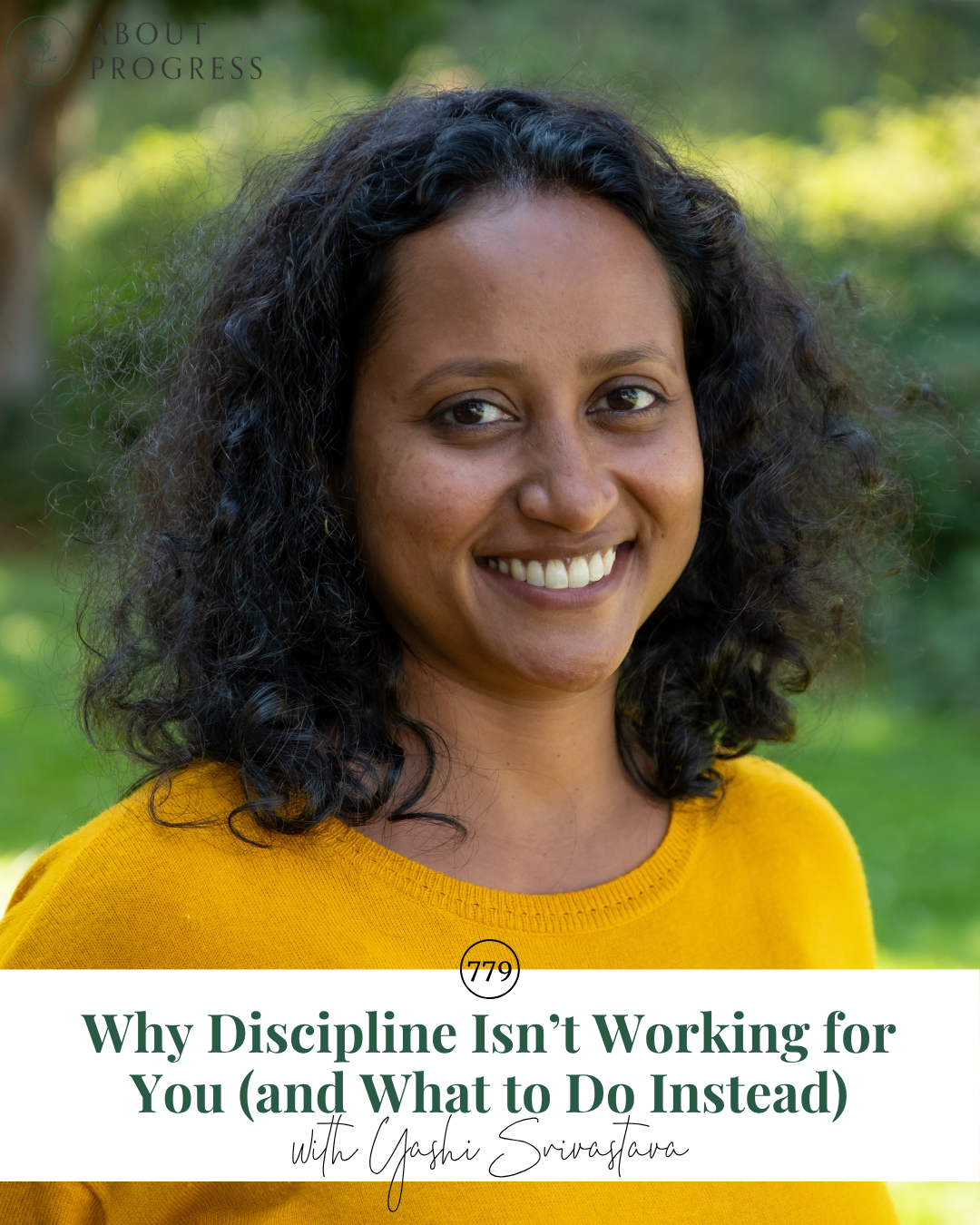
I've always believed that more discipline could solve all my problems, from achieving my goals to becoming a better version of myself. But in my conversation with Yashi Srivastava, I learned that discipline isn't the only way to make progress. Yashi introduced the concept of "inner alignment," shifting my perspective on how we can achieve our goals by harmonizing our minds, bodies, hearts, and souls.
This approach challenges the traditional notion of discipline, encouraging us to explore what's truly happening inside us. Instead of jumping straight to action, we need to pause, listen to ourselves, and support our inner needs. This journey isn't about being the most disciplined person; it's about finding fulfillment and making meaningful strides toward the life we envision.
Preorder Sticky Habits book today!
Join the Book Launch Committee for behind-the-scenes and first peeks at all things book.
Join the Supporters Club to keep About Progress around for good.
About a few other things...
Sign up for the Go Getter Newsletter to get Progress Pointers in your inbox every Wednesday.
You can listen to the episode below, on Apple Podcasts, or on your favorite podcast app. If you like the show please share it, subscribe, and leave a review!
SHOW NOTES
Yashi's Website, Free Training
Access exclusive supporter benefits
Sign up for the next Sticky Habit Intensive
Book Launch Committee
Leave a rating and review for the podcast!
Lend your voice and experience + be featured on the show HERE
Join Monica on Facebook and Instagram
Songs Credit: Pleasant Pictures Music Club
Get your AirDoctorPro air purifier with the discount code “MONICA.” Transform your space now.
TRANSCRIPT
Yashi: your goal is not to be more disciplined.
Your goal is to fulfill your dreams, pursue your goals, and so free yourself off this narrative if it's not serving you.
Monica Packer: Hi. This is Monica Packer and you're listening to About Progress where we are about progress made practical. I think a lot of us have quietly believed this. If I were just more disciplined, then my life would be so much better. Maybe I'd follow through. I'd follow through more.
I'd take better care of myself. I'd finally be the person I knew I could be. But what happens if you've tried that approach and you've tried and tried again and it still doesn't work? What if discipline doesn't work for you? Today's conversation is going to challenge that entire narrative that you are undisciplined and therefore broken, and you will never be able to change in the ways you so deeply.
Desire. Discipline is not the only way to make progress, and indeed, chasing discipline may be one of the things that is keeping you stuck. In today's episode, I'm speaking with Yashi Srivastava about why the way we've been taught to think about discipline can lead to cycles of self-blame, frustration, and burnout, especially for women navigating full complex lives.
We talk about why discipline can feel like a magic pill that doesn't actually work for a lot of people. And how the way discipline is taught often ignores your real life context, your capacity, and even your internal conflicts.
We also discuss what might be happening beneath the surface when you quote, know what to do, unquote, but you can't seem to follow through. we're going to learn about a different approach. One that, yes, she calls inner alignment, where instead of forcing action, you learn how to understand what's going on inside of you, work with it and make progress in a way that actually feels sustainable.
If you've ever felt like you are the problem because you just can't seem to be disciplined enough, this episode is going to offer you a much more hopeful way forward.
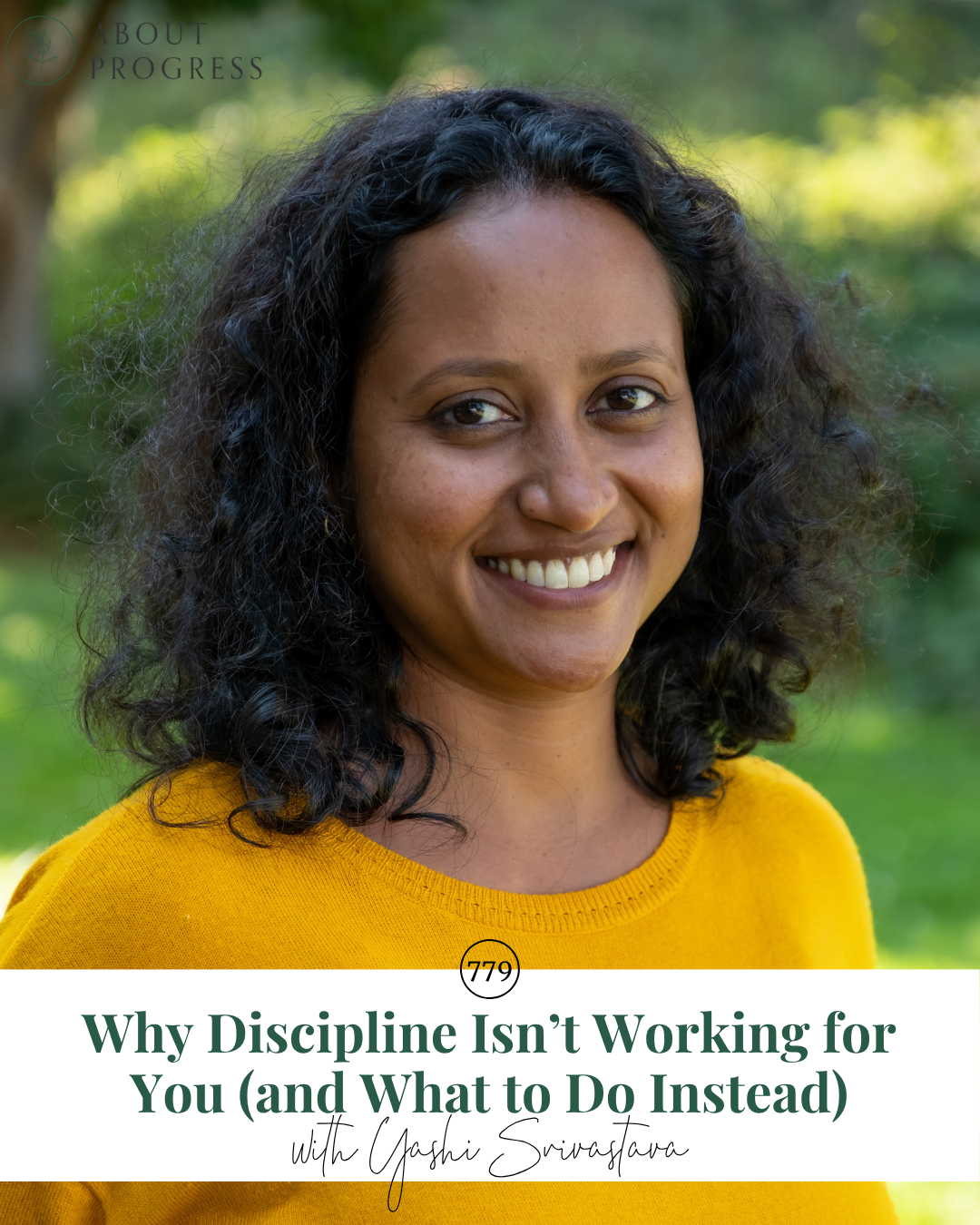
Yeshi, Srivastava helps people make consistent progress on their biggest goals. Without critical self-talk or forced discipline. Yeshi believes that life changes are more sustainable when they're rooted in deeper understanding of who we are and created from a place of compassion rather than judgment.
Her approach blends the practice. The science of happiness with spiritual wisdom and practical tools from her training as a coach and a conflict resolution professional. Yeshi holds a master of applied positive psychology from the University of Pennsylvania and is an ICF certified coach in her career.
Yeshi has also worked as a computer programmer, career coach, and human resource professional, originally from India. Yeshi currently lives in Canada with her husband and two daughters. As you listen to this episode, I know you are going to think of someone in your life who would really benefit from listening.
Please share the show with them in real time. That interview is coming up after a quick break for our sponsors.
Monica Packer: One of the things I did not have on my almost 40 bingo card is more allergies. Since I already have some kids who tend to struggle with allergies in general, I am now joining them in noticing the great difference between having good versus poor air quality.
This is why we love Air Doctor in our home. It's the only air purifier we use , and we are in good company. Air Doctor won Newsweek's Readers Choice Award for best air purifier with Air Doctor, we notice reduced allergy symptoms as an entire family, fewer odors around the home,
the cleaner air for my kids brings me a lot of peace of mind, as does the extra protection during wildfire season, air doctors, powerful three stage filtration captures particles about 100 times smaller than what typical air purifiers can remove.
Air doctor captures airborne contaminants that you do not want to be breathing in. Dust, pollen, mold spores, pet dander, wildfire, smoke, bacteria, viruses, odors and more, it has a whisper, quiet operation.
It's not loud like others on the market. And the auto mode feature is a big favorite of mine because it automatically kicks into different modes as needed, as well as an easy change filter reminder. So I don't have to guess when it's time to change my filter.
We are part of the 98% of Happy Air Doctor customers who say their home's, air feels cleaner, safer, and healthier. Head to air doctor pro.com and use promo code Monica to get up to $300 off today Air Doctor comes with a 30 day money back guarantee.
Plus a three year warranty. An $84 value free get this exclusive podcast only offered [email protected]. A-I-R-D-O-C-T-O-R-P-R o.com using promo code Monica.
Monica Packer: Yashi Srivastava. Welcome to About Progress.
Yashi: Thank you for having me.
Monica Packer: I've been so looking forward to this conversation because you have a different perspective on something that I think gets, it's like the, the, the dead horse that keeps getting kicked on the self-help space and it's about discipline and willpower and determination.
And today's the day and this is your life and you are the only one. Da da. And it just makes most of us feel terrible because we may not have the, that kind of capacity. Uh. Either innately or in our, in our season that we're facing, maybe not the same kind of discipline we had in the past. So I wanted to start with your own take on discipline and why the current teaching on this can be problematic for many people.
Yashi: I think. The self-help world as you are talking about, has, uh, most of us convinced that there is this magic pill when it comes to making progress on the goals that matter to us. What we need is discipline, and that is the way we move forward. I. The argument goes something like this. So you, if you have discipline, for example, you will be focused and productive. You will take better care of yourself. You will exercise and eat healthy and meditate. You will manage your money well. You will be in control of your thoughts and your emotions and your life and your destiny, and. All of that makes it sounds like discipline. Is this really a magic pill that, uh, we need Now the problem is a lot of people struggle with discipline, right? And so what ends up happening is we get caught up in this cycle of, okay, to make progress, I need discipline. I have been trying, but I don't seem to have the discipline that other people have. So I feel bad about myself, and then I go back to the next productivity app or a next formula that'll help me get the discipline that I'm I need and I'm looking for, and we just stay in this cycle. And what my personal experience, as well as work with hundreds of clients has shown me is that discipline is one way to make progress on your goals, but it's not the only way. There is at least one other that I have discovered and, uh, teach and then maybe more out there. And so. What I'm interested in is, is a couple of things.
So one, just highlighting that discipline is if it works for you, it's great, right? I'm not here to say that, you know, leave discipline aside and do something else. If it works for you, it's great, but you don't have to keep feeling bad about yourself if you don't have discipline. So. Challenging that idea that that discipline is the only way to make progress on your goals. And second, shift the conversation to a bit more hopeful direction, especially for people who feel really helpless with this narrative of wanting discipline, but then not having it. And then how do I actually make my dreams come true? Am forever? And so I wanna shift that towards some overall hopeful direction.
Monica Packer: We're all here for a more hopeful direction. You know, I was realizing as you were speaking about that magic pill of how it's presented to us discipline, um, it's really based on this idea that we can have total control. I. Over our lives. And so in many ways, the way that discipline is taught is pretty privileged.
Yashi: Hmm.
Monica Packer: I think it can be privileged to a certain neuro type. You know, I have a lot of Neurodiverse kids, so I've learned a lot about that because I'm personally not. And also in terms of circumstances and what's going on in life, or whether it's a season or a mental health setback, or a health setback, or a financial one.
We often can't control our lives. Even the people who maybe do find discipline has worked well for them in the past, or typically does. They may be facing a time where it doesn't now. And I wanted your perspective on that and what you see happening with those kinds of clients that you've worked with, who in the past, maybe grit and determination and discipline was the path, but for some reason it's not anymore.
And how that impacts the way they see themselves and also stymies their progress.
Yashi: Yeah. Yeah, great question. And I might actually, uh, step back a little bit and define discipline for the purposes of this conversation, because sometimes what can happen is discipline can mean different things to different people, and so there can be confusion around
Monica Packer: Okay.
Yashi: So I am actually going to read out the, uh. dictionary.com
Monica Packer: Mm-hmm.
Yashi: discipline, uh, which is, which is what I take an issue with. So dictionary.com, this defines discipline as the practice of training people to obey rules or a code of behavior with punishment or other undesired consequences for those failing to comply. Okay? And by this definition, discipline is punitive in nature. It requires us to create rules and then follow those rules, face the consequences if we fail to comply with those rules, right? And the consequences are punishment and often undesired. Going back to the point that you were bringing up about privilege, this definition of discipline, uh, makes it seem like we are entirely in control and we should be in control because it is our life and we should have complete control over it. That's not always true. The struggles that we face. They're not about personal failure. the time. And, and it's not to say that we don't have power. I am a firm believer that individuals have immense power inside of them, and we can tap into those powers, but that doesn't mean that we have complete control over our lives, our situations, uh, the privileges that we have or don't have.
And so it needs to take into account the unique human who is trying to apply this advice to their life. And I think that is where. I have a big issue. I mean, when it comes to personal growth, there is no one size fits formula to anything. Everybody has to find their own way. And so why would discipline be an exception?
Like why would discipline be a magic pill that works for everybody in the exact same way?
Monica Packer: Mm-hmm. Okay. Yeah. Thank you for that take on it. It's, it's helping me see that what it leads to is a lot of self blame. Do you see that a lot in your clients?
Yashi: Yes, I have. I work with a lot of leaders, a lot of women who are really brilliant, capable, and they just bought into this narrative that discipline is the way to make progress to also to what you were alluding, right. There is also a phase of life thing to it when earlier in their career they may have had a lot of free time and actual control over how things are. And so maybe there was more discipline there. And then as things move, we end up having, uh, kids or life situation changes, health issues may arise. We may have aging parents who we need to care for. So there's so many different things in which, uh, our phase of life changes. And then we of this as a personal failure, as if. We are not being disciplined enough. And that is the problem. And I think it really needs to, uh, be reset and recognize that are things we can absolutely control and we can do, and there is a larger context at play that needs to be taken into account. We cannot deny our reality completely and then try to push through and keep making progress through discipline.
Monica Packer: So let's say there's someone who's listening and they're hearing you, but they don't believe you.
Yashi: Yeah.
Monica Packer: They're like, sure, sure, sure. But not for me. And also like, how can I actually change? I really wanna change. I really wanna improve this area of my life and I can't, if I don't actually have some discipline, what would you say to them?
Yashi: I get that question quite a
Monica Packer: Mm-hmm.
Yashi: And so, so when I tell people that, when I introduce this idea, people ask me questions like, but Yeshi, if I were to let go of the pursuit of discipline, how will I get anything done? How will I accomplish anything? Won't I stop growing? Won't I stop striving for excellence in areas that matter to me?
Like I don't wanna give all of that up. And the thing that I say to them is, if you think about like all the things that you're thinking about that you won't be able to do if you don't have discipline, your ultimate goal is not to be a more disciplined person. Like nobody is living their life saying, I want to die.
Saying that I lived the most disciplined life possible.
Monica Packer: That on your tombstone
Yashi: Yeah,
Monica Packer: disciplined person.
Yashi: person, right? In my experience, people are not pursuing discipline for the sake of it.
Monica Packer: Okay.
Yashi: is something else. So discipline is a means to an end. What they want is to be able to accomplish their goals, to make progress on things that matter to them, to live a life that they feel proud of and are fulfilled by.
Right? And discipline is a bridge to get to those things. We have been told that discipline is the only bridge to get to those things, and what I am saying is that there is another bridge. So if we, for a moment stop chasing discipline as the only way to get where we want to be, and wonder like, is it possible that there is another way for me to get to my goals? If that way was available to me, would I want to pursue that? Wouldn't it be worthwhile to exploring this other way because. Like, we can spend so much time. I know from personal experience, I have spent years and decades of my life trying to be more disciplined, right? And it wasn't really getting me where I needed to be.
Monica Packer: Okay.
Yashi: I, instead of being, uh, staying stuck in that situation, I. Chose to switch and like I, I stumbled upon this, but I started wondering like, what is it that I'm missing? Why is it so hard for me to do the things that I really, really wanted to do? There must be some, some explanation. And so when I shifted from like trying to just be a more disciplined person to becoming curious about what was in my way, it showed me that there, there were other ways to make progress on my goals and I have been able to make. so much progress on all the things that mattered to me ever since I let go of the pursuit of discipline.
Monica Packer: I love that. So Yeshi, let's imagine someone's standing on that chasm, right? And it's, there's a gap between where they are and where they wanna be. And they're seeing the bridge of discipline and now they're like expanding their view. They're like zooming out and saying, oh wait, there's actually other options here.
What's another bridge then that can help them overcome that gap and get to where they wanna be?
Yashi: Mm-hmm. that's actually the essence of the work that I'm currently doing. Uh, the other bridge, I call it inner alignment.
Monica Packer: Okay.
Yashi: I define inner alignment as a state of harmony between our minds, bodies, heart and soul. So going back to the idea of like, we should be in control, right? So a lot of times discipline based approaches, uh, can. like, okay, I, I know that I should be doing this, so therefore why am I not doing it like I should? Just because I have this awareness, I should be able to take action on it. Right? So it goes from that, a thought to an action, and we feel like that that's how it's supposed to be. I have learned is that there is so much more to us than the cognitive, like thoughts, the mind, the things that happen in our brain.
Monica Packer: Mm-hmm.
Yashi: There is more towards than that, right? We also have body that brings so much wisdom in our life. We have a heart that is the seat of emotions and a lot of people may not realize this, but emotions drive a majority of our behavior. It's not rational thinking, it's emotion.
Monica Packer: Mm.
Yashi: And then we also have a soul, uh, which I see it as the seat of our deepest values and our sense of purpose and what we are here for this life, right? And when we take all of these aspects into account and when we, , kind of align them, then progress becomes easier. So let, let me actually explain this, um, through. This idea of, um, inner conflicts. So lot of times, let's say, let's say you have a goal, let's say, um, you want to be able to get up in the morning and exercise, right?
And I've had clients who say to me, uh, yeshi, you know, I'm really bad at keeping promises to myself. So if there's somebody else who's holding me accountable, I will. Get up and do it. But if I have to do it for myself, I just don't keep my promises to myself. One example is you wanna get up in the morning and exercise. So you set up your alarm at night, you get your gym clothes out because that is supposed to, uh, make it easier for us. Uh, you maybe have invested in a new pair of sneakers because that might motivate you, and so you're all set and you set up your alarm night, but when it rings in the morning. You snooze or you turn it off and you don't get up and then you feel really bad about yourself. So I, I had a client who came to me with this challenge and the thing that I asked her was, okay, so tell me a little bit about the night when you're setting that alarm for the morning. Would you say that every single part of you is absolutely on board with the idea that getting up in the morning is, uh, to exercise is the best thing and is a good idea? And so she paused. she'll slow down. And she said, you know what? Actually no. There's a part of me that loves having a quiet, spacious morning where I don't have to rush to the gym. You know? Uh, I have, um. You know, there, there's this part of me that hates going to the gym. Like I, once I go there, I exercise, it's great, but I actually don't like going to the gym so much. Um, there is a part of me that says that you are exhausted. What you need is rest, and why are you trying to go? Get up early in the morning and exercise, right? So all of us have these internal conflicts that are playing out in our life when it comes to the things that are important to us. And while a discipline based approach would say, okay, you've decided that you wanna get up in the morning, no matter what, you get up and you just do. Whereas the inner alignment focused approach looks at these inner conflict and say, huh, what is, what is going on, uh, there? How can we address these conflicts in a way that works for everybody that fulfills various needs and demands that we have? And then once we address these inner conflicts, then progress is inevitable.
But there is, if there is nothing resisting. You internally, then you're able to take the action that you need to take without forcing yourself or pressuring yourself or blaming yourself.
Monica Packer: Okay. I love that premise and I want to carry it forward. And it with a twist, like, so let's imagine it's you're that same client and they're realizing the night before actually. Yes. Like starting the morning earlier with movement would help me feel like so, in tune and present and cared for. And I really want this, but I still don't know how to get it.
Can we walk through how we can take this bridge of inner alignment and still practically get to where we wanna be. With that same kind of goal because I, you know, I, I love the idea of still like seeing like this is actually what I want and why. So can you walk us through the practicalities of that?
Yashi: Yes I can. So. So I, okay, so we can go in, couple, couple of directions. You tell me which one would be most useful right now, so I can share a specific story of how I overcame something like this in my own life, which is why I will die on the hill of inner alignment. And I can also talk about the, the step-by-step process that I teach, uh, which, which helps create that.
So where do you want to go knowing your audience?
Monica Packer: Okay, well, I just wrote right before the other question, story, and start it around. So let's start with the story and then you can tell, teach us the principles. Thank you.
Yashi: Sure. Yeah. Okay. So, uh, when, when I was little, I loved writing. Okay. It was something that like, in my quiet, whenever I had time to myself, I would just like, sit hardly in a corner of my room with a notebook and a pen. I just loved writing. I never really shared my writing with myself because it was something that I did, for me. And as I grew older, uh, I was in the corporate world at some point attended this training, which, um, kind of reminded me that I had moved away from writing and like I was not writing as much as I wanted to. And so it reminded me that, okay, this is something that I want to do in my life. I want to write, and I also want to share my writing with the board. So I realized this. I made this decision, and then in 2010 I started a blog, a personal blog, where I just wanted to write and share my writing with the world. From that moment on writing became such a massive turmoil for me that it had never been before,
Monica Packer: Hmm.
Yashi: And I was just caught up in this. Confusion of, I want to write.
And I was pushing myself to write, but why is it so hard now? Why is what is making it so difficult? And then over a period of, I would say, more than 10 years, lived with this inner turmoil where I wanted to write. I couldn't write, I, why am I not doing this? I'm not disciplined enough. What is wrong with me?
Like more than a decade, I did that to myself. And then, uh, at some point, I think this was around. Just after the pandemic, 20, 20, 20 year that we all had, I had this moment of, okay, I need to figure this out once and for all. Like I want to know with certainty whether or not I'm going to write in this lifetime, it's okay if I, if I'm not, but I'm, I'm done with this, like my energy on this tur oil. so I started. that, and that journey kind of led me to a spiritual teacher invited me into a different kind of a conversation with myself. So instead of, I'm not disciplined, I am not able to do this and all of that, he said, okay, for a moment, let let go of that and see, like, get curious about what, what is it that is making it so difficult for you to write in the first place? For me, it was a, a inner critic, like a voice in my head that just judged me constantly and persistently and relentlessly. And I said, it's this voice, like this is the voice. If this would go away, I would be able to write. And he said, huh, that's interesting. Uh, that voice is not going anywhere. how about you spend some time, time trying to understand that voice and see like, why is it making. You miserable like this. My first reaction was disbelief. Like, I was like, what are you talking about? Why would I want to sit and talk to this part of me that just drives me nuts? I hate it. I I do not want to do that. And he was like, yeah, that's your choice. You get to choose. Anyway, so long story short, I took that invitation because I was, I had tried everything else seriously. I was desperate for a resolution. And so I started, uh, this exploration, internal exploration of, okay, what is it that my inner critic is trying to do exactly? with that, um, exercise, I completely like shifted my relationship with my critic. Uh, I, after that, I actually created a program called Befriend Your Inner Critic, because there was so much wisdom that was hiding underneath what my inner critic was trying to do. once I was able to see that. I was able to turn my inner critic into an inner ally. So it's not that it's gone away anywhere, but it's been more than three years now. I have been writing consistently, joyfully, effortlessly. I don't have any discipline when it comes to writing. I don't write every day.
I don't even write every week, but I'm consistent. There's a newsletter that I sent out and, and just for me, that is such a magical transformation. I still, when I think about that. You know, shift. It's magical. And so to go back to your question of what, what actually happened on and how, how did I do that? that time, it was just turning inward with curiosity and compassion. And over the last few years, I have developed this step-by-step process, uh, to cultivate inner alignment that I now teach people.
You are not bad at habits. You've just been using the wrong method. My first book will be published this fall. It's called Sticky Habits, A Woman's Guide to Reclaim Happiness Ditch Perfectionism, and Create Habits That Last. It's set to release September 8th, but you can pre-order the book right now for three special bonuses.
This book is not about. Doing more. It's about building habits that survive real life, creating routines that flex instead of break. Letting go of perfectionism that keeps you quitting and learning how to keep promises to yourself. Again, even on hard days. In a world of self-help. That too easily ignores the invisible labor women carry. That changes everything because women must do habits differently. Sticky habits will teach you how to do so. Please pre-order the book now and check out the special pre-order bonuses by going to sticky habits book.com that's linked for you in the show notes.
I'm so thrilled for this book to be out in the world. It is several years in the making and I know it will change so much for you. Again, go to sticky habits book.com to pre-order the book now.
Monica Packer: Fantastic. I'd love to hear that force, that process.
Yashi: Yes. So let's, let's get into that. So the first thing I tell people is to pick a goal that really matters to you.
It like, I call it a regret worthy goal. that you would just really lie on your deathbed, regretting, not taking action on. It doesn't matter whether you're successful at it, whether you made your team come through. But what matters is that you tried and took action. So
Monica Packer: I love that framing. Okay, so a regret. Sorry, I wanna say that to everyone to make sure. I like the phrasing, a regret worthy goal. Not that you met it, not that you met it, that you tried. Okay. Continue.
Yashi: And if you have a goal like that, uh, the inner alignment process, uh, will definitely yield resources, is what I have seen. But I will also say that the process applies to other goals, so encourage people to use that as a starting
Monica Packer: Okay.
Yashi: because this is such a counterintuitive idea. That if you experience it and see results in one area, you can apply it to various other situations.
Monica Packer: Got it.
Yashi: is really important to have a goal that matters
Monica Packer: Mm-hmm.
Yashi: to do something about. So that's first, the first step, recognizing a goal. What is it? Why? Why does it matter? And then the, there are four phases of inner alignment. So the first phase is awareness, which is about understanding what is going on in your inner world.
Monica Packer: Okay.
Yashi: So identifying the different, , thoughts and beliefs and emotions you may have. So that is awareness. second phase is acceptance. Acceptance is about being able to turn inward with a lot of compassion and acceptance. This was the thing that I did with my inner critic. I turned towards it with more acceptance and curiosity and compassion. When you, you have. Gained a greater level of acceptance. The next phase, uh, the third phase is alignment, which is where you actively work to align the different aspects of yourself. So in my writing example, I actively worked with my inner critic to figure out what, what was it concerned about, what was it afraid of? How could I. Put some of its fears, uh, to rest, like how could I ease into writing in a way that it felt comfortable for it? So the third phase is alignment, where you compassionately work with, uh, your inner world and align them. And the fourth step is action. So once you have gone through awareness, acceptance, alignment, action almost naturally flows.
Like I I,
Monica Packer: Okay.
Yashi: I shifted the relationship with the inner critic, I don't have to force myself to write it just, it's not needed because it flows. It's something that I'm meant to do with my life, and the inner critic is supporting me. It still comes up and says, okay, this, this seems too dangerous. This is a problem, and I make space to listen to it, but it doesn't get in the way of me taking action on the things that I want to take action on.
Monica Packer: So, you know what I'm really narrowing in on this, um, is I feel like with discipline, they just jump right to action.
Yashi: Yeah.
Monica Packer: And, and, and I love this, this, uh, four step process because it's not about just pretending people can teleport to their end goals, you know, just magically get what they want because they think about it, which we also know matters, you know, in terms of having a vision and all that.
But action has to happen, but it will flow easier when you have gone through those other three steps and let that lead.
Yashi: Yeah. one, one metaphor that I think of is that imagine that you're sitting in your car you have like an important destination to get to, right? You, you definitely wanna get there and you are like trying to accelerate and it's, it's not like the car is not moving, the car is not moving. And so what you're doing is accelerate harder, but it's not budging. And what you're not realizing is that the hand brake is on.
Monica Packer: Uh,
Yashi: You need
Monica Packer: yeah.
Yashi: that break for the journey to unfold. is not going to help. Most of us think, okay, I have the awareness I should be able to take action, but acceptance and alignment are such crucial steps that we often miss and overlook and then get frustrated with ourselves as if there is something wrong with us.
Monica Packer: I wanna go back to the acceptance.
Yashi: Mm-hmm.
Monica Packer: You know, the, the, the way that you modeled self-compassion and being able to accept that there is an inner voice, a critic. And, um, there's one other facet to that too, I think is really important. And, and I, and I feel like you would have some thoughts on this too, is I have found it's really important to accept your limitations.
Meaning to accept, like, actually this is an obstacle. And this is why that this keeps happening, or here's why I keep hitting snooze, like for reals, like there's an actual limitation to my season. And then being able to better align my life to those limitations in a way where I can then have actions that actually make sense.
I just would love to hear more of your thoughts on that, like Yeah.
Yashi: So the acceptance part of Inner Alignment talks about acceptance of two things. One is acceptance of yourself, like the your internal world, and the other one is acceptance of the reality that you're in.
Monica Packer: Mm-hmm.
Yashi: Right, the context that you're in. So, uh, if, if your face of life is such that you not in a position to train for a marathon that you used to do until a few years ago, then fighting that reality is not going to help you. You need to be able to recognize the reality that you're in, and the practice of inner alignment needs to work in the larger context of your life. It has to work for you personally in that. Specific moment in time in that specific situation that you're in. And sometimes, we don't like the reality that we are in a lot of times, and so we spend a lot of time resisting
Monica Packer: Mm-hmm.
Yashi: that. And there is, I mean, there is reason for that, right? Like, so one of the things in, in this work that I've learned is that there's always a reason. For why you're experiencing resistance. And the goal is not again, to like shove the resistance aside necessarily, but get curious about it. Like what, maybe there is a part of you that, uh, really valued the identity of being somebody who ran marathons and you can't do that right now.
And that part feels really sad about it. And does a model let go? So is there something that you can do, offer compassion to that part that makes it easier for. It to see that your reality's changed and you are not in that same situation right now. Maybe in the future you will be there again, and then your of phase of life will change again. But being able to meet our reality and ourselves without judgment is an essential pillar of this work.
Monica Packer: And that's another like square peg, round hole thing. I think discipline misses is thinking like it has to look a certain way, like the same goal. I have to be able to do the same thing in the same way my entire life. Like if I'm a runner, I run the same way the rest of my life. When it's like, well, maybe you could become a once a week runner.
Yashi: Mm-hmm.
Monica Packer: you can run five Ks instead of marathons.
Yashi: Yeah.
Monica Packer: Maybe you can become a trail runner because it's easier on your knees.
Yashi: Mm-hmm.
Monica Packer: all these things to people in my life who I know are actual runners. But um, this is such a beautiful, refreshing way of looking at how we pursue what matters most in our lives.
And it's given me a lot of hope. And I know the women who are listening to, I'm sure they'll wanna learn more from you. So where would you recommend they go to do that?
Yashi: I think the best ways to learn about my work, uh, there, there, there are two places that I will say, I have a free training. It's called, uh, how to Make Progress Without Self-Discipline. It's available on my website, it's ya.com/progress, and I'm sure you can link this,
Monica Packer: Yes, I'll.
Yashi: free training.
It's, it's 30, 32 minutes, which gets, uh, more deeper into this, this approach that I've talked about. So that is one place where people can learn about, especially if they're interested in this topic. That is a great place to start. also have, um, newsletter, uh, it's called Unshackle. Which is, uh, a lot about, you know, how do we break free from the inner barriers that hold us back,
Monica Packer: Okay.
Yashi: how do we lean more into the inner capacities that all of us have, like all of us have access to wisdom and strengths, but we tend to forget those things.
And so the newsletter is another place where I share some of my writing, and it's a really good way to learn more about me and the feel for the work that I do. And yeah.
Monica Packer: Fantastic. We, we'll link to both of those things in the show notes for them. We like to always enter interviews with the same question and it's what is one small way listeners can take action on what they learned today.
Yashi: Can I say two things? They're both
Monica Packer: Yes,
Yashi: okay.
Monica Packer: you can break the rules, can make your own rules.
Yashi: good. Okay. So I think the simplest thing I would say is to. Sit with this idea and allow yourself to free from this narrative around sound discipline like you. You don't have to keep freshing yourself and pushing yourself to try and be more disciplined, because your goal is not to be more disciplined.
Your goal is to fulfill your dreams, pursue your goals, and so free yourself off this narrative if it's not serving you. So that's one simple thing. The other one I would say is, . Pick an activity and you could pick from a range of activities, but the it, it needs to do two things. it should be enjoyable for you, so pick an activity that is enjoyable. It could be, an art and craft project. It could be singing, it could be dancing, it could be being in nature. It could be journaling. There's a wide range of activities that pick an activity. It should be something that you already love doing. It's enjoyable. And the second condition it should meet is, , it should make you feel connected with yourself in a deeper way. So one example I have is I, I had this client who a, like a big stressful job and kids at home and one, one of the things that she did was when, when life got too much, would go to her car, the doors, turn on like the, or the music of her choice, turn up the volume at max capacity and headbang and sing. At the top of her lungs. And she would do that for minutes, 10 minutes, whatever. And it brought her back to herself in a
Monica Packer: Hmm.
Yashi: that she was like, okay, I can deal with whatever else is happening right now. So that's one specific example, but anything that gives, you a sense of connection with that is, that connects with your heart. Your body, your soul, pick an activity like that and then choose a frequency that is really easy and doable for you. If you can do it for five minutes a day, great. If you can do it for once a week for 15 minutes, that's fine. Like it's, the goal is not to get disciplined about it. The goal is to make space for it and have it as an anchor that you can, you know, that grounds you, that you can come back to and. Because when we are connected with ourselves in a deeper way, it paves way for more alignment and things a lot easier.
Monica Packer: I feel ready to go do that. Uh, thank you. I love that recommendation. Well, Yahi, this was an amazing conversation. Thank you so much for being on about progress.
Yashi: Thank you so much for having me. This was amazing.
Monica Packer: Well, you did great. I could have talked to you for a much longer time. That was awesome.
Yashi: I have been, uh, following your.
I hope this episode gave you the hug and kick in the pants you need to grow. I'll now share the progress pointers. These are the notes I take so you don't have to, and those on my newsletter. Get them in an expanded graphic form each week. You can sign up at about progress.com/newsletter.
Number one, discipline is not the goal. Progress is number two. Stop jumping straight to action. Check for inner resistance first. Three, use the four step inner alignment process, awareness, acceptance, alignment, action. Number four, your lack of consistency may be an internal conflict, not a character flaw.
And number five, build connection with yourself before trying to fix yourself. Your Do Something challenge this week is instead of asking, how can I be more disciplined, try asking what is getting in the way and how can I support myself better through that? I always love to hear about how you deal with the challenge.
You can email me at hello to about progress.com or message me on Instagram at About Progress. This podcast is listener supported. Members of the Supporters Club. Make my work free and available to all. No paywall, No dramatic increase in ads.
In exchange, they get access to three levels of exclusive benefits. For more time to more content with me, benefits start at $2 a month and cap at $7 a month. You can check out those benefits and sign up at about progress.com/support, but you can always support the show for free.
The best way right now is to share this episode with a friend, so copy the URL and send it to someone you know right now. Thank you so much for listening. Now go and do something with what you learned today.
Yashi: So I, should I look at the, the camera in my, where do you want me to look?
Monica Packer: look okay. Right now you're looking at me.
Yashi: Yeah.
Monica Packer: Okay. Move me over a little bit. So I'm more center screen,
Yashi: Uh, I can move you.
Monica Packer: like move the window.
Yashi: Okay. I'm trying to do that. It's not, how does that.
Monica Packer: You just drag it over like the normal window, like on the side of the
Yashi: it's
Monica Packer: the tab.
Yashi: Can I just hide myself completely so I
Monica Packer: It used to be able to do that. Let me see
Yashi: Okay. Let me see.
Monica Packer: it. It does echo cancellation, but not
Yashi: okay, pin, I, I just pinned you. Is this
Monica Packer: great. Oh, and now you taught me something new. This is the first, the second, only second time I've used it in this setting, so this is great. Okay. Yeah. Perfect. Yeah, so if you're looking at me, that's, that's great.
Yashi: Okay. Yeah. I'm looking at you now.
Monica Packer: Awesome. Okay. That's perfect. Thank you.