
A Tribute to Carol Lynn Pearson || Her Shared Lessons on Love, Acceptance, and the Divinity in Us All
Aug 10, 2026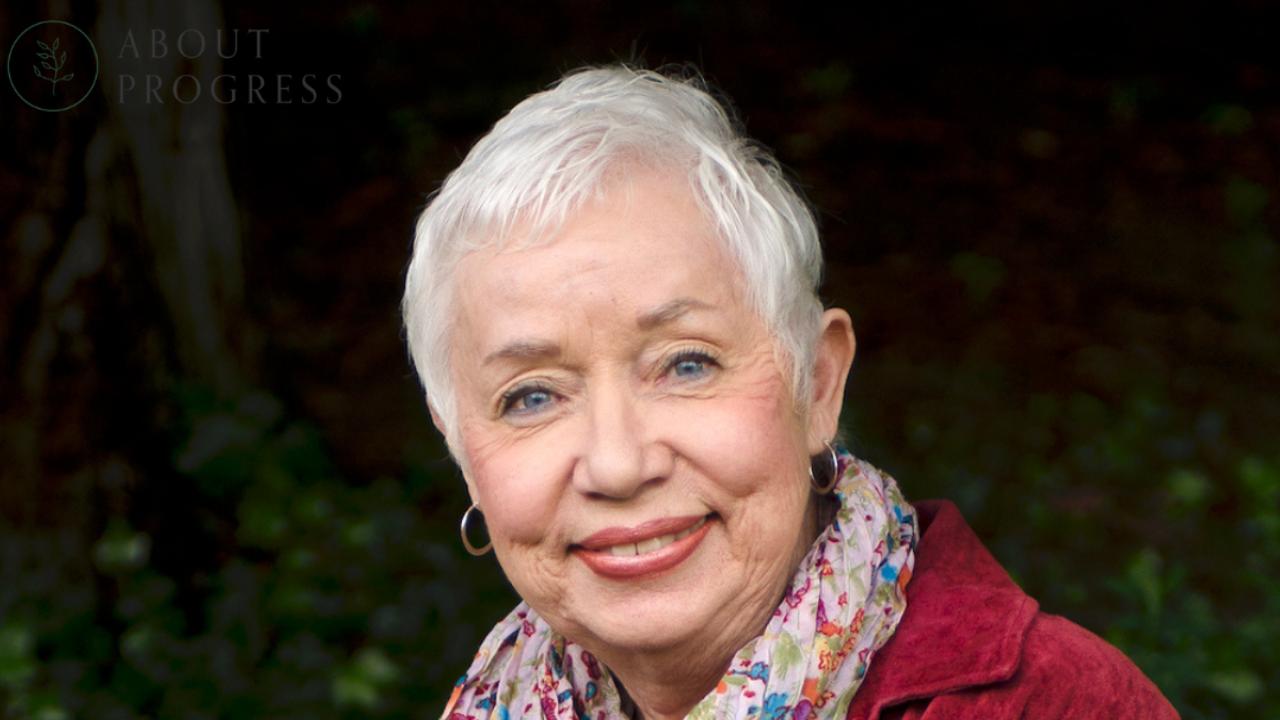
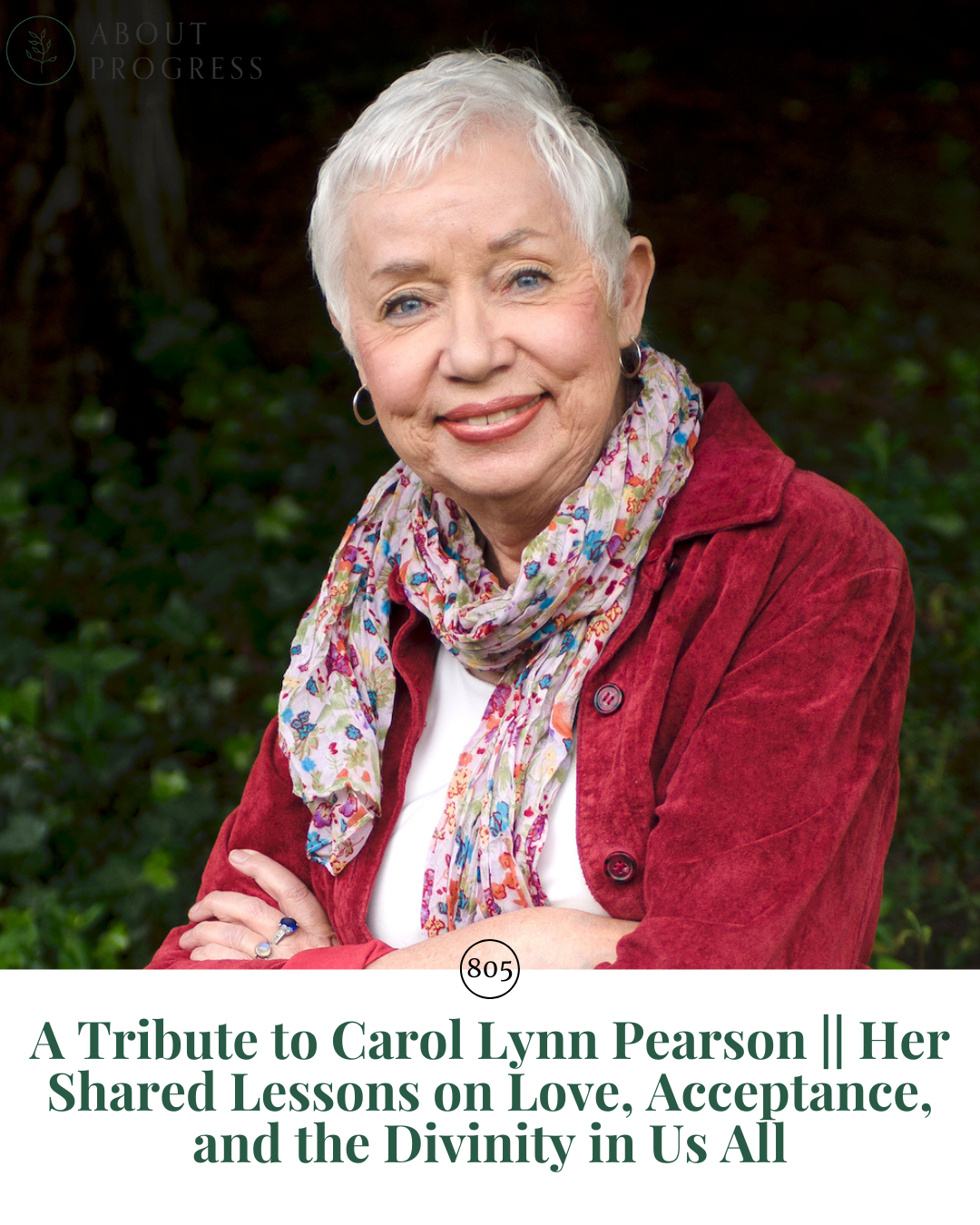
In this tribute episode of "About Progress," I honor the legacy of my dear friend Carol Lynn Pearson. Her life spanned 86 years, during which she was a celebrated poet, playwright, and activist, prominently championing marginalized voices in the LGBTQ+ community within the LDS faith.
Reflecting on our friendship, a lingering regret remains with me: the times I allowed life’s challenges to pull me away from keeping in touch with her. Despite this, Carol Lynn’s unwavering forgiveness and wisdom continue to inspire me every day. I invite you to join me in celebrating her rich life and enduring impact as I share personal anecdotes and sing her song "I'll Walk With You," a testament to the love and companionship she so fervently embodied.
First episode with Carol Lynn, “How to Evolve Alongside Your Gifts.”
Snag your ticket for About Progress LIVE
Preorder Sticky Habits book today!
Join the Book Launch Committee for behind-the-scenes and first peeks at all things book.
Join the Supporters Club to keep About Progress around for good.
Go to Quince for free shipping on your order and 365-day returns.
About a few other things...
Sign up for the Go Getter Newsletter to get Progress Pointers in your inbox every Wednesday.
You can listen to the episode below, on Apple Podcasts, or on your favorite podcast app. If you like the show please share it, subscribe, and leave a review!
SHOW NOTES
Access exclusive supporter benefits
Book Launch Committee
Leave a rating and review for the podcast!
Lend your voice and experience + be featured on the show HERE
Join Monica on Facebook and Instagram
Songs Credit: Pleasant Pictures Music Club
TRANSCRPT
Carol Lynn Pearson: [00:00:00] just to believe that there's something good going on- with every person whose path we do not know, and we have to give everyone the benefit of the doubt and look for the - divinity , in them.
Monica Packer: Hi, this is Monica Packer, and you're listening to About Progress, where we are about progress made practical
In now nearly 10 years of podcasting, the episodes that I have both felt the most honored to share with you and also the most sad to share with you have been those that are tribute episodes, where I honor a past guest on the show after their passing. And today is one of those episodes, except this person that we are featuring today is not only a former guest, she is a dear friend of mine,
And her name is Carol Lynn Pearson. I'm gonna do my [00:01:00] best to get through this intro, but it'll be a little tough because Carol Lynn meant a lot to a lot of people, and I know I am one of many, many thousands who can say that She not only cared for me, but in many ways saved me through a difficult time in my life.
If you don't know Carol Lynn, she is a remarkable woman. She recently died a few days ago as I'm recording this at 86 years old from uterine cancer. Um, lived a very long, amazing, very interesting life. She is most known for being a poet, a playwright, a writer, and an activist, especially of LGBTQ, , plus individuals in the LDS, Latter-day Saint faith.
, And she was a polarizing figure to many within that same faith. I first met Carol Lynn having no idea who she was. [00:02:00] She was in my congregation in Walnut Creek. We lived in that congregation for seven years, and I f- I first vaguely met her when I was in the women's hour, and I rose my hand to say something that was not something I heard many people say.
And it was essentially about my own desire to know the divine feminine. And this woman in front of me, when I said something about that, turned around and looked at me very intently. And I took that look as a judgment. But the next Sunday or two, that same woman, came out of the bathroom stall of all places, was standing there washing her hands, and she wanted to know about me.
And that woman was Carol Lynn Pearson. Little did I know that Carol Lynn was a fierce advocate for so much of the unseen and the dismissed in my faith. Questions, [00:03:00] doubts, concerns that people had long felt pressured to sweep away, to not say. Um, and she said it. She said those things, she defended those things, and she helped those people.
That first meeting with Carol Lynn turned into repeated bathroom visits because the mother's lounge, where women go to nurse their babies, was connected to that bathroom, and Carol Lynn was fond of hiding out there during the second and third hours of church,
and I was there often because I met Carol Lynn when I was pregnant with my second child, and I left that congregation nearly a year after having my fourth child I gradually came to know who she was, but it wasn't until many times as we both sat in the rocking chairs and she would sit there and listen, and I would sit there and nurse a child, and I would mostly talk, and she would mostly listen, and she would occasionally chime in with some words of wisdom and her own perspective of [00:04:00] things.
, Other friends would join us in there from time to time, and we all just got to learn from her. I, I came to learn who Carol Lynn really is as a person, someone who has seen a lot, who has been through a great deal, a person who knew what her purpose was on Earth and lived it well.
I came to really love and know Carol Lynn just as I believe she came to know and love me too.
I invited Carol Lynn to be on the podcast in 2020 and again in 2022, so there are two lovely episodes we have with her. I wanted to share the second of the two because we talk about love in it, and I would not say that people would describe Carol Lynn as sweet, but they would describe her as incredibly, deeply loving.
She had a strong personality because she was resolute in the things she believed and unafraid about raising her hand and saying the things [00:05:00] that needed to be said
But it was because of love that she did those things, And I also believe it's this love that gave her the courage and the energy to do so throughout her long life. I'm gonna link to, The Salt Lake Tribune's article on her.
I think it's an amazing overview of her life and what she meant to people. But what I wanted to start this episode with is just what she meant to me. She was an example to me of being a woman who could challenge the community that she put herself in because she loved that community A woman who could dare to do and say hard things because of the deeper purposes she held onto, and a woman who would quite literally drop anything and everything to be with someone who needed her.
Carol Lynn never shied away from opportunities where people would honor her, but she mostly lived an extremely quiet, humble life. She spent a great deal of her days journaling, [00:06:00] writing, reading, thinking, walking, and hiking. A lot of people who got to know her went on those walks and hikes with her, where at the top of a mountain she would bless the world, as she was fond of doing.
it really didn't take much for you to get Carol Lynn's number or to show up on her doorstep and for her to be there for you, regardless of your background and where you're headed
There's a lot I could say about Carol Lynn and her professional attributes, but I think the article that I will link to from the Salt Lake Tribune is a wonderful way to look to that. But it really is the small things, the small ways that Carol Lynn loved people, that I think she showed who she was. I reference that in the episode you're gonna hear, but one of my favorite stories of Carol Lynn is shortly after the birth of my fourth child, many of you know this, but he had twisted bowels, and because of that, he was in the process of dying, and there had to be an emergency surgery for him, a very serious surgery, [00:07:00] and often would require you staying in...
We stayed in the PICU because there wasn't room in the NICU, the pediatric ICU. You're supposed to typically stay there for up to a couple weeks. Um, we stayed there much shorter, and when I got home, I finally listened to a lot of voicemails that I missed, and one of them was from Carol Lynn. I tried to find it, but I couldn't, which I'm so disappointed about.
But in that voice message, she told me something to the extent of, "Monica, I heard that you're in the hospital. I would love to come and visit you and give you a hand and foot and head massage. When can I come?" That was Carol Lynn
Carol Lynn was very open in letting people into her orbit, and I was lucky to be able to be part of the, the book of poetry that she wrote called Finding Mother God. One of the poems she has, has me in it, And came from our many conversations together, which I'll never be over that.
What's, what a cool thing. Um, I was able to read her manuscript in advance and to give some of my feedback on it from The Love Map, which we [00:08:00] talk about in this episode. And she was just such a remarkable, creative woman. She was funny. She had good stories. She always had an amazing necklace or earrings and some other accessory, like a a scarf that she would put on.
She always looked so creatively and beautifully dressed. Um, she was fierce. And there are also things about Carol Lynn that, you know, people may be surprised to know. Um, she didn't like the way she looked. While she was very resolute in what her gifts were and powerful in them, she had self-doubts and insecurities just like the rest of us.
There were things she would never talk about, including deaths in her family of a child There was a lot of pain in her history, a pain of feeling like she wasn't the one that could be chosen. But she continued to show up
While I know I'm not the only one grieving Carol Lynn, my grief has felt a little extra [00:09:00] painful for me than maybe of other people I've loved passing in, as in my adult years because I have a regret. I have a regret about how I let that friendship fade. When we first moved away from California, Carol Lynn and I would keep in touch.
We would call, we would email. She sent me the latest book she was working on. And with this interview we recorded in 2022, and we were still in pretty good touch, but after that, my life got really challenging circumstantially with a hard pregnancy and then a postpartum, and then just feeling like I was barely keeping my head above water.
I've never been great at keeping in touch with old friends, and it's something I don't like about myself, and I wanted to be different with Carol Lynn, and I tried, but not as much as I should have. In the last probably two years, I kept thinking, "I need to call Carol Lynn." And I just felt embarrassed to because I hadn't read through her [00:10:00] manuscript in the way she deserved, even though it was such an honor to have it, because it had been so long, because I felt like I had been a bad friend.
And I wish I had had more faith in Carol Lynn that she deserved, that she would have understood, that she would have picked up that phone whenever I ended up calling. And in fact, the very morning that I found out that she had passed away, I thought while I was in the shower of all places, "I should call Carol Lynn.
I'm gonna regret if I don't." And I do. So I wanted to share that with you because at the end of the day, that regret comes from love, which is what this episode really is about. And I have had a conversation with Carol Lynn, and I told her I'm sorry, and I know she's forgiven me-
And I hope I can learn from that a- and, um, just be better about not getting sucked into my own life and the [00:11:00] urgency that is in it at all times. Because Carol Lynn's life was full, but she was never too busy to stop and to call or email or to open her front door, or to stop everything and show up at the hospital if you wanted her to.
She was never too busy, and that's something I wanna learn , from her. So what you're gonna hear from here is that interview that I aired in 2022. I hope you can come to know Carol Lynn like I did, and I hope you can come to love her like I've have and do. And instead of the usual sendoff at the end, I'm gonna sing a song that I'm embarrassed to do, but I think Carol Lynn would love and be tickled if I tried.
I don't have the best voice in the world. It's not gonna sound great. It's gonna be a cappella. But I wanna honor her and the song that she wrote called I'll Walk With You, which is so symbolic of her whole life and what she really lived for and, and what I think she died for, [00:12:00] too, in many ways, is to just us all be better about seeing people for who they are and being there for them.
So let's turn to that interview. And, um, just so you know, I still have to air ads on podcasts that I air on the normal feed. So there will be ads. There will just be two ad slots with two ads each. So I've limited it where I can. But just know they come after I start the interview.
Thank you for listening.
Carol Lynn Pearson, it's so wonderful to have you back. Oh, well, M- uh, Monica, it is wonderful to be with you, to see you.
How I have missed you. The same is true here. I'm honored to, to be your friend. I'm, I'm honored to, to be able to see who you are in person. It's a lot of what we're actually gonna be talking about and how you live out what, what you are known for, you know, with your words and- Mm ... and your advocacy and, and your activism and things that you do for people.
But I'm [00:13:00] especially eager to talk about something I've learned from you today that I think- Oh, okay ... my community really needs to learn. I, I, I can't wait to learn what you have learned from me. Well, among many, many things, one thing I've learned from you is how to deeply love and accept people. You are so good at this.
Mm-hmm. And I think it is so hard to do. And, uh, uh, somehow it's hardest to do with the people who are closest to us- Mm ... within our own, the walls of our own home, or within our neighborhoods, our, our church communities. So let's start there. Let's, let's start with, you know, how relationships are what life is all about, but they are what challenge us the most, too.
And I wanted to know from you and your perspective what you think are the biggest problems that we are facing in having deeply loving, accepting, fulfilling relationships.
Carol Lynn Pearson: Hmm. Well, to start this off, I guess I would say that the most [00:14:00] difficult thing about any relationship that is that the other person is the other- Mm
and is not ourselves. And it, it would be- So disappointing. It, it, it would be so easy, you know- Mm ... if, if everybody that we knew was just a slightly different version of ourselves. That would make things so easy. But all of us just smash into relationships that we have to have- Mm-hmm ... and/or relationships that we want to have where that other person is just not what they're supposed to be.
Now, anybody who knows me knows my, I guess, my signature story, that I was married for 12 years to a gay man. Now, that, just saying that presents a problem in- Yes ... in relationship. Mm-hmm. And so... And of course, I, I [00:15:00] knew that that was our challenge going into this. But, you know, we, we had not been taught the right things about what homosexuality is all about and that it's- Mm-hmm
a, a, an ac- an actual thing and not just a sin. So that might have been the, the most challenging relationship that taught me that you can't just love the people who are like you. Yeah. And in this particular case, through ma- many years of, of challenge, I, I did come to the place where I, I forgave my husband and then my ex-husband, as he became- Mm
for not being what I wanted. And, and I think that, that, that same principle probably holds to everyone. It is kind of like you, you pull back as the camera does, and, [00:16:00] and we see everybody in their natural habitat of their own personality, their own way of doing things. And I think if we have a concept, well, call it divine, call it God, call it anything you want, or, or just plain expansive humanity- Hmm
that, that we just understand that every person is unique in a lot of ways. And so what right do we have to want them to be some kind of slightly varied mirror image of us? Because everyone on this planet, you know, we are all created by whatever force there is that, that moves things along. And so I, I think to have reverence for that fact- Yeah
sort of makes us look at other people and say [00:17:00] Wow. Th- this is an interesting phenomenon that nature or God has produced here. But it's sacred. It, you know, it's not, it's not for me to judge- Mm ... who this person is. It's for me to honor who they are, and of course, use common sense in, in understanding how much we want to relate to various people.
But, uh, always, and at the same time, just honor them for, for who they are, and sit back and say, "Wow, isn't that an interesting human being?" So that's about all I can say about that one, Monica.
Monica Packer: I think the way you've lived it out speaks volumes, truly. Mm. And if people want to know more about that story between you and your former husband, it's Goodbye and I Love You is the book they need to read.
The thing about that, though, that really struck me of what you just said [00:18:00] is the acceptance piece to it, the acceptance of the person, acceptance of just life in general, that we're not all going to be the same. I, I was curious to hear more about that. Uh, uh, you can talk about that relationship in particular or any other where that's been the biggest shift maker is starting with the acceptance, like the acceptance is what could lead to love.
Carol Lynn Pearson: Yeah. Well, all of us who have children Mm ... have come to understand that, that they come with their own framework of who they are. And yes, we have given them our genetic material. We have given them our best i- ideas and stories and training and all of the things that parents want to give, but nevertheless, they're gonna surprise us.
S- Yeah ... every parent will be surprised by what that child turns [00:19:00] into. Uh, but wonderful surprises, and sometimes really startling surprises. And, you know, some of the things that, that get in the way of, of our, our relationships now are, well, what we see in the world, what we see in, in our national scene every person who looks from their own point of view sees people on the other side- Mm-hmm
who are so, who, who just think so wrong. Mm-hmm. They're just wrong thinking. Why can't they see and think better? And in, in the final analysis, we have to maintain our own position of what we see and try to display that as honorably as we can, and still make room for the people that, that we judge really- Mm-hmm
severely. Now, [00:20:00] that, you know, that doesn't challenge us so much when it's way over there, the neighbor or the person back east or wherever. But we will find that same thing with our children. And, and I, I have a child whom I love dearly, who is very different in political perspective. Hmm. With everybody, we have to find the common ground- Mm-hmm
and then be reverent of the differences. Mm. So that we do not let the differences become the major ground that we walk on. Hmm. Yeah.
Monica Packer: So hard to do in practice, too, though. But yeah, I, I know what you mean. Like, when you actually live this out, when you have the acceptance and curiosity to find the common ground, and the respect of the difference, it changes a lot.
And I've been [00:21:00] curious- Yeah ... what that's looked like for you. You know, how has it looked to, to accept and love someone who's different from you, and what it's given back to you. It's hard.
Carol Lynn Pearson: Selfishly, you know? It's hard, Monica. Yeah. It's just hard. And, uh, I, I don't have any magic answers to, to add to- Mm-hmm
to what I just said. But to, to be sufficiently humble- Mm-hmm ... to say, "Maybe I don't know everything." Huh. Maybe this other person, even if it's my child, who ought to be exactly what I programmed them to be, to, to have room. That, that in this lifetime, they may have chosen that this provides the lessons that I need to learn.
And, and, and they're on territory that is valid for them. [00:22:00] And, you know, our job, I, I, I think ultimately, is to, to look at everybody as somehow walking on sacred ground, a- and manifesting their own soul as they came into this, this earth. And for us to be humble enough to say, "I don't know everything about this person."
Hmm. But, you know, all, all, all of us who have any kind of, of a spiritual background, i- in our case, you know, Jesus is our example. And we have been taught to, that inasmuch as we do to our, to the other people in our lives, we are doing that to Christ. And, and maybe for, for anybody who has some kind of [00:23:00] spiritual ideal human representative, to just keep that in mind and say, "Oh, I am called to treat you, this strange person who's making all these mistakes I could correct if you could only listen to me."
I, I am called to, to look at you as the holy person that God or whoever we, we maintain in our minds, see. And boy, that's, that's just not easy.
Monica Packer: And I'm glad that you can be honest about that, 'cause that honestly gives me more hope. You know? That it, it's supposed to be [00:24:00] hard. It's supposed to take time. It's going to be challenging, and it doesn't mean we're doing it wrong. It means we have a lot to learn, and if we have that patience, we can have the acceptance- Sure
and love on the other side. Yeah.
Carol Lynn Pearson: And, and when we're told that we're here to be tested, I don't think it's quite in the way that sometimes we, we perceive that, that phrase. Mm-hmm. We are here to, to be placed in, in growing circumstances And I, I guess we should be grateful for every new growing circumstance that, that comes into our lives.
You know, which I'm not. You know? I say, "Oh, no, not, not another one. Oh, no, not again." I- Yeah ... uh, but, but I do have a, a philosophy that, that we are all here, all, all us billions are here to kind of rattle [00:25:00] around here, and to, to, to let the good stuff emerge, which ultimately it does. Mm-hmm. You know, with, with all of the backsliding that society sees from time to time, g- we're on a better plane than we were, you know, way back in the witch-burning days, and all-
all of that. So, and I think that- You definitely would've been burned by now if I were the queen. Oh, you and, you and I would, would be ashes right now, Monica. Yeah. Yeah. So, so I, I don't know. Just, just to believe that there's something good going on- Yeah. Hmm ... in general and in specific with, with every person wh- whose path we do not know, and we have to give everyone the benefit of the doubt and look for the - divinity , in them.
Monica Packer: So Carol Lynn, this has been beautiful and helpful, and we're talking a lot about our relationships with others. I think one of the most challenging relationships [00:26:00] that makes it hard for us to put everything we've learned from you in practice is our relationship with ourself. I was curious what your thoughts are with that, and applying all of this.
Carol Lynn Pearson: Oh, Monica, you, you just ask the hardest questions, don't you? Well, because I need to learn from the expert. Oh, yeah. Yeah. Hey, that, that's a big error right there. I, I am not an expert. I'm, I'm just a curious person. Mm-hmm. Like it's just wandering around, trying to learn this and that, and stumbling, and, and, and, and doing learning that I, I, I can identify.
You know, and all of this great stuff that I talk about, I think sometimes it's easier to apply that to somebody else than, than, than to yourself. Because, you know, there are a lot of times that I really disappoint myself. There are times that I just don't love myself- Mm-hmm ... very much. [00:27:00] And in those times, I just have to...
Well, you know, it's, it's good to be with people who do love me, you know, to k- kind of let, let, let that, that love in- Mm-hmm ... to, to myself. Hmm. And, and then in order just to say, "Okay, I'm, I'm just one of all these people flailing around, and if you can look past their stumbles, you can certainly look past your own."
And I, I guess that's just it. Monica, it helps me to love myself if I can get up and not just slouch around in my bathrobe for a few hours. Yeah. If I can get up and, you know, put a little eyeliner on, put a little masCarol on, fix my hair a little bit and say, "Oh, you look pretty good today. You know, you-
you can pass, you can pass muster." Honestly, that simple little thing [00:28:00] Caring for yourself. Superficial though it is, it helps me to, to, to, to love myself. And you know what? Sometimes when I know I don't, I know I'm not gonna even see anybody, I, I put a little perfume on to say, "Oh, I, I deserve that. Oh, now I smell better.
Now I look a little better." And you know, it, it certainly, it helps me, Monica, to remember that there are people like you who do love me, and, and, and that does help. And, and to remember that there is something, something that we call God, Mother, Father God, who, who created me in what mysterious way there is.
Mm-hmm. And, and because, you know, the best line about God is God is love. And so if, if I was created from love, then I am love, and how dare I not love what is love? Hmm. I never [00:29:00] quite thought of that, but that's, that's interesting. We need a poem about that now, too. It, it really is tied to everything you've, you taught, though, about others, the acceptance, the curiosity, the making space for different lived experiences, even in yourself, I think.
Mm-hmm. And also the honoring the divinity in you. It's- Yeah ... you're right. It is harder to do for ourselves. It is. It is. But I often find the people who are hardest to be in a relationship with are the ones who really do not have a relationship with themselves. Hmm. That is built on any of these- Yeah, that makes, that certainly makes sense.
Yeah. Yeah. Maybe it's in the trying that it counts, in the trying to love and accept ourselves. That's what really makes a difference is the trying.
Monica Packer: .
I, I actually want to bring this in with this beautiful new [00:30:00] book that you've written. I absolutely loved The Love Map.
You have a main character who goes through this inner journey of, of learning how to love someone else in her life, but along the way, acceptance and love of herself is one of the important lessons that she learns. I want people to get the book, and w- we'll talk more about the book itself. But I actually wanna first start by what inspired this because it's, it's not only a, a magnificent story, it's a magnificent allegory all about love and- Mm-hmm
the deep development and stages we go through to become a loving person. And I wanted to know what that came from for you. Lived experience, ideas, sparks of, of different stories, or how did that all come together for you?
Carol Lynn Pearson: Well, uh, uh, certainly all of the, the pieces that I have gathered here and here and here and here that, that have settled into, in- into what [00:31:00] became this book,
and I wanna make sure that they also understand the, the subtitle here. Mm-hmm. The Love Map, subtitle, Saving Your Love Relationship and Incidentally Saving the World. Now, let- let's just give one minute to that idea of saving the world. Mm-hmm. We, you know, we, we all understand sort of the concept of the tipping point, where something just m- boils and boils and boils, and then it reaches a, a certain place, and shwoo.
Yeah. Just like that. So here I'm suggesting, and, and the, the, the heroine in this story, Joanna, is, is told that, that her ability to salvage and d- and make perfect a- as perfect as a human can, her own relationship, is the tipping point. And the whole world rests on her being able to do that. [00:32:00] Which theoretically every one of us could be that, you know, that little drop that overflows the fountain.
So, but the main thing that we look at here is Joanna saving her own love relationship, that, you know, it was just glorious. She fell in love, and it was just transformative. Everything beautiful, wonderful. And then about three years in, she, she sees this meme that says, "The wagon of love breaks under the burden of life."
Hmm. And that is just so true, you know? Mm-hmm. The stuff of life, the crap of life just- climbs into the wagon, and before long, you know, it, it's, it's, there's often a, a breakdown. So in, in this story, she is, she is called by her employer, Google, to, to go to Jerusalem on [00:33:00] a, a, a fact-finding mission. And there she's involved in a, a bomb accident in a cafe.
Subsequently she has a, a visionary experience in which her, her higher self is present- Mm-hmm ... and leads her through this hero's journey of how she can and must save her love relationship by following the map. Joanna is told, "There is a map." Hmm. You don't have to just flail around saying, "Where am I?
Wh- what do I do next? How do I..." Because All of our philosophical theories sort of have the same kind of flow. But in, in the, the system that we know as the chakra system, and that I, I only use the word chakra I think three times here, because I like to call these, these seven areas the, the, [00:34:00] the kingdoms.
Mm-hmm. So we, Joanna goes through each one of these kingdoms to learn what it is that, that, that personal and relationship and even civilization development, evolution is all about. Mm-hmm. And, and she does. And it, I think it... Well, you asked how I came up with this. Well, I, I have always been very, just so curious about spirituality and what, what has proven to be true through the centuries from different ways of thinking.
And a- as I did a little study about the, of the, the chakra system and, and read an especially powerful book, I thought, "Wow, you know, this, this really is a [00:35:00] map- Hmm ... that relationships can follow to make it easier." Because we, we just flail around and say, "Oh, it's too hard. It's too random." But it's not random.
There, there is this map with, you know, the, the, the, the first chakra being the one of survival. Mm-hmm. And in, in our relationships, that's what we do. We don't wanna be alone. We have to have a tribe. We have to have the other, someone to take care of us and for us to take care. That, that's the, the first one.
And then the second one is the, the area of reproduction, sexuality, creativity. And, and this should be- And is for many, many people just a delicious experience. But often, es- in, and especially in a marriage relationship, that gets really clogged up. And, and religion and various kinds of teaching get in the way of seeing that as, [00:36:00] as a, a beautiful and essential and celebratory e- experience, the, the sexuality in a, in a relationship, a safe relationship.
And then moving up into the third, and, and Joanna is shown not only how civilization does all this, but she's shown how her relationship developed this way. Mm-hmm. And then we get into what, where she is personally stuck, where most of us are personally stuck, and where absolutely civilization is stuck, which is in the third kingdom, the abdomen, whose
contribution, because it's a great, we, we can't do without it. It, it gives us a lot. It's where stuff happens, where we make things happen, where civilization has created, you know, all of the, the, the technology that you and I are using right now. And, and where a couple starts building, [00:37:00] builds a home, builds a family.
But the, the, the challenge in this relationship is that if it becomes the strongest one Power gets too powerful Mm-hmm And, and the fire that's necessary here. See, fire can warm, but fire can burn. And when there is too much personal fire going on here, that leads to selfishness. Th- this kingdom is not working properly.
When it's my will over your will, and, and that's where Joanna sees that she has erred in that direction Mm-hmm ... that she, she has to have things her way, and, um, all of us know that our way is the best way. So she understands that that is where she is stuck. And in order to salvage her relationship, in order to save the world, she has to climb those few [00:38:00] inches from the abdomen up to the heart Mm-hmm
which is the fourth kingdom. And this is the place where spirit and body meet. This is the place where God operates for us, where we operate for God, for, for one another. This is the place of love. Mm. So that, that is generally the, the map. And of course then we have the higher ones that I don't spend m- much time on.
But our business right now in the world and in, in our relationships is to take with us the energy of all of these lower kingdoms, especially take the energy of the, the abdomen, of the power, and utilize it, purify it, and use it to magnify the heart. And to, to, to l- to live in the heart and [00:39:00] utilize everything below is...
That's all we need to do, Monica. That's it. Mm. That's all. That's simple, right?
Monica Packer: Well, you know what adds to this too is the guide being herself. Yeah. And it being her higher self. Yeah. Which really resonated with the work that I do with women. We actually do a ton of what I call identity work, but really it, it is learning who that higher self is and trying to align our lives and our realities more with that higher self.
And I loved seeing how Joanna built that relationship between where she was and her higher self, and how she worked towards it. Mm. I was curious what [00:40:00] your thoughts are- Yeah ... on both that's, you know, the story part of this, but also how it applies to the larger discussion we've been having about love of others also stems from being able to love and accept ourselves and the higher self as two, two being part of that equation.
Carol Lynn Pearson: Sure. And, and as you say all that, what I'm, I'm thinking is, you know, this higher self- Is not an other, it's, it's a layer when we are functioning at our best, we are- Yeah ... functioning as our higher selves. Mm-hmm. And I think one of the important things that I say as, as, as Joanne is learning all this is d- do not think that you are apart from God.
You are a part of God. Mm-hmm. And, and so here we have this, this, this little human, frail, very often angry Joanna realizing her higher self is, is so [00:41:00] much wiser and better. And, and, and then a- a- actually, if we were to move up and up and up and up, w- we get to this thing that we call God, and you know, we, we don't even have to be religious to understand this.
I choose to use the word God because you add one more O and it, it's good. Mm-hmm. So, and I, I'm getting lost here in some of my own personal enthusiasm. This, no, this is what I'm here for. The high- the higher self. Yeah. And, and being our, our, our really our, our connection to, to our creator, and, and trusting our, our higher self.
And, and recognizing, recognizing when we're acting with and from our, our higher self, which would be really living in the kingdom of love, living in the heart, recognizing when we're doing that. [00:42:00] And then of course recognizing when we have fallen- Mm-hmm ... fallen those six inches from the heart back into the abdomen of power.
I will make this decision the way that I want it to, to be, and you, you will, you will accept that. Yeah. There, there's just s- so much here. There really is. So this consulting can take us in so many directions. It really can. But, but the direction- Yeah ... is always upward. Mm-hmm. Upward. A- and when we realize that, oh, oh, boy, I just fell out of my heart down to my place of power where I've gotta have it my way no matter what, when we see the value of knowing that we have a map is we can see it visually.
We can even feel it viscerally. And, and we, we know what it feels like when we are in our heart. Mm-hmm. We know what love feels like, giving it and taking it. We [00:43:00] know w- what the, what the, what the whole business of goodness and kindness is, is about because that is where the heart is. And when we recognize that oops, whew, I just fell.
I just became so angry. Well- Sometimes I do. I, I go around slamming doors. I, I don't- ... hurt people. Yeah. I, I have to, I, I, I take that- Oh, I shouldn't have confessed, but I- Oh, I love hearing this. Yeah. Please. So, a- and, and, and just acknowledging that I have fallen out of my heart into my... See, we need our gut.
The gut is the abdomen. Mm-hmm. And when, when gut and heart work together, nothing is impossible. Hmm. We need gut and heart to make every wonderful thing happen. But, but when we, when we lose the [00:44:00] heart and just fall down into the gut and have to make things be our way, the, the, the point is to recognize that.
Yes. And e- even, you know, in, in these times that I just mentioned, and, and they really, they are not, not very often, but they happen. Even, even when I recognize, "Oh, I have fallen out of the heart down here into the place of my will over your will," I cannot immediately jump back up. Mm-hmm. It, it, it's just hard.
You know, we have to all go through a process of, you know, calming down and recognizing, and, and then just- Sitting with the question of how would love handle this difficult situation? Because when we handle our difficult situations from the third kingdom, which is we'll do it my [00:45:00] way, I, I know better than anybody, when we have to do it that way, we're
It's just not gonna work. So to, to see it clearly that we fell from here to here, and the, the way to rise is to ask ourselves the question: What would love do? Right now, what would love do? Mm. And as we're calm enough and, and sufficiently experienced in our seeing our own emotional setup- Then, then we can.
We can do whatever's necessary. We can apologize or we can say, "Hey, look, can we revisit that, that argument that we had?" Mm-hmm. And, and try to do it with a little different energy
Monica Packer: This is a really huge moment [00:46:00] for About Progress. Not only are we celebrating 10 years of the podcast this November, It's also right around the same time that my first book is getting published, Sticky Habits.
To celebrate both of these milestones, I am hosting a free event on August 31st, one week prior to the publication of my book. It's called About Progress Live, and it's a live podcast recording. From podcast to page, we are gonna celebrate 10 years of progress. We're gonna do behind the scenes of the podcast, behind the scenes of the book, lessons I've learned, , funny stories along the way, And I don't wanna celebrate this alone.
So you can register for this event. It's free at no cost to you, but you do need to register as seats are limited. Go to aboutprogress.com/live, L-I-V-E, and that will take you to register for About Progress Live. Again, seats are very limited. It's in Utah in Salt Lake on August 31st , in the evening. We have a [00:47:00] fantastic host who's gonna emcee the night, Julie Rose, who is a very accomplished talk show host, and I'm so pleased she's gonna be there, and I'd love to have you there for the live podcast recording.
Again, About Progress Live. Register at aboutprogress.com/live
Carol Lynn Pearson: Can, can you imagine, Monica, if, if everybody in our country who is in a, in a decision-making position, if they were to insist- Mm-hmm ... that they may have their conversations f- fourth kingdom to fourth kingdom with everybody they have to negotiate with, or even, uh, I'll, I'll r- I'm, I will maintain in my fourth kingdom of the heart even though the person I'm negotiating with seems not able to do that.
Boy, that's, that's pretty much an impossible thing. However, we have been commanded to do that by [00:48:00] whatever highest spiritual beings we have in our consciousness. M- most of us have Jesus as one of our major guides. A- and he, He made no bones about this. Love your enemy. Love the stranger at the gate. Love everybody.
Stay in your heart. And, uh, y- the use of the word heart in a, in all spiritual languages means love, really. It has helped me a lot just to have this visual of who I am. Yeah. My development from here to here to here, and here's where I wanna live, accessing all of the good energy from the, the, the kingdoms, the chakras below.
That's the answer to everything, and we're just here to keep practicing and practicing, but if everyone practiced, we could change this world pretty [00:49:00] instantly It's, it's connecting back to my big audacious goal for this podcast is to change the world by changing women. But when, with changing women, to me it's more about a reconnection to self, and I can so clearly see it's a re- reconnection to love.
What you talked about, love and acceptance, compassion for self, for others. It is a higher plane. It did make me think that the times where I feel like I've been most able to step into my higher self, to like really embody the higher self and not it just be, you know, a different figure or guide in my life, but just be me, has been when I've been in relation with others on that, on that kingdom that you talked about, on that plane of love.
And I'd actually like to end by hearing if you can think of an experience where that's been the case for you, where you feel like you've been able to embody your higher self because [00:50:00] of you choosing to be in relation with someone at that level. Most of the things that we encounter in all this are the small things.
Mm-hmm. So I, I am living here with a, with, with a, a son of mine who is a wonderful human being, and there are some challenges there. Mm-hmm. And yesterday morning, I, I went downstairs and I said, "John, I, I need to apologize for something that I said last night." Mm-hmm. "Because this is what I said and I, and I, I did not mean what it sounded like.
And I am deeply grateful for you, and this is how I would, w- I want to reframe what the thing that we were talking about d- so that..." And, and, and I, I just- [00:51:00] I, I j- I just need to apologize for the way that I said it And, and that helped me a lot just to, to, to make that statement. And it, it helped the thing that we needed to address.
Mm-hmm. So that was a very small thing, but it, it came from realizing that I had really stumbled. That, that I had said something that was not warm, that, that was the, the fire that burns rather than the fire that, that, that warms. Yeah. And having recognized that, I d- I just made that little trip up from the abdomen- Yeah
up to the heart. And, and just said a simple thing- Yeah ... that, that changed the, the c- conversation. So since you asked for, for a personal [00:52:00] confession from me- ... that, that is my personal confession for the day, Monica.
Monica Packer: Well, I'm glad we got that checked off your list. Now you don't have to have another. Right. But it helps.
Right. Yeah. Because honestly, Carol Lynn, I think, you know, when you talk about this love map and, and how Joanna learns that she's this drop that can be that tipping point for the world- Right ... it's the smallest of things, the smallest of ways that we choose to embody our higher selves. It's the smallest of moments that are those drops, too, that are the tipping points in our relationships, and then our communities- Right
and then our world. And, you know, when I brought up this topic to you about how to deeply love and accept others, including ourselves, and I, I feel like you faced some inner resistance to that, thinking you, you didn't... I don't know, maybe you didn't think you were worthy of that. But I just wanna point out, to me it's not the amazing [00:53:00] plays and books and books of poetry you've written.
It's not your big acts of activism which have helped so many and continue to help so many. To me, it's what I see in your day-to-day life, the, the walks you take with people, the conversations that you're willing to have, the phone calls you pick up, the emails you send. It's the small drops. That is how I've been able to see this in you.
Mm. Maybe more than we can- Yeah ... you can see in yourself.
Carol Lynn Pearson: Well, thank you for that, Monica. Yes. And I, I, I do have opportunities that just stumble into my path, that, that give me those, those great opportunities to, to be with people in what sometimes turns out to be important ways. Yeah. And it, and it is. And, and you did that even with me.
I didn't know who you were the first several times we had conversations. Mm-hmm. I just knew this [00:54:00] lovely woman was really curious. That's a word that's come up a lot today, about my life, about my perspective. Oh. Genuinely interested in, in me. And- Yeah ... yeah, that's it ... and I, I, I remember poking around and saying, "Ooh, this is a beautiful, interesting woman."
"I, I, I need to know more about, about her." So I, I did. I, I, I put myself in your pa- path and oh, and look what lovely things have come of it.
Monica Packer: I'm so grateful that you did. Yeah. And that's what's taught me a lot. I mean, Carol Lynn, if I were dis- to distill this whole conversation, I mean, let's just start with curiosity for women.
Let's just start by being curious. Curious about this map, curious about our fumbles, our failures within it, curious about what our higher self can look like and what it can look like to be in that love kingdom, and curious about others, about their experiences, their divinity, their wisdom, their perspective, their possible love.
I, [00:55:00] I mean, that can be as simple as starting there, that level of curiosity. Do you have anything to add to that?
Carol Lynn Pearson: Uh, I think you said that very, very well, Monica. Yeah. To, to be, well, to be curious maybe even about ourselves. How would it feel- Mm ... if we were a little less judgmental? I wonder how it would feel if I gave up this strange i- i- idea.
W- how well would it feel if I w- if I were open to new thinking about this? Mm-hmm. And, you know, b- b- before we end, I, I, I really, because I love this little book so much that we're talking about, The Love Map, I, I wanna make sure that people know that, uh, this is available now on Amazon. Or, or please go to my website, just my name, Carol Lynnpearson.com.
Mm-hmm. You can get any of my books personally autographed to you. But there, there are so many things there that I w- I wish we had [00:56:00] time to talk about. You know, the, this m- most re- recent book prior to The Love Map, Finding Mother God- Mm-hmm ... is such a wonderful invitation for women, and for everybody, to, to understand that the love that brought us into being here is not just God the masculine, but God the feminine as well.
And it w- once we get a grasp of that, it, it helps us a lot to... It helps women to look in the mirror and see the divine in them- Mm-hmm ... in a way that they had not when they were never allowed the concept, that our creator is a perfect balance of femaleness and maleness. And w- you and I may have talked about that an awful lot, and maybe we should talk about it more.
Monica Packer: I would love [00:57:00] that. And, and I would say those, the two together, the back to back, they're almost companion pieces to each other and in different ways. I would say both are, you know, touching and deep. But I, I do wanna just emphasize The Love Map because it's new here. You know, it's that charming, entertaining, like you-want-to-read-it kind of book.
It is. The story is so beautifully told. It's a, it's a fun book, isn't it? It is a fun book. It is. And I... but on the flip side, too, that's what I wanna bring back, is it's surprising about how deeply it can teach us things and be applied in our real life, too. And that's why I think it's even just more of like this allegory and, and a charming story, too- Oh, it is
together. So I wanna really make sure we push that, The Love Map. I'll link to it, and I'll link to anything that we, that we want from you, Carol Lynn. I'm grateful for you, that you'd be willing to take this, this hour with us and with me. It's, it's really special. And, uh, I know that this can be a [00:58:00] drop for many of the women who are listening, the drop that helps them- Have that tipping point they need to love others better in their lives and to love themselves better.
So thank you, Carol Lynn
Carol Lynn Pearson: Oh, I, I hope so. And thank you, Monica. I love you, and I appreciate your excellent work. I love you too
Monica Packer: I hope you enjoyed this tribute episode to Carol Lynn. I couldn't really cut this one down, um, but I know you understand. I've been, uh, thinking a lot about Carol Lynn. Obviously, the first day I felt kind of numb. The second day is where I felt like I couldn't s- she's just on my mind and my heart. I went for a bike ride with my three-year-old, and it kinda became a dedicated bike ride to Carol Lynn, where I just thought through her, and my experiences with her, and what I learned from her.
And one of the things I thought of is, as much as I know so many adore Carol Lynn, it should be said that very many reviled her [00:59:00] too. She created some big waves in my faith, And you were hard-pressed to find someone in my faith who didn't have a strong opinion of Carol Lynn, for good or for bad.
And I wish anyone could just spend a few minutes in her presence to really be able to base their judgment off of her, because I believe a lot of people who, who reviled her would feel differently if they had a little time with her. But it's also been a really instructive lesson for me to know that not everyone does have to like you, and that's something I'm still trying to work on and learning from Carol Lynn about
I wanted to end this episode, this tribute episode, with me singing a song , which is a weird thing, I know, and not something I've ever done on the podcast. But as part of her many talents, Carol Lynn wrote beautiful poetry and also lyrics for things. This became a song in many ways [01:00:00] synonymous with many of, the members of my faith community's childhoods and Sundays.
It's a song called I'll Walk With You, as I said in the intro, it's really, I think, symbolic of her entire life, and the many ways she lived out this mission in person, in prose, in poetry,
this is who she was
If you don't walk as most people do, some people walk away from you. But I won't, I won't. If you don't talk as most people do, some people talk and laugh at you. But I won't, I won't. I'll walk with you, I'll talk with you. That's how I'll show my love for you. Jesus walked away from none. [01:01:00] He gave his love to everyone.
So I will, I will. Jesus blessed all he could see, then turned and said, "Come follow me." And I will, I will. I will, I will. I'll walk with you. I'll talk with you. That's how I'll show my love for you. I love you, Carol Lynn